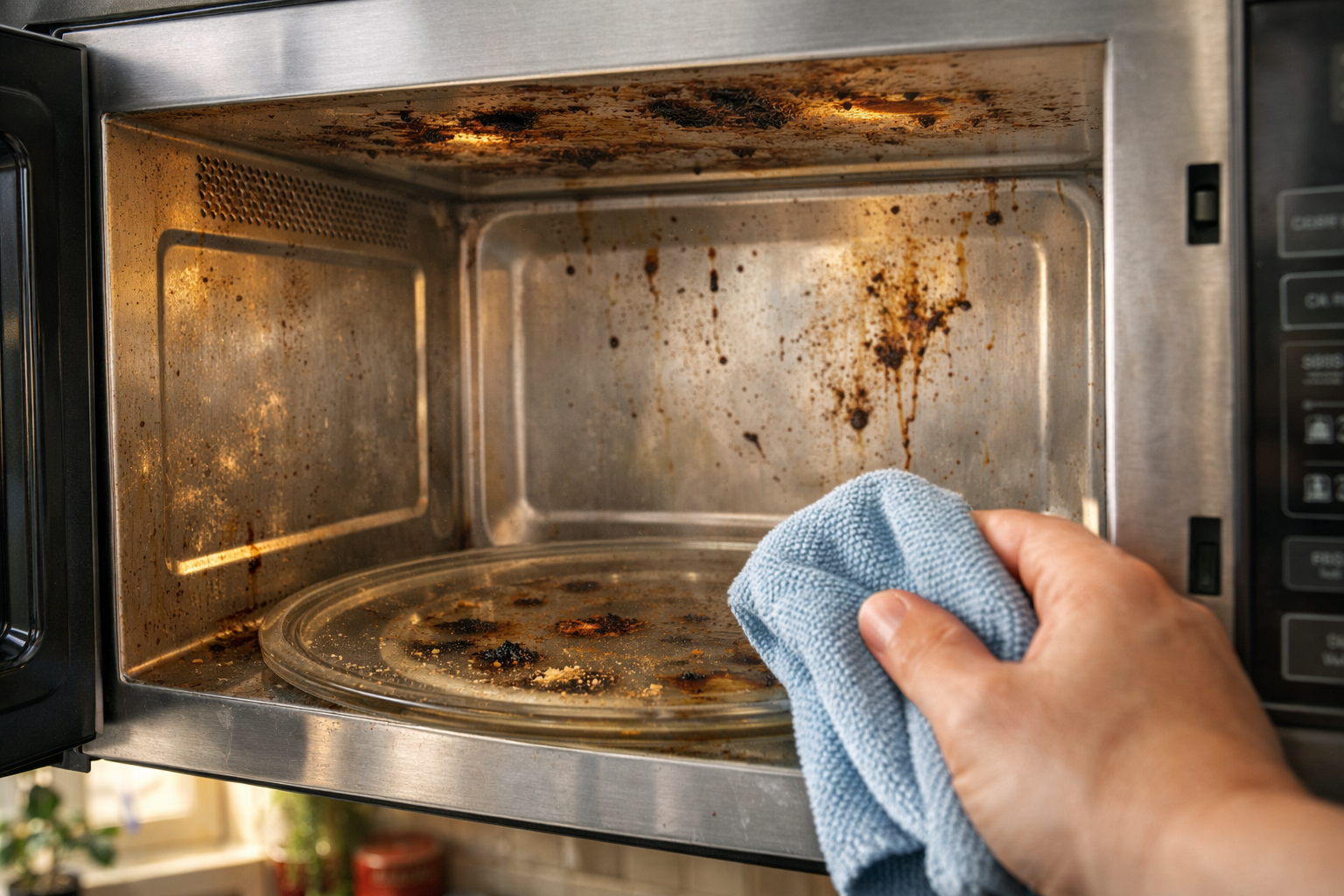
Burnt food inside a microwave happens faster than most people expect. One minute you’re reheating leftovers… the next minute smoke fills the kitchen and your microwave smells like burnt popcorn for days!
I’ve been there myself. Once I accidentally left a mug cake inside the microwave too long, and the inside turned into a sticky, burnt mess that looked impossible to clean. But here’s the surprising part: removing burnt stains and odors from a microwave is actually easier than most people think.
The key is using the right cleaning method. Certain natural solutions can loosen burnt food, dissolve grease, and remove lingering smoke smells without harsh chemicals.
In this guide, I’ll show you exactly how to clean a burnt microwave step-by-step. We’ll cover safe household cleaning solutions, deep-cleaning techniques, odor removal tricks, and common mistakes people make when scrubbing microwave interiors.
By the end, your microwave can look—and smell—almost brand new again.
Why Burnt Food Sticks Inside a Microwave
When food burns inside a microwave, it creates more than just a simple stain. Heat causes sugars, oils, and proteins in food to break down and bond with the microwave’s interior surface.
That’s why burnt sauce or popcorn residue often becomes dark, sticky, and stubborn. These particles harden quickly as they cool, forming a thin crust that clings to microwave walls and ceilings.
Grease makes the situation worse. When oils heat up during cooking, they vaporize and spread across the microwave interior. If the food burns, those grease particles combine with smoke residue and burnt food particles, creating a layer that smells strong and looks difficult to remove.
Another reason burnt messes are stubborn is the microwave’s interior material. Most microwave ovens have enamel or ceramic-coated walls that are durable but can trap residue if it’s left sitting too long.
The good news is that these residues soften again when exposed to moisture and steam. That’s why many microwave cleaning methods rely on steam or heated water to loosen burnt particles before wiping them away.
Understanding this simple chemistry makes cleaning a burnt microwave much easier.
The Steam Cleaning Method (Best First Step)
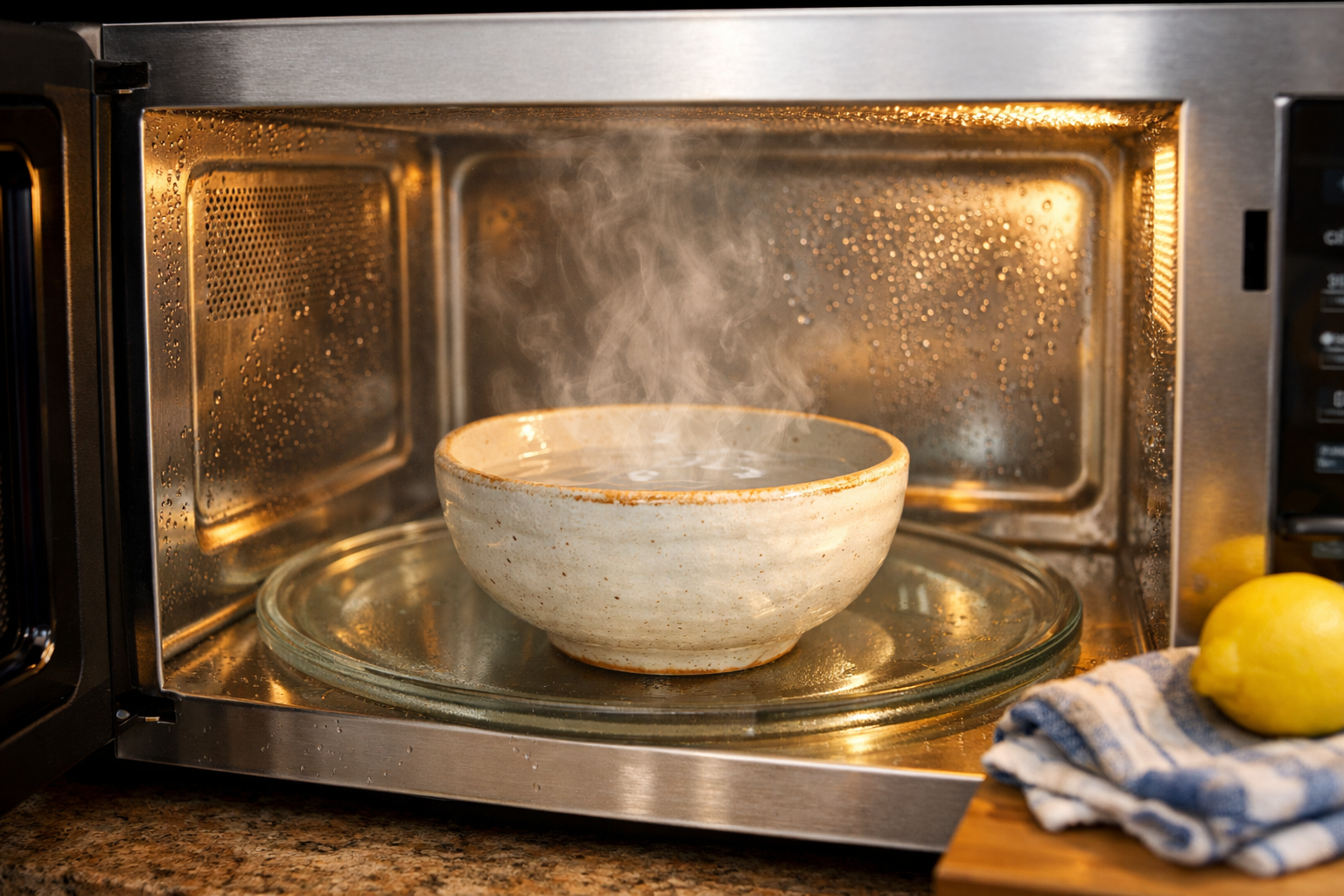
The easiest way to start cleaning a burnt microwave is by using steam. Steam softens burnt food, loosens grease, and lifts stubborn stains without heavy scrubbing.
I use this method almost every time because it does most of the work for you.
Fill a microwave-safe bowl with water and place it inside the microwave. Heat the water for several minutes until it starts producing steam. As the steam circulates inside the microwave cavity, it begins breaking down dried food particles stuck to the walls and ceiling.
Once the microwave stops, leave the door closed for a few minutes. This allows the steam to continue softening stubborn residue.
When you open the microwave afterward, you’ll often notice moisture droplets on the interior surfaces. That’s exactly what you want. Those droplets contain condensed steam that has already begun loosening burnt debris.
At this point, wiping the microwave interior becomes much easier. A soft sponge or microfiber cloth can usually remove most burnt stains without aggressive scrubbing.
Sometimes the difference is dramatic. What looked like a baked-on disaster can wipe away in seconds after proper steaming.
How Vinegar Removes Burnt Stains and Odors
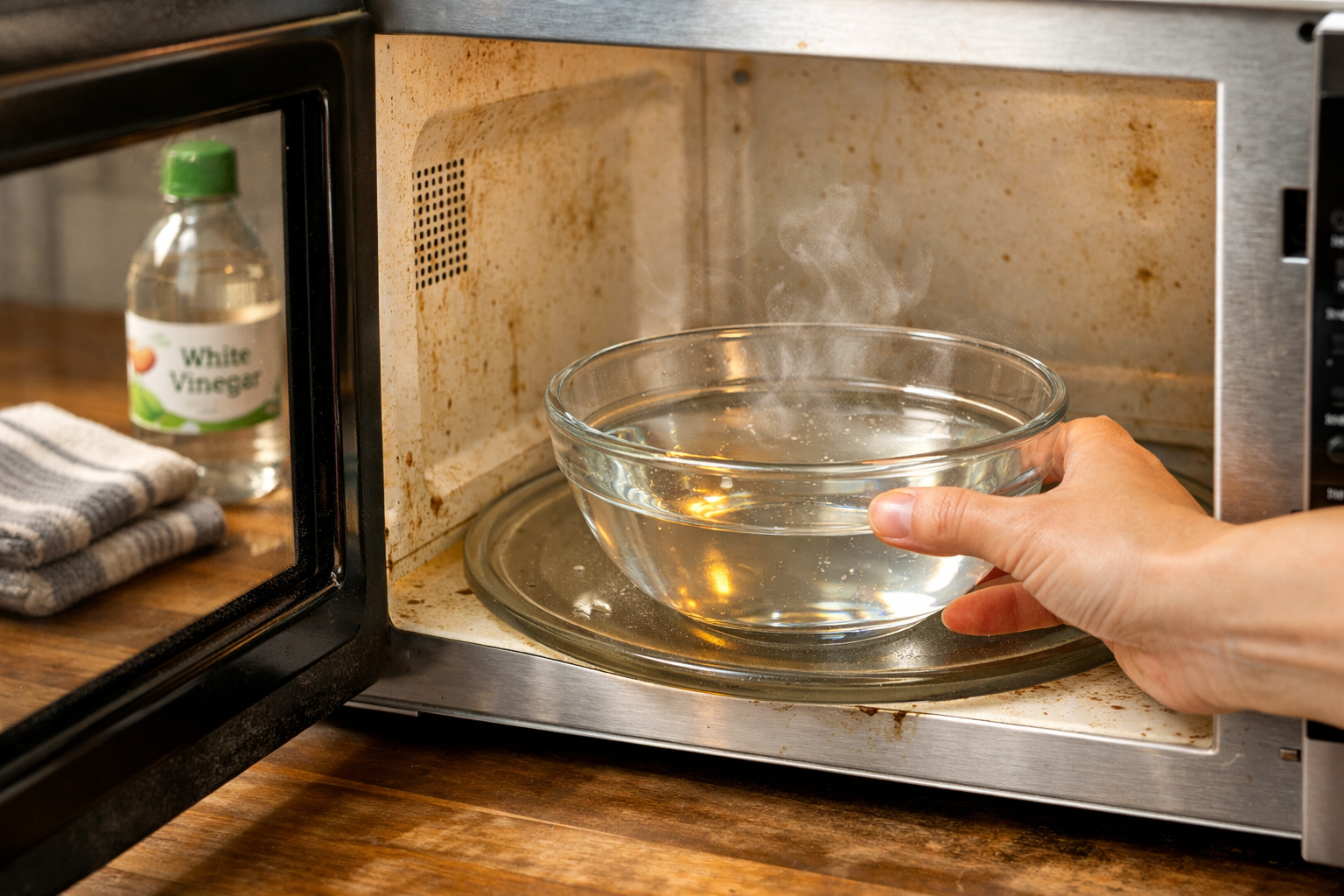
If steam alone doesn’t remove the burnt residue, vinegar is the next solution I recommend. Vinegar works incredibly well because it breaks down grease and neutralizes odors at the same time.
Mix equal parts water and vinegar in a microwave-safe bowl. Heat the mixture in the microwave for several minutes until it begins steaming. The warm vinegar vapor spreads across the microwave interior, dissolving greasy buildup and burnt food residue.
One of the biggest benefits of vinegar cleaning is odor removal. Burnt microwave smells often linger because smoke particles stick to interior surfaces. Vinegar neutralizes those particles instead of simply covering the smell.
After heating the vinegar mixture, allow the microwave to sit for a few minutes with the door closed. Then open it and wipe the interior using a damp cloth.
You’ll usually see burnt stains wipe away much more easily. Even stubborn brown spots from burnt sauces or reheated leftovers begin to disappear.
And surprisingly, the vinegar smell fades quickly after the microwave dries.
Cleaning Heavy Burnt Residue with Baking Soda
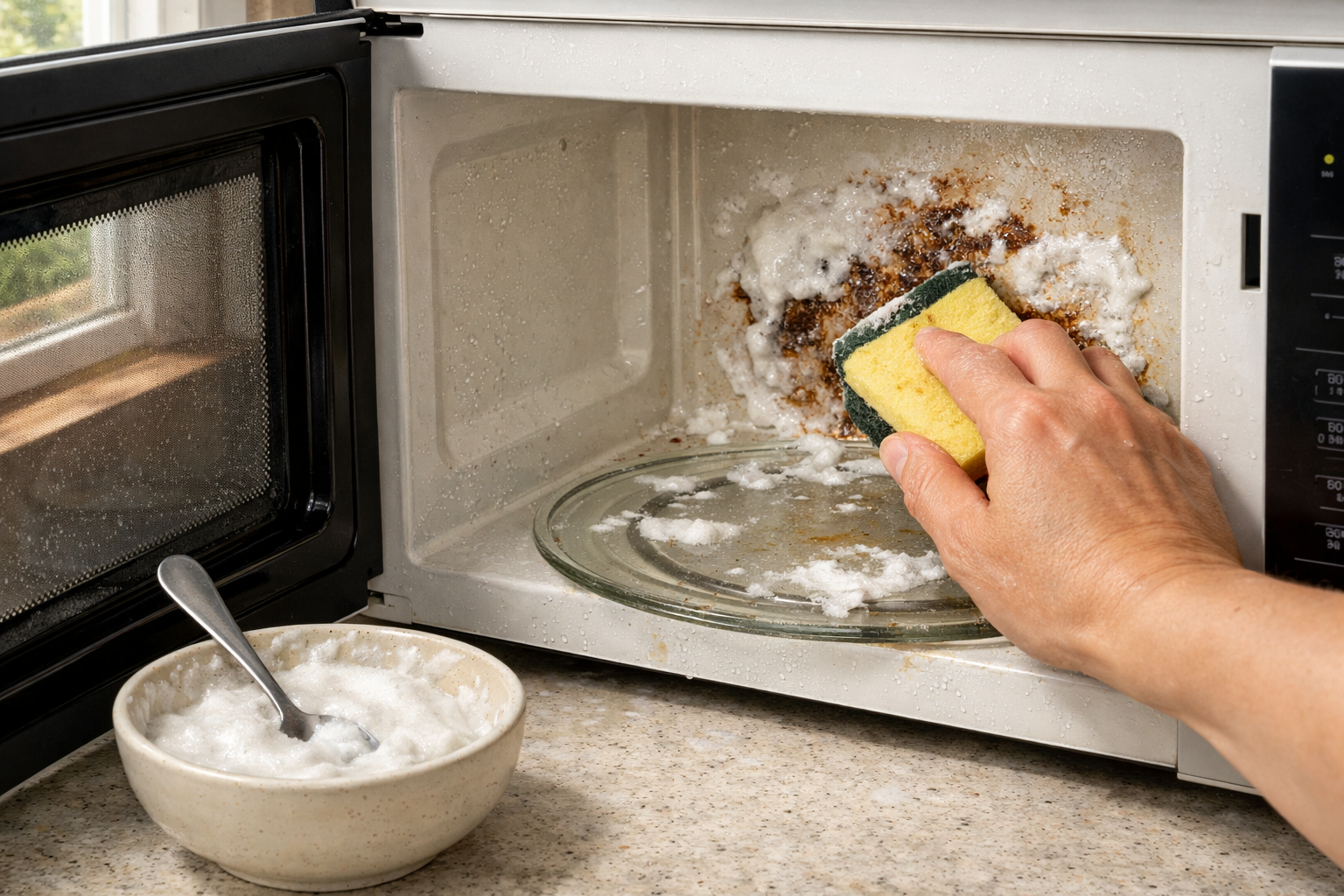
Sometimes burnt food becomes extremely stubborn, especially if it has been sitting in the microwave for several days. In those cases, baking soda becomes one of the most effective cleaning tools.
Baking soda works as a gentle abrasive that lifts burnt residue without damaging microwave surfaces. Unlike harsh scrubbing pads, it removes stains while protecting the enamel coating inside the appliance.
To use this method, mix baking soda with a small amount of water until it forms a thick paste. Apply the paste directly onto burnt spots inside the microwave.
Let the mixture sit for several minutes. During this time, the baking soda begins breaking down the residue and loosening stubborn stains.
Afterward, gently scrub the area using a soft sponge. The paste will lift the burnt particles while the sponge removes them from the surface.
In my experience, this method works particularly well on burnt sugar stains, tomato sauce splatters, and caramelized food residue.
Removing the Burnt Smell from Your Microwave
Even after the stains disappear, the burnt smell can sometimes remain. This happens because smoke particles settle into tiny crevices, vents, and door seals.
The simplest way to remove that odor is by using natural deodorizing ingredients.
Lemon works especially well. Heating a bowl of water with sliced lemon inside the microwave releases natural citrus oils that help neutralize lingering odors.
The steam from the lemon water spreads through the microwave interior and freshens the appliance at the same time. After heating the mixture, wipe the microwave again to remove any remaining residue.
Another trick I sometimes use is leaving an open bowl of baking soda inside the microwave overnight. Baking soda absorbs odors slowly, helping remove stubborn smoke smells.
Within a day or two, the burnt odor usually disappears completely.
Cleaning the Microwave Turntable and Accessories
Many people focus on the microwave interior and forget about the turntable. But burnt food often spills onto the glass plate, where it hardens and becomes difficult to remove.
Fortunately, cleaning the turntable is simple.
Most microwave glass plates are dishwasher-safe. If yours is especially dirty, remove it and wash it with warm soapy water or place it directly into the dishwasher.
Burnt residue usually softens quickly when soaked in hot water. A sponge can then remove the remaining stains without much effort.
Don’t forget to wipe the microwave floor underneath the turntable as well. Food particles often collect there and contribute to lingering odors.
Cleaning both areas ensures the microwave stays fresh and hygienic.
Common Microwave Cleaning Mistakes to Avoid
Many people accidentally damage their microwave while trying to clean burnt messes.
One common mistake is using metal scrubbers or steel wool. These materials can scratch the microwave’s interior coating, making it easier for stains and food particles to stick in the future.
Another mistake is using strong chemical cleaners not designed for kitchen appliances. Harsh chemicals can leave residues that may contaminate food during future use.
People also sometimes forget to unplug the microwave while deep cleaning it. While it may seem unnecessary, unplugging the appliance is always a safer practice when wiping interior surfaces.
Finally, avoid letting burnt spills sit for too long. The longer burnt food remains inside the microwave, the harder it becomes to remove.
Cleaning it quickly saves time and effort later.
Conclusion
Cleaning a burnt microwave might seem like a frustrating chore, but it doesn’t have to be difficult. Simple methods like steam cleaning, vinegar solutions, baking soda paste, and lemon deodorizing can remove even stubborn burnt stains.
The key is softening residue first before scrubbing. Once burnt food loosens, wiping it away becomes surprisingly easy.
Regular microwave cleaning also prevents odors and keeps the appliance running efficiently. A quick wipe after spills can stop stains from turning into baked-on messes.
With the right techniques, your microwave can stay clean, fresh, and ready for everyday cooking.