A properly working air conditioner can feel like magic on a scorching day, yet the real “engine” behind that comfort is something most people never think about—the compressor. In reality, without the compressor, your cooling system simply cannot function.
The air conditioner compressor is the heart of any cooling system, responsible for circulating refrigerant and enabling heat transfer. It plays a critical role in the refrigeration cycle, working alongside components like the evaporator coil, condenser coil, and expansion valve.
I’ve seen many people assume their AC just “blows cold air,” but the truth is far more technical and fascinating. The compressor doesn’t create cold air—it moves heat out of your home. Once you understand this, the entire cooling process suddenly makes sense. In this guide, I’ll break down exactly what the compressor does, how it works, common issues, and why it matters for efficiency and comfort.
The Core Function of an Air Conditioner Compressor
The compressor’s main job is simple in concept but powerful in execution: it compresses refrigerant gas and keeps it moving through the system. This process is what allows your air conditioner to transfer heat from inside your home to the outside environment.
Inside the compressor, low-pressure refrigerant gas is squeezed into a high-pressure, high-temperature gas. This transformation is crucial because it prepares the refrigerant to release heat when it reaches the outdoor condenser unit. Without this pressure increase, heat transfer would not happen efficiently.
Think of the compressor like the heart in a human body. Just as the heart circulates blood, the compressor circulates refrigerant through the system. Without this circulation, the cooling cycle stops completely, and your air conditioner becomes useless.
Many people don’t realize that compressors are also energy-intensive components. They consume a significant portion of your AC’s electricity, which is why efficient compressors can drastically reduce energy bills. This is why modern systems are designed with inverter technology and variable-speed compressors.
How the Air Conditioner Compressor Works Step by Step
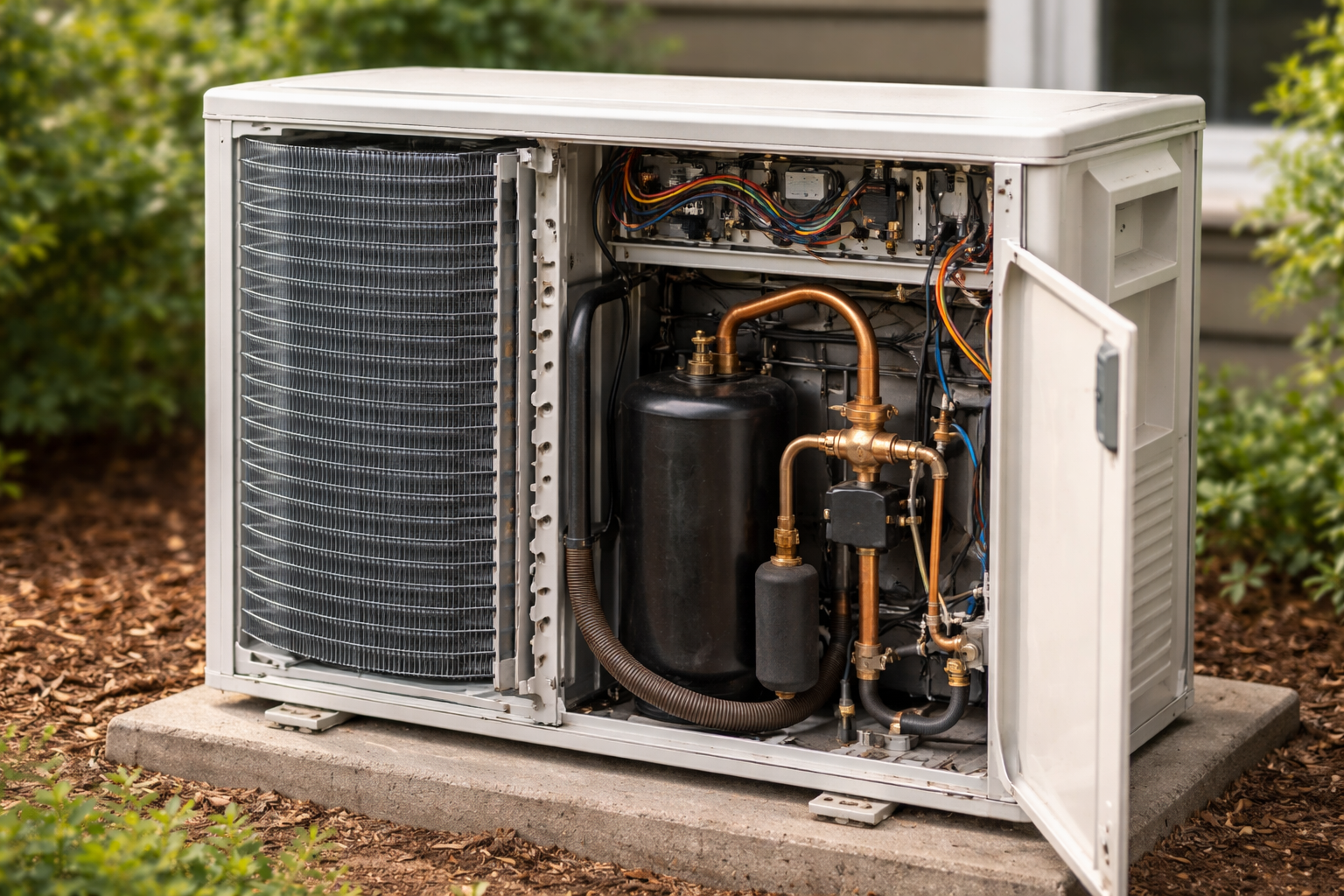
The working of an air conditioner compressor is part of a continuous loop known as the refrigeration cycle. This cycle never stops while your AC is running, which is why cooling is consistent and ongoing.
First, the refrigerant absorbs heat from inside your home at the evaporator coil and turns into a low-pressure gas. This gas then travels to the compressor, where it gets compressed into a high-pressure, high-temperature gas. This is the key transformation stage.
Next, the compressed gas moves to the condenser coil located outside. Here, the refrigerant releases its heat into the surrounding air and cools down, turning into a liquid. The compressor plays a vital role in ensuring this heat release happens efficiently.
After that, the refrigerant passes through the expansion valve, where its pressure drops again before returning to the evaporator coil. The cycle repeats continuously, maintaining a cool indoor environment.
This entire process depends on precise pressure control. Even a slight malfunction in the compressor can disrupt the entire cycle, which is why technicians often check it first when diagnosing AC issues.
Types of Air Conditioner Compressors
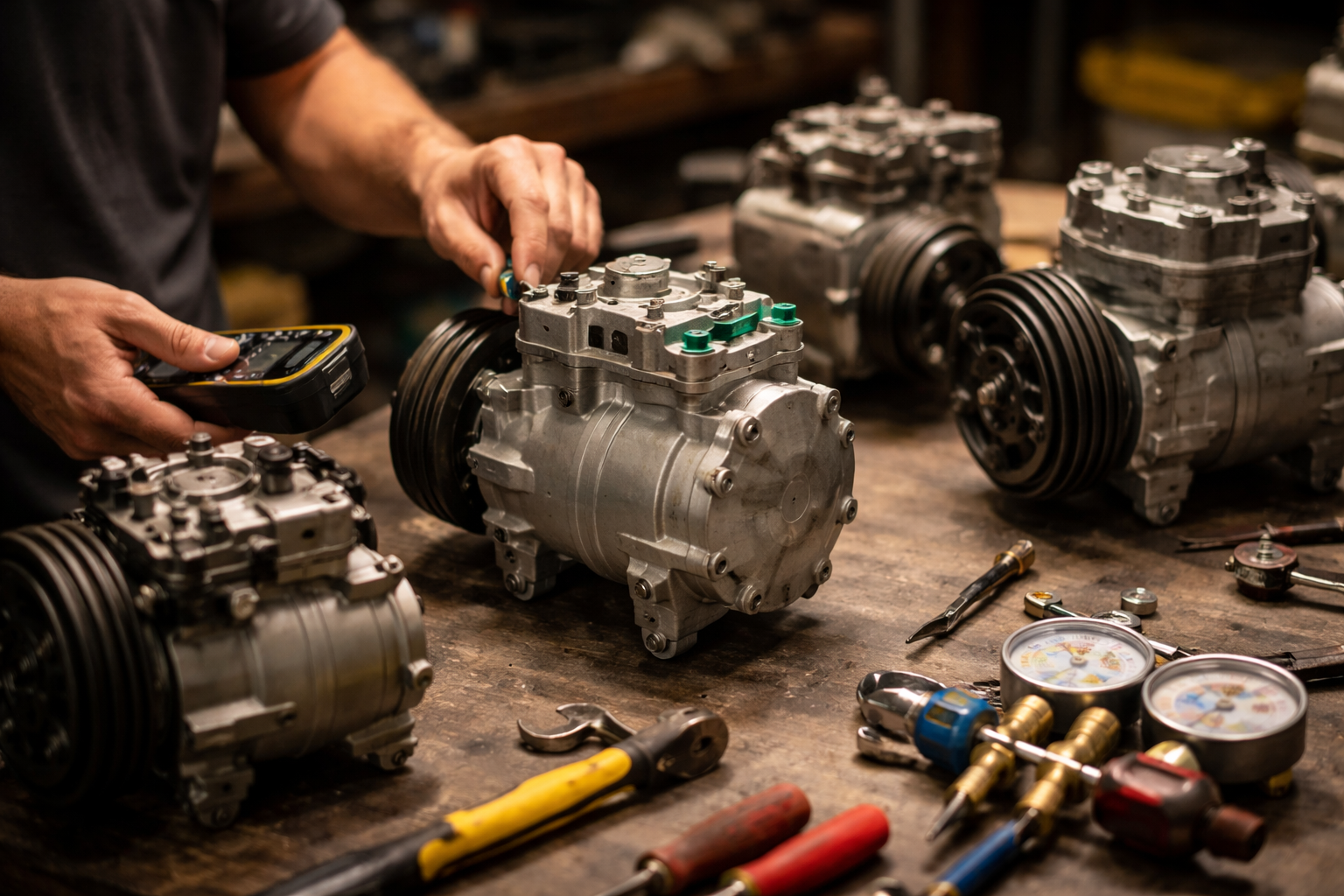
Different air conditioning systems use different types of compressors, each designed for specific performance levels and efficiency needs.
One common type is the reciprocating compressor, which works similarly to a car engine piston. It compresses refrigerant using a piston-cylinder mechanism. These are often found in smaller residential units and are known for their reliability.
Another widely used type is the rotary compressor. It uses rotating blades to compress the refrigerant and is typically quieter and more efficient than reciprocating models. Many modern window ACs and split systems use this design.
Scroll compressors, commonly used in high-efficiency systems, operate using two spiral-shaped scrolls. One remains stationary while the other moves in a circular motion, compressing the refrigerant smoothly and quietly. These are highly efficient and have fewer moving parts.
Finally, inverter compressors are becoming increasingly popular. These compressors adjust their speed based on cooling demand, rather than turning on and off repeatedly. This leads to better energy efficiency, quieter operation, and more consistent temperature control.
Why the Compressor Is So Important for Cooling Efficiency
The compressor directly affects how efficiently your air conditioner uses electricity. A well-functioning compressor ensures that the refrigerant flows smoothly and that heat is removed effectively from your home.
If the compressor is inefficient or failing, your AC will struggle to maintain temperature. This leads to longer run times, higher energy consumption, and inconsistent cooling. Over time, this can significantly increase your electricity bills.
Modern compressors, especially inverter-driven ones, are designed to reduce energy waste. Instead of cycling on and off, they adjust their speed to maintain a steady temperature. This not only saves energy but also reduces wear and tear on the system.
In my experience, homeowners often overlook compressor maintenance, focusing only on filters or coils. However, neglecting the compressor can lead to major breakdowns and expensive repairs. Keeping it in good condition is essential for long-term system efficiency.
Common Problems with Air Conditioner Compressors
One of the most common issues is compressor overheating. This usually happens when airflow is restricted or the refrigerant levels are off. When the compressor gets too hot, it can shut down or even get permanently damaged.
Another frequent problem is electrical failure. Faulty capacitors, wiring issues, or voltage fluctuations can prevent the compressor from starting. This is often why an AC unit hums but doesn’t cool properly.
Refrigerant issues also impact compressor performance. If the refrigerant is too low or leaking, the compressor has to work harder, which increases strain and reduces its lifespan.
Mechanical wear is another concern, especially in older systems. Over time, the internal components of the compressor can degrade, leading to reduced efficiency or complete failure. At that point, replacement is usually the only solution.
Recognizing these issues early can save you from costly repairs. Strange noises, reduced cooling, or higher energy bills are often early warning signs that something is wrong with the compressor.
Signs Your Air Conditioner Compressor Is Failing

A failing compressor often gives clear warning signs if you know what to look for. One of the first indicators is reduced cooling performance. If your AC is running but not cooling effectively, the compressor may not be functioning properly.
Unusual noises, such as clicking, rattling, or buzzing, can also signal compressor trouble. These sounds often indicate internal mechanical issues or electrical faults.
Another sign is frequent tripping of the circuit breaker. Since the compressor draws a lot of power, any malfunction can cause electrical overloads.
You might also notice warm air coming from the vents instead of cold air. This is a strong indication that the compressor is not compressing the refrigerant properly.
In severe cases, the AC may not turn on at all. When the compressor fails completely, the entire system can shut down, requiring professional repair or replacement.
Maintenance Tips to Keep Your Compressor Working Efficiently
Regular maintenance is key to extending the life of your compressor. One of the simplest steps is keeping your air filters clean. Dirty filters restrict airflow, which can cause the compressor to overwork and overheat.
Ensuring proper refrigerant levels is equally important. Low refrigerant forces the compressor to work harder, increasing wear and reducing efficiency. A certified technician should check this periodically.
Cleaning the outdoor condenser unit also helps. Dirt, debris, and dust can block airflow, making it harder for the compressor to release heat. This can significantly affect performance.
I’ve noticed that many people ignore routine servicing until something breaks. Scheduling regular maintenance checks can prevent major compressor issues and keep your system running smoothly for years.
Even small actions like keeping the area around the outdoor unit clear can make a big difference. Good airflow equals better compressor performance.
Final Thoughts: Why Understanding the Compressor Matters
Understanding what an air conditioner compressor does gives you a clearer picture of how your entire cooling system works. It’s not just a component—it’s the core mechanism that drives the refrigeration cycle and keeps your home comfortable.
When you recognize its importance, you can make better decisions about maintenance, repairs, and even system upgrades. A healthy compressor means better cooling, lower energy bills, and fewer breakdowns.
If your AC isn’t performing well, don’t ignore the compressor. Paying attention to early signs can save you time, money, and frustration.
Take the next step by scheduling regular maintenance and staying aware of how your system behaves. A little attention now can prevent major issues later—and keep your home cool when it matters most.