A running fan with no cool air feels like a betrayal—everything sounds normal, yet the room stays warm. I’ve seen this exact situation turn a comfortable home into a sauna in under an hour, even when the AC seems “on.” It’s one of the most frustrating HVAC problems because it tricks you into thinking the system is fine.
In reality, when an air conditioner not working but fan running situation happens, something deeper is wrong—often hidden behind normal airflow. It could be a frozen evaporator coil, a dead compressor, a thermostat misfire, or even a clogged air filter choking your system silently.
I’ve dealt with this issue personally during peak summer, and the fix wasn’t obvious at first. But once you understand the core causes and how your AC actually works, diagnosing it becomes much easier. Let’s break it down step by step so you can fix it fast—or know exactly when to call for help.
Why Your AC Fan Runs But No Cold Air Comes Out
The fan spinning without cooling is not random—it’s a signal. Your system is partially working, but the cooling cycle is broken somewhere. The indoor fan (blower) is responsible for circulating air, while the outdoor unit handles heat removal. When cooling fails but airflow continues, the issue is usually isolated to the cooling components.
I remember checking my AC once and thinking, “Air is coming out, so it must be fine.” That assumption cost me hours. The truth is, airflow alone means nothing without the refrigerant cycle doing its job. Your system needs both airflow and heat exchange to produce cold air.
Another common mistake is ignoring the outdoor unit. Many homeowners never step outside to check if it’s running. If the outside compressor isn’t working, your indoor fan will still blow—but it’ll just circulate warm air. This disconnect is often the root of confusion.
The key takeaway here is simple: your AC has multiple parts working together. When one fails, the others may still run, creating this misleading situation.
Thermostat Issues That Mimic Bigger Problems
Sometimes the issue isn’t mechanical—it’s control-related. A faulty or misconfigured thermostat can easily cause your AC to behave strangely while appearing “on.”
I’ve personally seen cases where the thermostat was set to “fan only” mode without the homeowner realizing it. The fan ran perfectly, but no cooling happened because the compressor never received the signal to turn on. It sounds simple, but it happens more often than you’d think.
Dead batteries in digital thermostats are another silent culprit. When power is unstable, signals to the AC system can become inconsistent. The fan might run as a default behavior, while the cooling function stays inactive.
There’s also wiring. Loose or damaged thermostat wires can disrupt communication between components. In one instance, a small wiring issue caused the compressor to stay off entirely, while the fan continued operating like nothing was wrong.
Before assuming major damage, always double-check your thermostat settings, power, and wiring. It’s a quick step that can save you a lot of time and money.
Dirty Air Filters and Airflow Restrictions
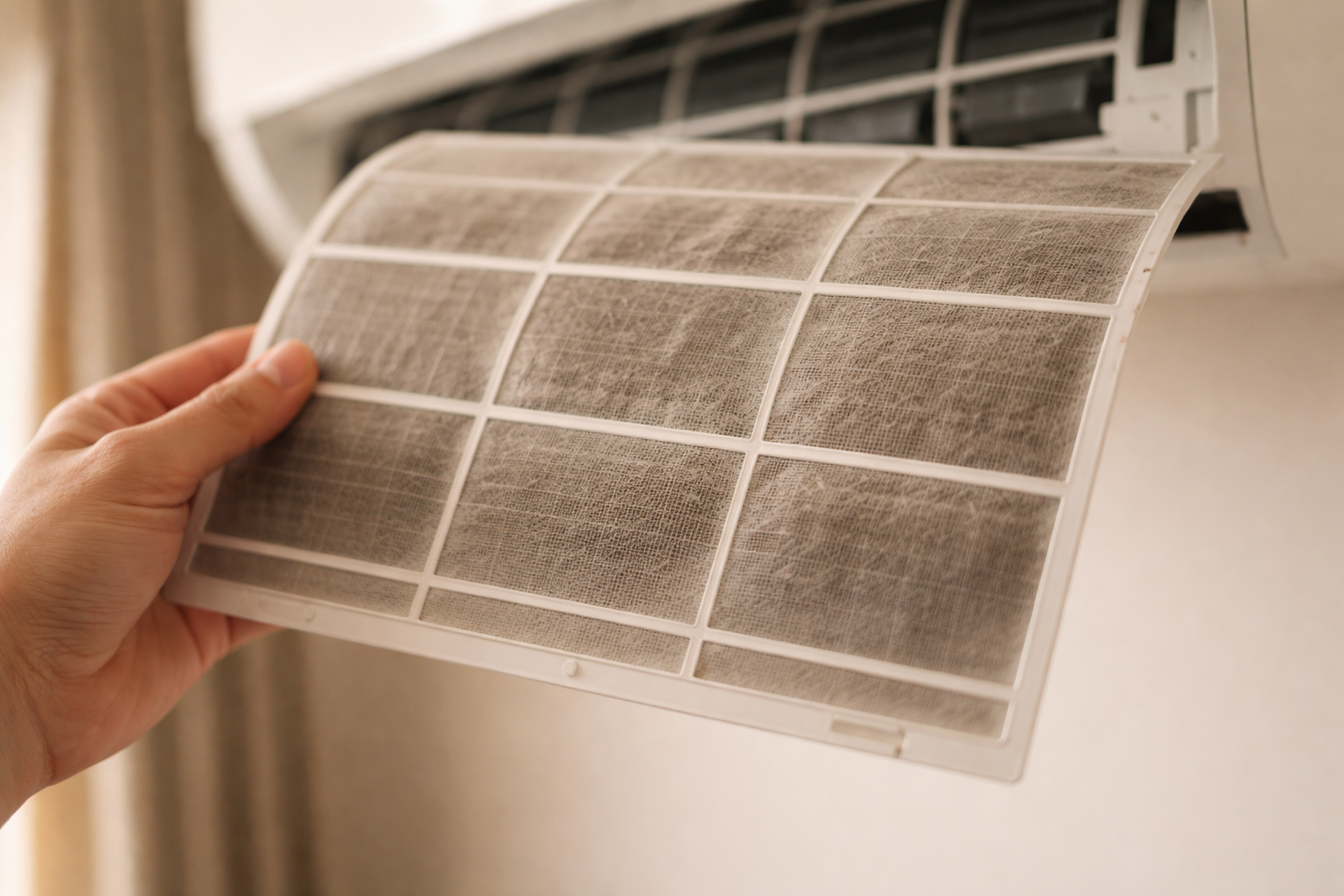
A clogged air filter might sound minor, but it can completely disrupt your cooling system. When airflow is restricted, the evaporator coil can freeze over, stopping the cooling process entirely.
This happened to me during a heatwave. The AC fan kept running, but the air felt warmer by the hour. After checking the unit, I found the coil frozen solid. The cause? A filter I hadn’t replaced in months.
When airflow drops, cold air builds up inside the system instead of circulating. Ice forms, and eventually, the system can’t cool at all. The fan still runs because it’s not directly affected, which creates that confusing “working but not working” scenario.
Another overlooked factor is blocked vents or closed registers. Even if your filter is clean, poor airflow inside the home can lead to similar problems. The system needs consistent circulation to function properly.
Keeping airflow clear and filters clean is one of the simplest yet most powerful ways to prevent this issue entirely.
Frozen Evaporator Coil: The Silent Cooling Killer
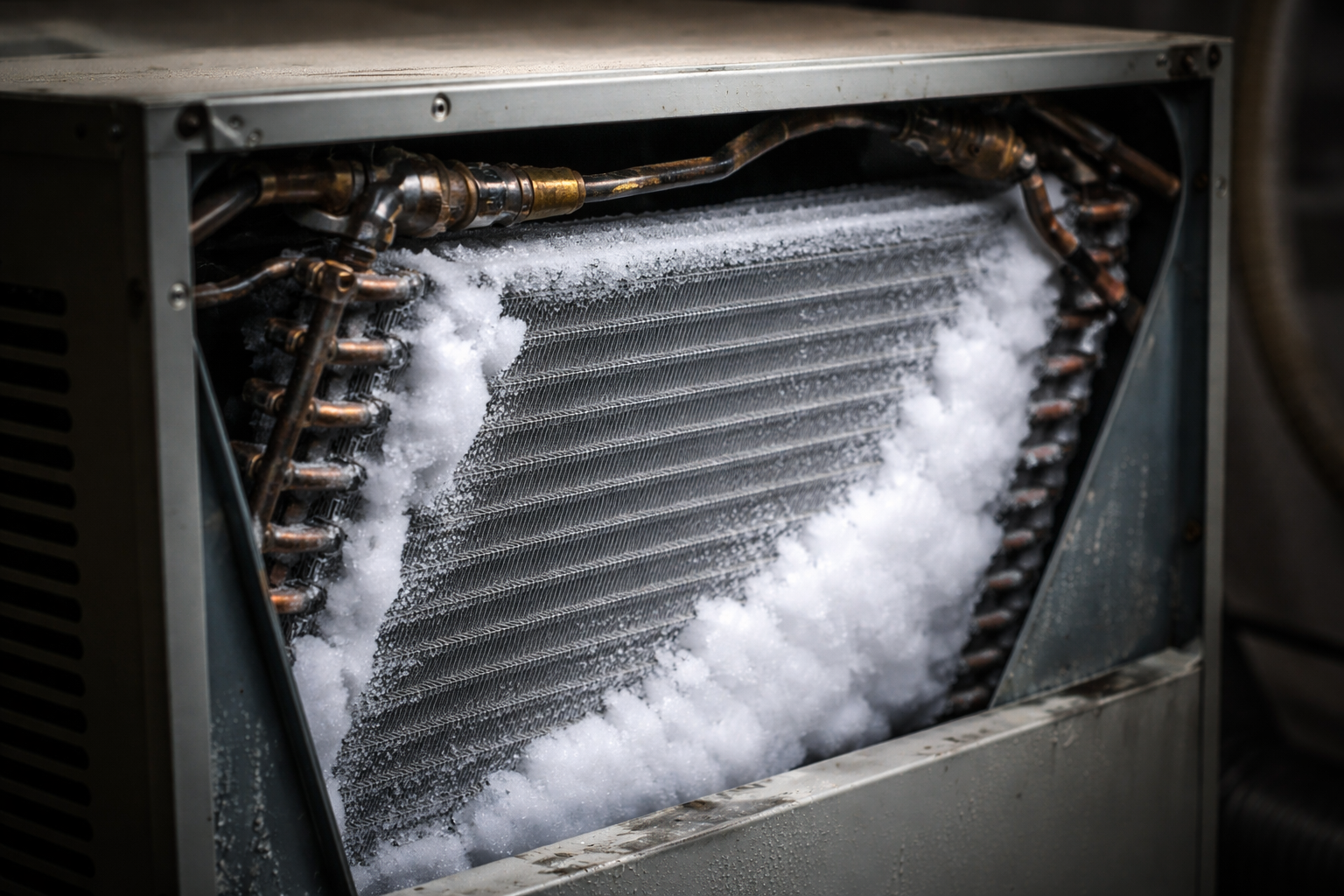
A frozen coil is one of the most common reasons behind this problem, and it often goes unnoticed until the system stops cooling completely.
The first time I encountered this, I didn’t even realize ice could form inside an AC. But when the coil freezes, it acts like a barrier. Air can still pass through, but it won’t be cooled effectively.
Low refrigerant levels are a major cause of freezing. When refrigerant drops, pressure inside the system changes, leading to ice buildup. Dirty coils and poor airflow can also trigger this issue.
Fixing it requires patience. You need to turn off the system and let the ice melt completely before restarting. Jumping the gun and turning it back on too soon can worsen the problem.
If freezing happens repeatedly, it’s a sign of a deeper issue—usually refrigerant leaks or airflow problems—that needs professional attention.
Compressor Problems and Outdoor Unit Failures
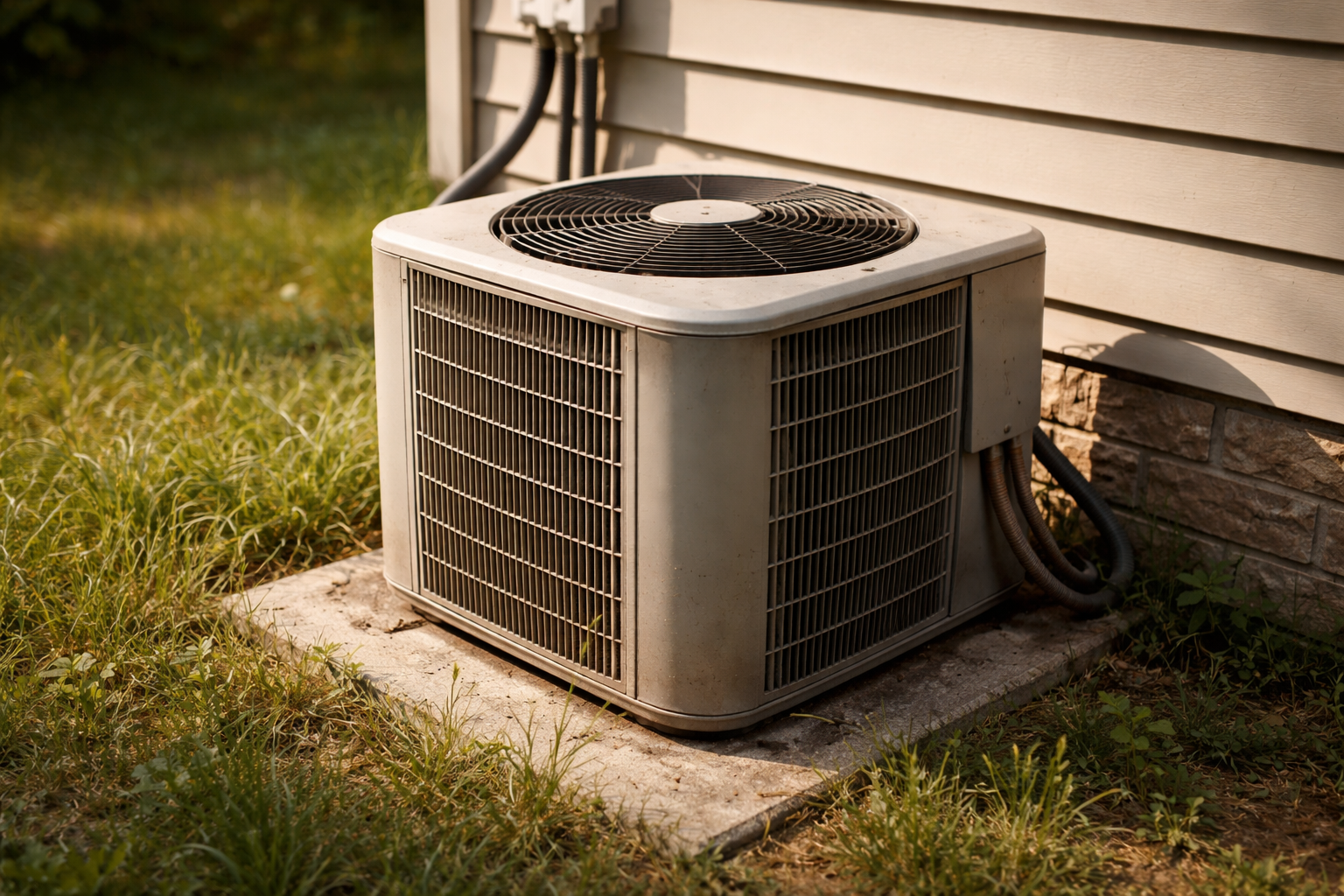
The compressor is the heart of your AC system. When it fails, cooling stops entirely—but the fan inside your home can still run.
I once checked an AC where everything seemed fine indoors. But outside, the unit was silent. No hum, no vibration—nothing. The compressor had failed, and the system was just circulating warm air.
Electrical issues like blown capacitors or tripped breakers can also prevent the outdoor unit from running. In these cases, the fix might be simpler than replacing the compressor.
Another possibility is overheating. If the outdoor unit gets too hot, it may shut down as a safety measure. Dirt buildup, blocked airflow, or extreme weather can trigger this.
Checking the outdoor unit is crucial. If it’s not running while your fan is, you’ve likely found the core problem.
Refrigerant Leaks and Low Cooling Efficiency
Refrigerant is what actually cools the air. Without enough of it, your system can’t perform its primary function.
Leaks are tricky. They don’t always cause immediate failure but gradually reduce cooling efficiency. At first, the air might feel slightly cool. Then it becomes neutral. Eventually, it turns warm—even though the fan keeps running.
I’ve seen systems run for weeks like this before homeowners realized something was wrong. By then, the problem had worsened, and repairs became more expensive.
Signs of low refrigerant include hissing sounds, ice buildup, and longer cooling cycles. Unlike filters or thermostats, this isn’t a DIY fix. Handling refrigerant requires proper tools and expertise.
If you suspect a leak, it’s best to call a professional before the issue escalates.
When to Fix It Yourself vs Call a Professional
Some fixes are quick and safe to handle on your own. Others require technical knowledge and tools.
I always start with the basics—checking thermostat settings, replacing filters, inspecting vents, and making sure the outdoor unit is running. These steps solve a surprising number of cases.
But once you’re dealing with refrigerant, electrical components, or compressor issues, it’s time to step back. Attempting complex repairs without proper knowledge can cause more damage or even pose safety risks.
There’s also the cost factor. Small issues are cheap to fix early. Ignoring them can lead to major repairs or even full system replacement.
Knowing your limits is part of smart maintenance. Fix what you can safely handle, and call a professional when needed.
FINAL THOUGHTS / TAKEAWAYS
An air conditioner not working but fan running situation is frustrating—but it’s rarely random. It’s your system signaling a specific failure, whether it’s airflow restriction, thermostat issues, frozen coils, or compressor trouble.
Start simple. Check your thermostat, filters, and outdoor unit. These quick steps often reveal the problem faster than expected. If the issue goes deeper, don’t delay getting expert help—small problems grow quickly in HVAC systems.
Stay proactive. Regular maintenance and early detection can save you from costly breakdowns and unbearable heat. Fix the root cause, not just the symptoms, and your AC will reward you with reliable cooling when you need it most.