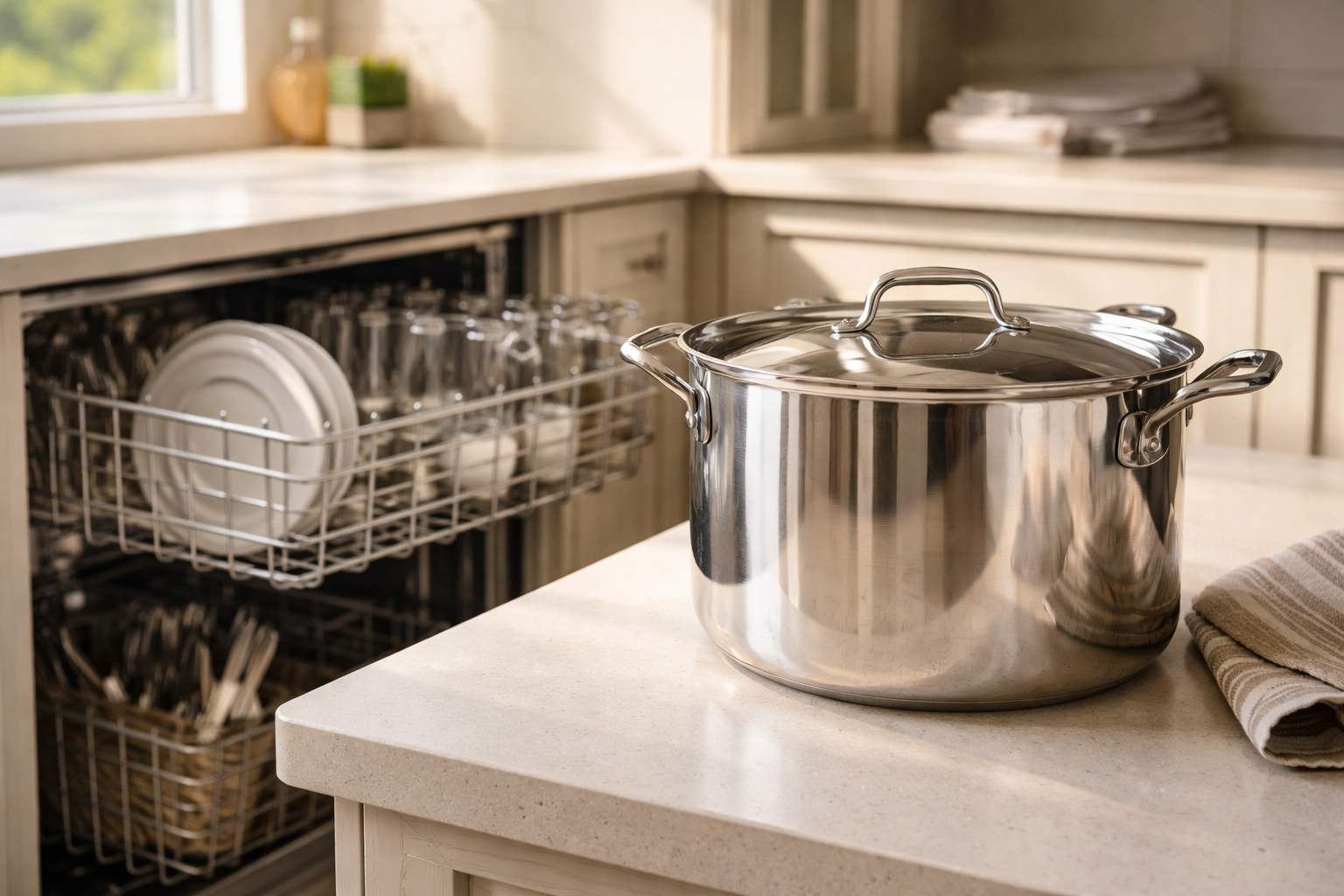
I used to think stainless steel cookware was basically indestructible. After all, brands like All-Clad are famous for durability, professional performance, and lifetime use. So naturally, the first time I tossed one of my All-Clad pans into the dishwasher, I didn’t think twice about it. Big mistake.
A few cycles later, I noticed something odd—dull spots, faint discoloration, and a chalky residue that definitely wasn’t there before. That’s when I started digging into the question many home cooks ask: can All-Clad pots go in the dishwasher?
Technically, some models can survive a dishwasher cycle. But that doesn’t mean they should. Stainless steel cookware reacts to detergents, high heat, and mineral-rich water in ways that can permanently affect its appearance and performance.
In this guide, I’ll walk you through exactly what happens when All-Clad cookware goes through a dishwasher, why manufacturers warn against it, and the safest ways to clean your pots and pans so they stay looking—and cooking—like new for years.
Why Dishwashers Can Damage All-Clad Cookware
All-Clad cookware is built from bonded layers of stainless steel and aluminum. This multi-ply construction is what makes it heat evenly and perform like professional kitchen equipment. But that same construction is also the reason dishwashers can cause problems.
Dishwasher detergents are extremely alkaline and abrasive compared to regular dish soap. These chemicals are designed to strip grease and food residue aggressively. When stainless steel cookware sits in that environment for a full wash cycle, the detergent can interact with the metal surface. Over time, it begins to dull the polished finish and sometimes leaves behind cloudy stains that are hard to remove.
Another factor is heat. Dishwashers operate at very high temperatures during washing and drying. While All-Clad cookware is designed to handle high heat on the stovetop, the combination of hot water, detergent, and prolonged exposure inside a closed dishwasher creates a completely different environment. This can accelerate oxidation or discoloration on stainless steel surfaces.
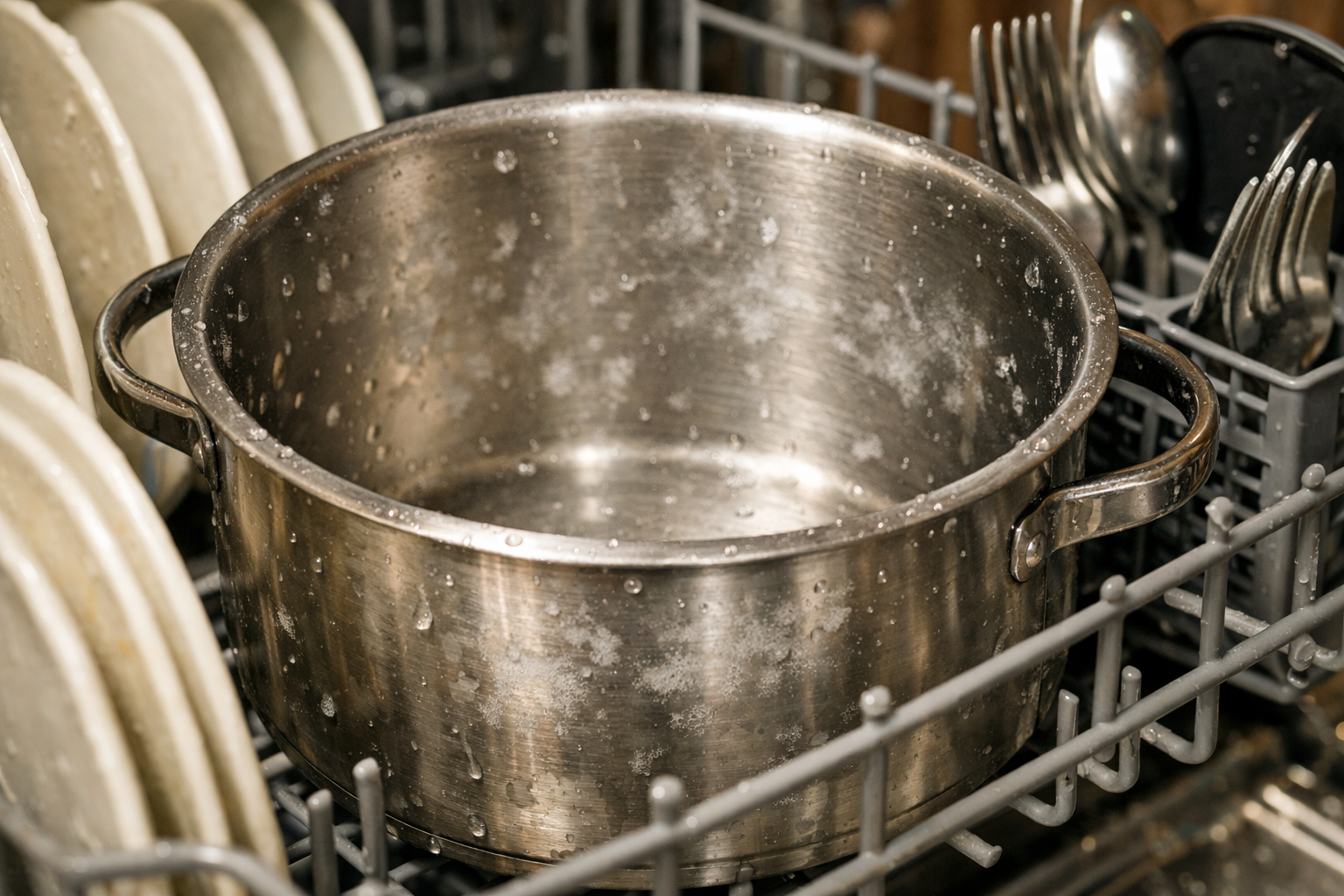
Hard water also plays a role. Minerals like calcium and magnesium often remain on cookware after a dishwasher cycle. These deposits can create chalky spots or a rainbow-like sheen on stainless steel. While the cookware may still function perfectly, the appearance can change significantly after repeated dishwasher use.
What All-Clad Officially Recommends
If you look at the official care instructions from All-Clad, the recommendation is clear: hand washing is the preferred method.
The company designs its cookware to last for decades, and part of that longevity depends on how the pans are cleaned. According to the manufacturer, dishwashers may cause discoloration or dulling of the stainless steel finish over time. While this damage is usually cosmetic, it can still affect the look of premium cookware that many people buy specifically for its polished appearance.
Another concern is that dishwasher detergents may react with the aluminum core of the cookware if exposed through microscopic edges in the bonding layers. This can create pitting or corrosion in extreme cases, especially after years of dishwasher use.
Hand washing avoids these risks entirely. Warm water, mild dish soap, and a soft sponge are usually all it takes to keep All-Clad cookware clean. Because stainless steel doesn’t absorb odors or flavors, food residue typically comes off easily without aggressive scrubbing or harsh chemicals.
What Happens If You Put All-Clad in the Dishwasher Anyway
Many people still occasionally run their All-Clad cookware through the dishwasher, especially after cooking messy meals. In most cases, the pan won’t be ruined after a single wash cycle. However, several noticeable changes may appear over time.
One common issue is rainbow discoloration on the stainless steel surface. This effect happens when heat and detergent interact with the metal, creating thin oxide layers that reflect light differently. It doesn’t affect cooking performance, but it can make the cookware look older than it actually is.
Another issue is white or chalky residue caused by hard water minerals. These spots sometimes appear after the drying cycle and can make a shiny pan look cloudy or dirty even when it’s clean.
Long-term dishwasher use may also cause etching or dullness on polished stainless steel. The mirror finish that many All-Clad pieces have can gradually lose its shine. While the cookware still works perfectly, restoring that original appearance can be difficult.
The most important thing to remember is that these effects usually build slowly. A single accidental dishwasher cycle isn’t likely to ruin a pan, but repeated washing can gradually change how the cookware looks.
The Best Way to Clean All-Clad Pots and Pans
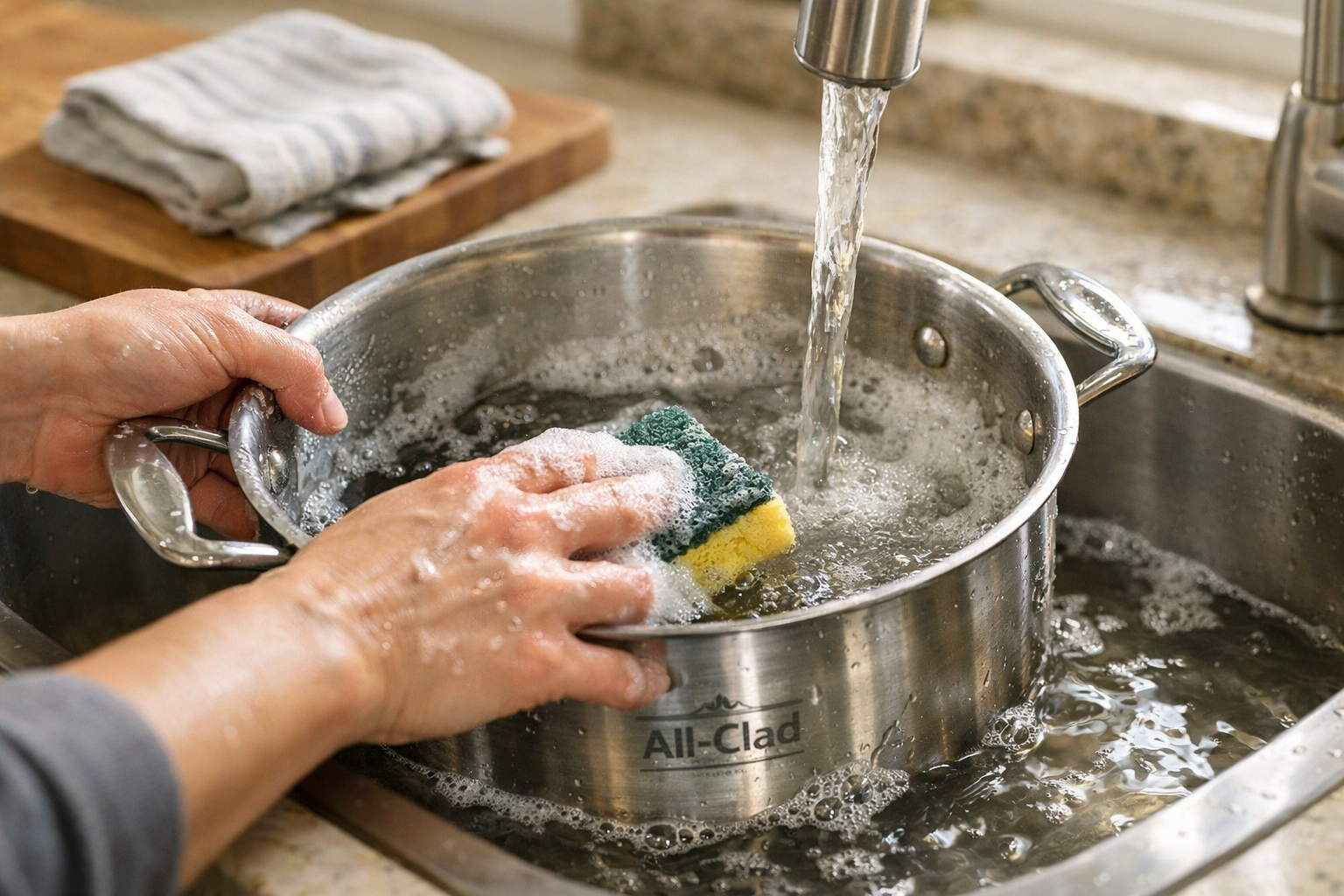
The safest and most effective cleaning method for All-Clad cookware is simple hand washing. Fortunately, stainless steel is one of the easiest cookware materials to maintain when you know the right approach.
Start by letting the pan cool slightly before washing. Placing a hot pan directly under cold water can cause thermal shock, which may warp cookware over time. Once the pan is warm rather than hot, rinse away loose food with warm water.
Add a small amount of mild dish soap and gently scrub the surface using a non-abrasive sponge or soft dish brush. Most food residue comes off quickly, especially if the pan was properly preheated before cooking.
For stubborn burnt bits, filling the pan with warm water and letting it soak for a few minutes usually loosens the residue. After soaking, the remaining food can be wiped away without aggressive scrubbing that might scratch the surface.
Drying the cookware immediately with a towel also helps prevent water spots, especially in areas with hard tap water.
How to Fix Dishwasher Damage or Discoloration
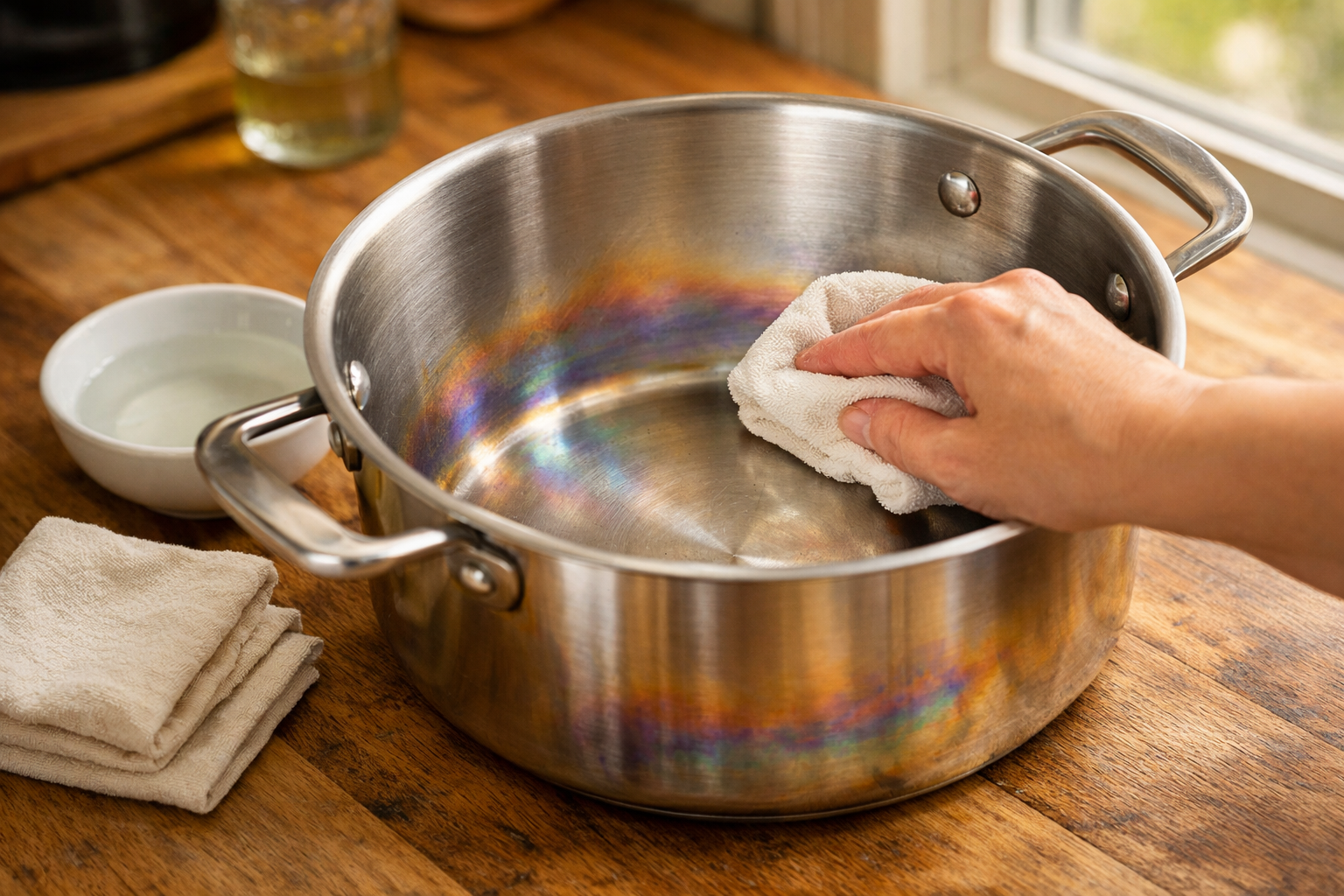
If your All-Clad cookware already shows dishwasher stains or discoloration, don’t panic. In many cases, the appearance can be restored with simple kitchen techniques.
A common fix for rainbow discoloration is using a mild acidic cleaner such as white vinegar. The acidity helps dissolve the oxide layer responsible for the color change. A quick wipe with vinegar followed by rinsing often brings back the original stainless steel shine.
For tougher stains, specialized stainless steel cleaners can help polish the surface. These products are designed specifically for cookware and appliances, and they remove mineral deposits without damaging the metal.
Another trick many experienced cooks use is baking soda paste. Mixing baking soda with a small amount of water creates a gentle abrasive cleaner. When rubbed lightly on the cookware surface, it can lift stubborn stains without scratching stainless steel.
In most cases, these methods restore the appearance completely. Even if some dullness remains, the cookware will still perform exactly the same during cooking.
Which All-Clad Cookware Is Most Sensitive to Dishwashers
Not all All-Clad cookware reacts the same way to dishwasher cleaning. Some lines are more resistant to cosmetic changes than others.
Highly polished stainless steel collections tend to show discoloration more easily. Because the finish is mirror-like, even small mineral deposits or detergent stains become noticeable. This is why many owners of premium All-Clad cookware prefer hand washing to preserve the original shine.
Cookware with brushed or matte finishes often hides dishwasher marks better. While the same chemical reactions may still occur, they are less visible on a textured surface.
Nonstick All-Clad cookware deserves even more caution. Dishwasher detergents can gradually degrade the nonstick coating over time. Heat from the drying cycle may also weaken the coating, reducing its lifespan. For nonstick pans especially, hand washing is almost always the better choice.
Conclusion
So, can All-Clad pots go in the dishwasher? Technically yes—but it’s rarely a good idea.
Dishwashers expose stainless steel cookware to harsh detergents, intense heat, and mineral-rich water that can cause discoloration, dullness, and residue buildup over time. While these changes are usually cosmetic, they can affect the polished look that makes All-Clad cookware so appealing in the first place.
Hand washing with mild soap and warm water is the safest method. It takes only a minute or two, prevents long-term damage, and keeps your cookware looking like new.
If your All-Clad pans have already been through the dishwasher, don’t worry. Most stains or discoloration can be removed with simple cleaning techniques like vinegar or baking soda. With proper care, these pots and pans can easily last decades.