A poorly chosen air conditioner doesn’t just underperform—it quietly increases electricity bills, struggles during peak heat, and shortens its own lifespan. Many people assume all cooling units behave the same once installed, but that assumption often leads to discomfort and wasted money.
When I first started studying cooling systems for real-world home setups, I noticed a pattern: the issue was rarely the brand, but the mismatch between room requirements and system design. Terms like BTU rating, inverter technology, and energy efficiency ratio suddenly start to matter far more than expected.
Choosing the right AC is not just about cooling a room; it’s about balancing power consumption, climate conditions, insulation quality, and usage habits. In this guide, I’ll break down everything step by step so you can confidently understand how cooling capacity, AC types, and efficiency ratings come together to form the right decision.
Understanding Cooling Needs Based on Room Environment

Room environment plays the biggest role in selecting an air conditioner, yet it is often overlooked in favor of brand or price. The same unit that works perfectly in a shaded bedroom may completely fail in a sun-facing living room. Heat exposure, ceiling height, and even window size directly influence cooling performance.
In real installations I’ve observed, rooms with large glass windows tend to trap heat far more aggressively. This creates a constant load on the air conditioner, forcing it to run longer cycles. Without accounting for these environmental factors, even a high-capacity unit can feel weak or inefficient.
Humidity also changes the equation significantly. In coastal or humid regions, air conditioners must work harder to remove moisture from the air before cooling becomes noticeable. This is why comfort often feels inconsistent even when temperature settings are the same.
Understanding the actual thermal load of a room helps eliminate guesswork. Instead of focusing on the device first, the correct approach always starts with analyzing how the room behaves under heat.
Types of Air Conditioners and Their Practical Use Cases
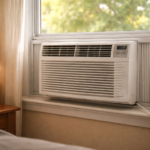
Different air conditioner types exist because cooling needs vary widely across homes and buildings. A window unit, for example, is often sufficient for smaller rooms with limited installation flexibility, while split systems offer better airflow distribution and quieter operation.
Split air conditioners tend to dominate modern residential setups because they separate the compressor from the indoor unit. This reduces noise indoors and improves cooling consistency. I’ve seen many users switch from window units to split systems simply because of comfort differences, not just performance.
Portable units, while convenient, usually serve temporary or supplemental cooling needs. They are useful in rented spaces where installation is restricted, but they often struggle in high-heat environments due to limited exhaust efficiency.
Each system has a purpose, and selecting the right type depends heavily on usage patterns, room layout, and long-term expectations rather than just upfront cost.
Energy Efficiency, Inverter Technology, and Electricity Cost Impact

Energy efficiency is one of the most important long-term factors in air conditioner selection. A unit with lower upfront cost can easily become expensive over time if it consumes more electricity per hour of operation.
Inverter technology has significantly changed the way modern ACs operate. Instead of constantly turning on and off, inverter compressors adjust their speed based on temperature needs. This leads to smoother performance and reduced power consumption, especially during long usage periods.
In my experience reviewing household energy usage patterns, inverter ACs consistently reduce electricity spikes during peak summer months. While the initial investment is higher, the monthly savings often balance out over time.
Efficiency ratings like EER or seasonal energy efficiency indicators help compare models objectively. These numbers are not just technical labels—they directly translate into real electricity bills and long-term affordability.
Cooling Capacity, BTU Ratings, and Proper Sizing Decisions
Cooling capacity is where most buying mistakes happen. A unit that is too small will struggle constantly, while an oversized unit will cool too quickly without properly removing humidity, leading to uncomfortable room conditions.
BTU rating or tonnage is used to measure cooling power, but it must be matched carefully with room size. A small bedroom does not require the same capacity as a large hall or open-plan living space.
I’ve seen cases where users installed high-capacity ACs thinking they would cool faster, but instead experienced uneven temperature control and frequent cycling. This not only affects comfort but also increases wear on internal components.
Proper sizing ensures balance. The goal is not maximum power, but consistent, efficient cooling that matches the room’s thermal load.
Installation Environment, Airflow, and Maintenance Realities
Even the best air conditioner performs poorly if installation is not optimized. Outdoor unit placement, airflow clearance, and indoor positioning all affect cooling efficiency more than most people realize.
In tightly enclosed spaces, restricted airflow forces the system to work harder. This increases energy consumption and reduces long-term durability. Proper ventilation around the outdoor unit is equally important to ensure heat is released efficiently.
Maintenance is another critical factor often ignored during purchase decisions. Dust accumulation, clogged filters, and neglected servicing gradually reduce cooling performance. I’ve seen systems lose significant efficiency simply due to poor maintenance habits.
A well-installed and regularly maintained unit often outperforms a higher-end model that is poorly managed. Longevity depends as much on care as it does on initial quality.
Budget Planning, Brand Reliability, and Long-Term Value
Budget decisions should never focus only on purchase price. A cheaper air conditioner that consumes more electricity or requires frequent repairs often becomes more expensive over time than a premium model.
Brand reliability plays a major role in service availability, spare parts, and long-term durability. Well-established manufacturers tend to offer better warranty support and more stable performance across seasons.
In real-world usage, the true value of an air conditioner becomes clear after one or two summers. Consistency, quiet operation, and energy stability matter more than marketing specifications at the time of purchase.
Thinking in terms of total ownership cost rather than initial price leads to better long-term satisfaction and fewer regrets after installation.
Final Thoughts and Practical Takeaways
Choosing the right air conditioner becomes much easier when the decision is based on environment, capacity, efficiency, and long-term usage instead of brand hype or price alone. Every room has a unique cooling requirement, and matching the system to that requirement is what creates real comfort.
The smartest approach is to first understand your space, then evaluate AC types, efficiency levels, and installation conditions before making a final choice. When all these elements align, cooling becomes consistent, energy bills stay controlled, and maintenance issues reduce significantly.
A well-chosen system does more than cool a room—it creates stable comfort for years while keeping operational costs predictable and manageable.