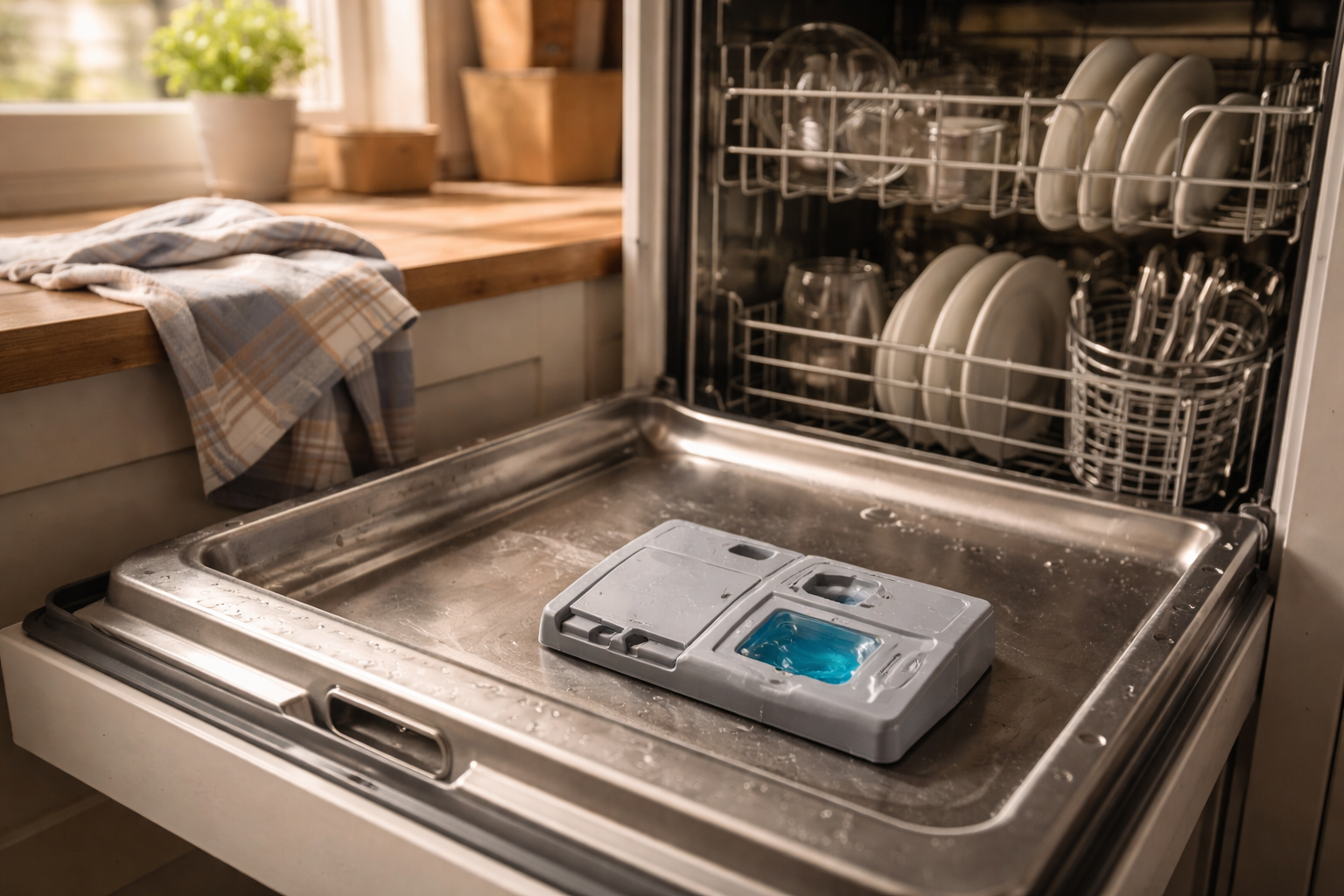
Ever pulled your glasses out of the dishwasher only to find them covered in cloudy spots or streaks? I used to think my dishwasher was failing—until I discovered the secret most people overlook: rinse aid. It sounds like an optional extra, but trust me, it can completely transform your results!
So, what is a dishwasher rinse aid, and why does it matter so much? In simple terms, it’s a liquid solution designed to improve drying, reduce water spots, and leave your dishes looking spotless. But there’s more to it than that. From enhancing water flow to preventing mineral deposits, rinse aid plays a critical role in modern dishwashing.
In this guide, I’ll break everything down in a clear, practical way. You’ll learn how rinse aid works, when to use it, common mistakes people make, and whether it’s truly necessary. If you want sparkling dishes without frustration, you’re in the right place—let’s dive in!
What Is a Dishwasher Rinse Aid and How Does It Work?
A dishwasher rinse aid is a specially formulated liquid that helps water slide off dishes during the final rinse cycle. When I first learned about it, I assumed it was just another marketing gimmick. But after trying it myself, the difference was obvious—glassware came out crystal clear instead of dull and streaky.
The science behind rinse aid is surprisingly simple. It reduces the surface tension of water, allowing it to sheet off dishes rather than forming droplets. Those droplets are what leave behind mineral deposits and spots when they dry. By eliminating them, rinse aid ensures a cleaner, more polished finish.
Another important function is improving drying performance. Dishwashers rely on heat and evaporation, but without rinse aid, water tends to cling to surfaces. This is why plastic items often come out wet. With rinse aid, even those tricky materials dry more effectively, making your overall dishwashing experience much smoother.
Why You Need Rinse Aid for Spotless Dishes

I used to think detergent alone was enough. After all, it cleans the dishes—so what else could be necessary? But over time, I noticed a pattern: no matter how good the detergent was, my dishes still had water spots, especially in areas with hard water.
Rinse aid addresses a completely different problem than detergent. While detergent removes food and grease, rinse aid focuses on the drying stage. Without it, minerals like calcium and magnesium remain behind, leaving visible residue. Once I started using rinse aid regularly, those annoying spots disappeared almost overnight.
Another benefit is improved shine. Plates, glasses, and cutlery look brighter and cleaner when rinse aid is used. It’s one of those small additions that makes a big visual difference. If you care about presentation—especially when hosting guests—it’s absolutely worth it.
When Should You Use Dishwasher Rinse Aid?
In my experience, rinse aid is most useful if you live in an area with hard water. Hard water contains higher levels of minerals, which increases the chances of spotting and streaking. If you’ve ever noticed a chalky film on your dishes, that’s a clear sign you could benefit from rinse aid.
Even in soft water areas, rinse aid can still improve drying performance. Modern dishwashers are designed to be energy-efficient, which often means lower drying temperatures. Rinse aid compensates for this by helping water evaporate more quickly.
You don’t necessarily need to use rinse aid with every wash, but most dishwashers have a built-in dispenser that automatically releases it during cycles. I personally prefer keeping it filled at all times—it’s one less thing to think about, and the results are consistently better.
How to Know If You Need More Rinse Aid
A simple way to tell is by checking your dishes after a cycle. If you see spots, streaks, or leftover moisture, it’s likely time to refill. Many dishwashers also have indicator lights that alert you when rinse aid levels are low.
How to Use Rinse Aid Correctly
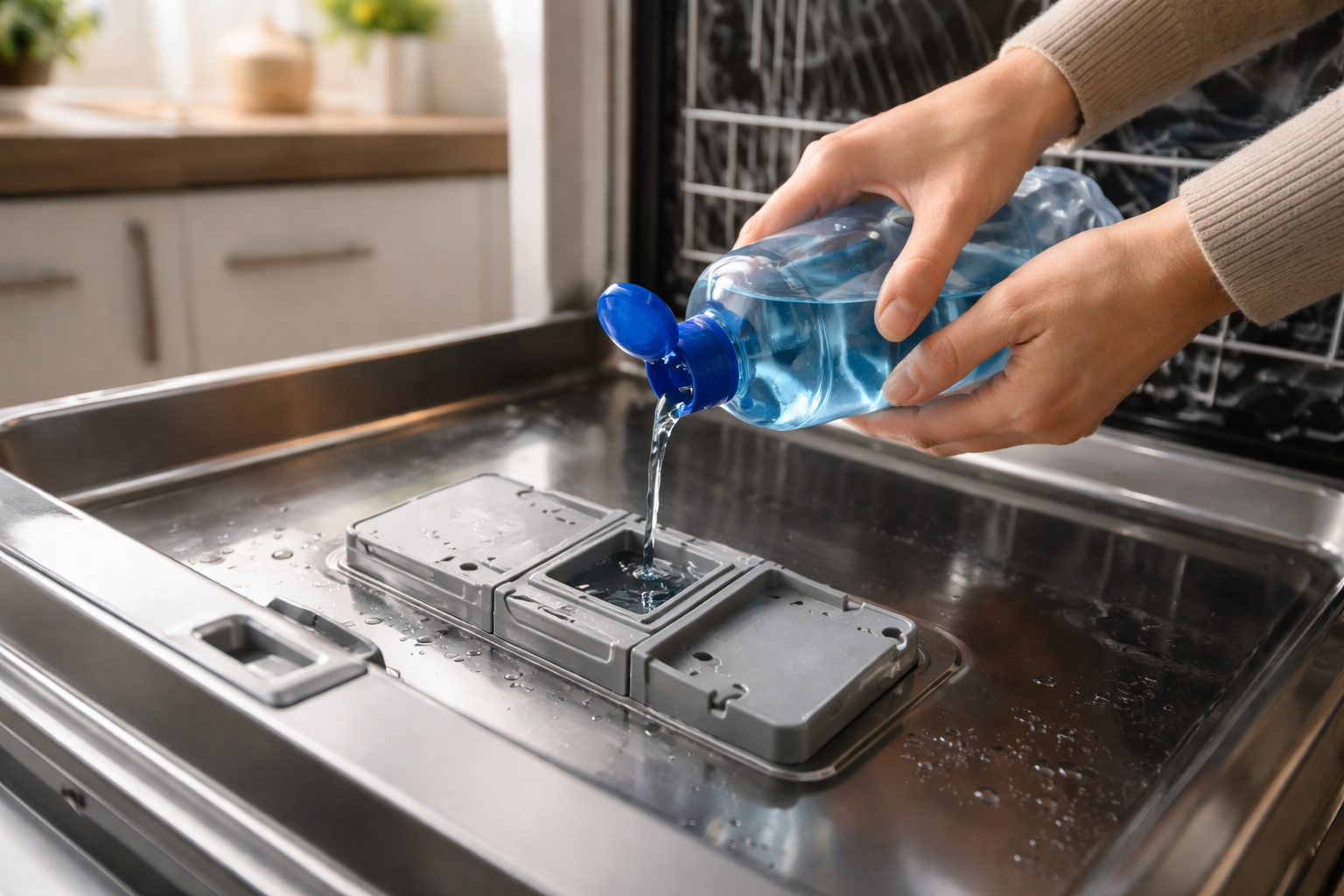
Using rinse aid is straightforward, but there are a few details that can make a big difference. The first time I used it, I accidentally overfilled the dispenser, which caused excessive foaming. Lesson learned—always follow the fill line indicated in your dishwasher.
The dispenser is usually located on the inside of the dishwasher door, next to the detergent compartment. Once filled, the machine automatically releases the right amount during each cycle. You can also adjust the dosage settings depending on your water hardness and results.
Consistency is key. If you use rinse aid sporadically, you may not notice its full benefits. Keeping the dispenser filled ensures that every cycle delivers optimal drying and shine. It’s a small habit that pays off over time.
Common Mistakes People Make with Rinse Aid
One of the biggest mistakes I see is confusing rinse aid with detergent. They serve completely different purposes, and using one doesn’t replace the other. Skipping rinse aid while expecting spotless dishes is a common frustration point.
Another mistake is using too much or too little. Too much rinse aid can leave a bluish film on dishes, while too little won’t prevent spotting effectively. Finding the right balance may take a bit of trial and error, but once you dial it in, the results are consistent.
People also tend to ignore their dishwasher’s settings. Many models allow you to adjust rinse aid levels, but this feature often goes unused. Taking a few minutes to fine-tune these settings can significantly improve performance.
Rinse Aid vs Dishwasher Detergent: What’s the Difference?
It’s easy to assume that rinse aid and detergent do the same thing, but they actually complement each other. Detergent is responsible for breaking down grease, food particles, and stains during the wash cycle. Without it, your dishes simply wouldn’t get clean.
Rinse aid, on the other hand, works during the final rinse. Its role is not to clean but to enhance drying and prevent residue. I like to think of detergent as the cleaner and rinse aid as the finisher—it gives your dishes that polished, professional look.
Using both together creates a complete dishwashing system. When I switched to this approach, the improvement was immediate. Cleaner dishes, better drying, and no more frustrating spots—it’s a combination that just works.
Is Rinse Aid Safe and Eco-Friendly?
This is a question I had myself before using rinse aid regularly. Most commercial rinse aids are safe when used as directed, but some people prefer eco-friendly or natural alternatives. Fortunately, there are biodegradable options available that deliver similar results.
If you’re concerned about chemicals, you can also experiment with alternatives like vinegar. I’ve tried it myself, and while it can reduce spotting to some extent, it doesn’t match the performance of a dedicated rinse aid. Still, it’s a viable option for those seeking a more natural approach.
Ultimately, the choice comes down to your priorities. If you want maximum performance and convenience, traditional rinse aid is hard to beat. If sustainability is your focus, eco-friendly options provide a balanced solution.
Final Thoughts: Getting the Best Results from Your Dishwasher
Rinse aid might seem like a small detail, but it has a big impact. Understanding what is a dishwasher rinse aid and how it works can completely change your dishwashing results. No more cloudy glasses. No more water spots. Just clean, shiny dishes every time.
The key is consistency. Use it regularly, adjust settings if needed, and pay attention to how your dishes look after each cycle. Over time, you’ll find the perfect balance for your home. If you’ve been skipping rinse aid, now’s the time to give it a try—you might be surprised at how much of a difference it makes!