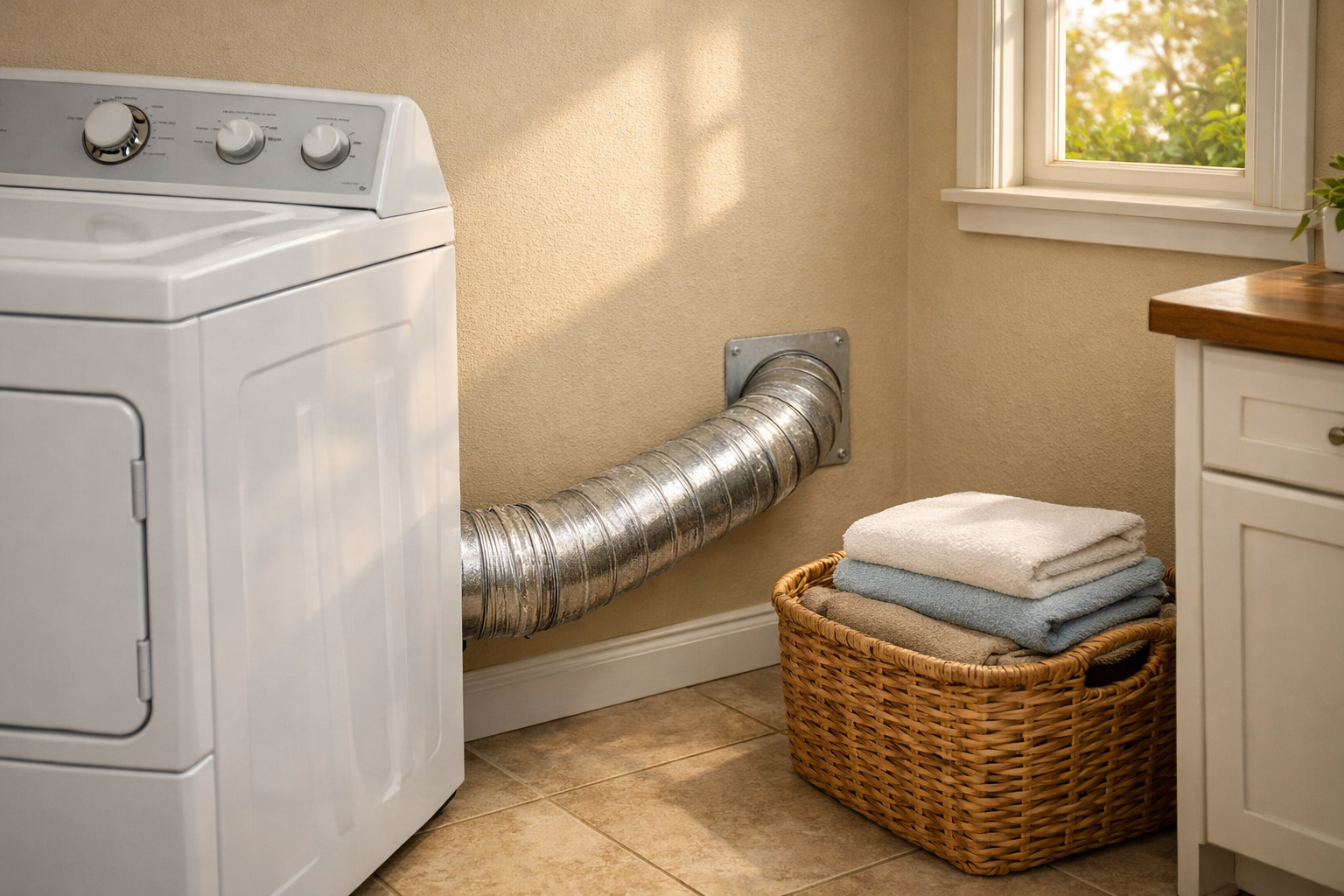
Did you know that a dryer vent that’s too long can quietly turn into a fire hazard? Most homeowners never think about vent length—until clothes take two cycles to dry or a home inspector flags an issue.
I’ve seen this happen more times than I can count. Someone relocates a laundry room, adds a few elbows, runs ducting through an attic or crawlspace, and suddenly airflow drops. Lint builds up. The dryer overheats. That’s when the real questions start: how far can a dryer vent be run without causing performance or safety problems?
The answer isn’t just a number. It depends on duct material, elbow count, blower strength, and building code requirements. In this guide, I’ll break down maximum vent length, how bends reduce allowable distance, when booster fans are allowed, and how to design a safe, efficient exhaust system that passes inspection and dries clothes properly. Let’s clear this up once and for all.
What Is the Maximum Dryer Vent Length Allowed?
Most residential building codes in the United States follow guidelines from the International Code Council under the International Residential Code. According to these standards, the maximum recommended dryer vent length is typically 35 feet from the dryer to the exterior termination point.
That 35-foot number assumes ideal conditions. It applies only to smooth, rigid metal duct with minimal restrictions. Many people think that number is flexible. It’s not. It’s calculated based on airflow resistance and lint accumulation risk.
Some dryer manufacturers publish their own venting charts inside installation manuals. Those charts can override general code if they specify shorter limits. I always tell homeowners to check both the code and the manufacturer’s documentation. The stricter rule wins.
If you exceed the maximum vent length, you risk reduced airflow, overheating, longer drying times, and potential code violations during resale inspections.
How Elbows and Bends Reduce Allowed Distance
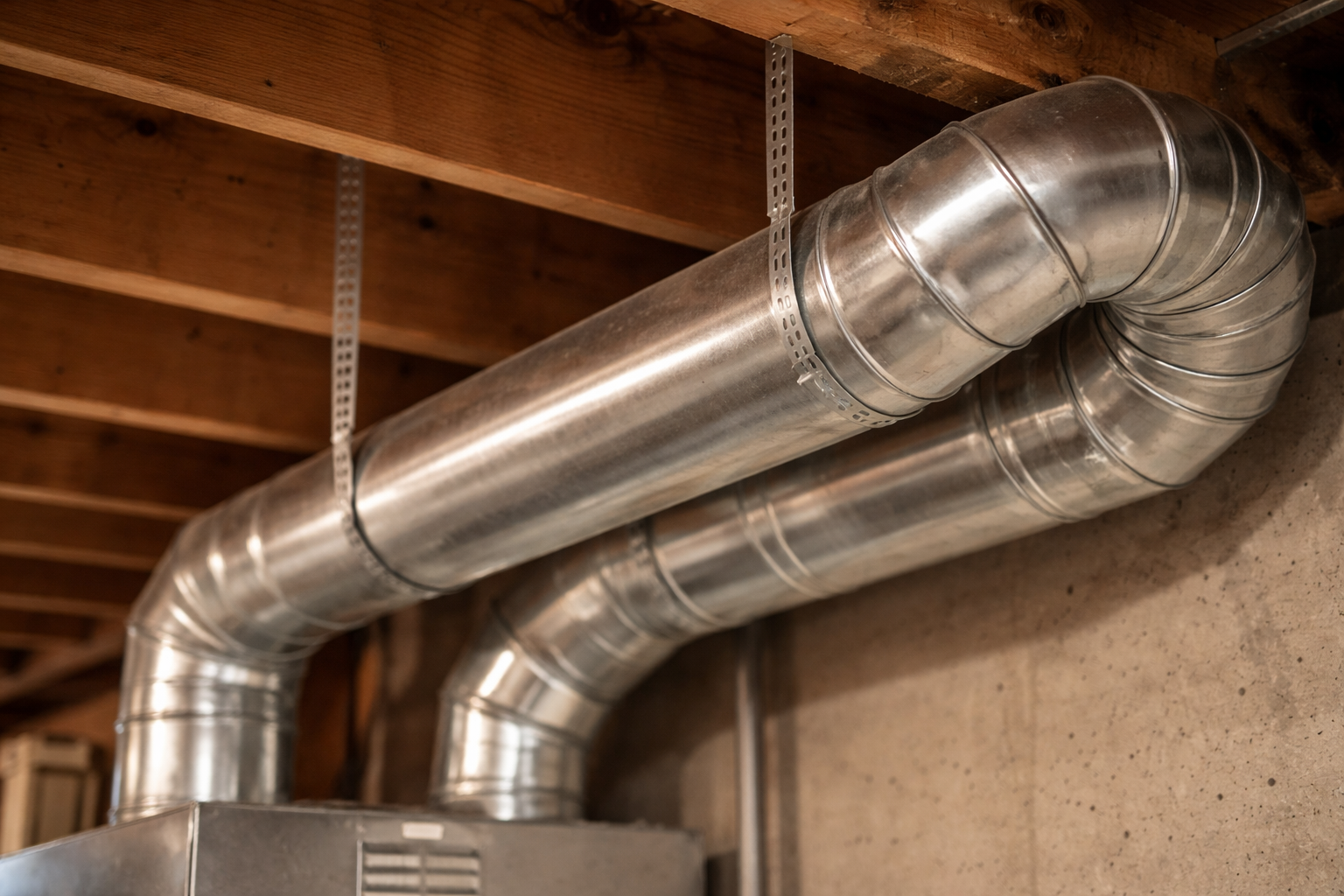
Here’s the part most people miss: every bend in the duct reduces the total allowable length. A straight 35-foot run is rarely what you actually get in a home.
Each 90-degree elbow typically subtracts 5 feet from the total allowed length. A 45-degree bend may subtract around 2.5 feet. So if your dryer vent includes two 90-degree turns, your maximum straight distance drops from 35 feet to 25 feet.
I once evaluated a home where the vent ran 28 feet but included three sharp elbows. The homeowner assumed they were under the limit. Technically, they were far over once deductions were applied. The dryer was overheating, and clothes required two cycles to dry.
Sharp turns slow airflow dramatically. Air carrying lint needs smooth, unobstructed pathways. Every bend increases friction, turbulence, and lint buildup. That’s why vent routing design matters as much as total distance.
Why Dryer Vent Length Matters for Safety
Dryer vents don’t just move warm air. They carry lint, which is highly combustible. According to the National Fire Protection Association, clogged dryer vents are a leading cause of home dryer fires.
When a vent run is too long, airflow weakens. Weak airflow means lint settles instead of exiting the system. Over time, that buildup restricts the duct even more. It’s a compounding problem.
Long vents also trap heat. When the dryer’s heating element works harder to compensate for poor exhaust flow, internal temperatures rise. Thermal limit switches may shut the dryer off, but that’s a warning sign—not a solution.
Safety isn’t theoretical here. A poorly designed 40-foot vent run can increase fire risk significantly. Staying within length limits protects both your appliance and your home.
Can You Run a Dryer Vent Through an Attic or Crawlspace?
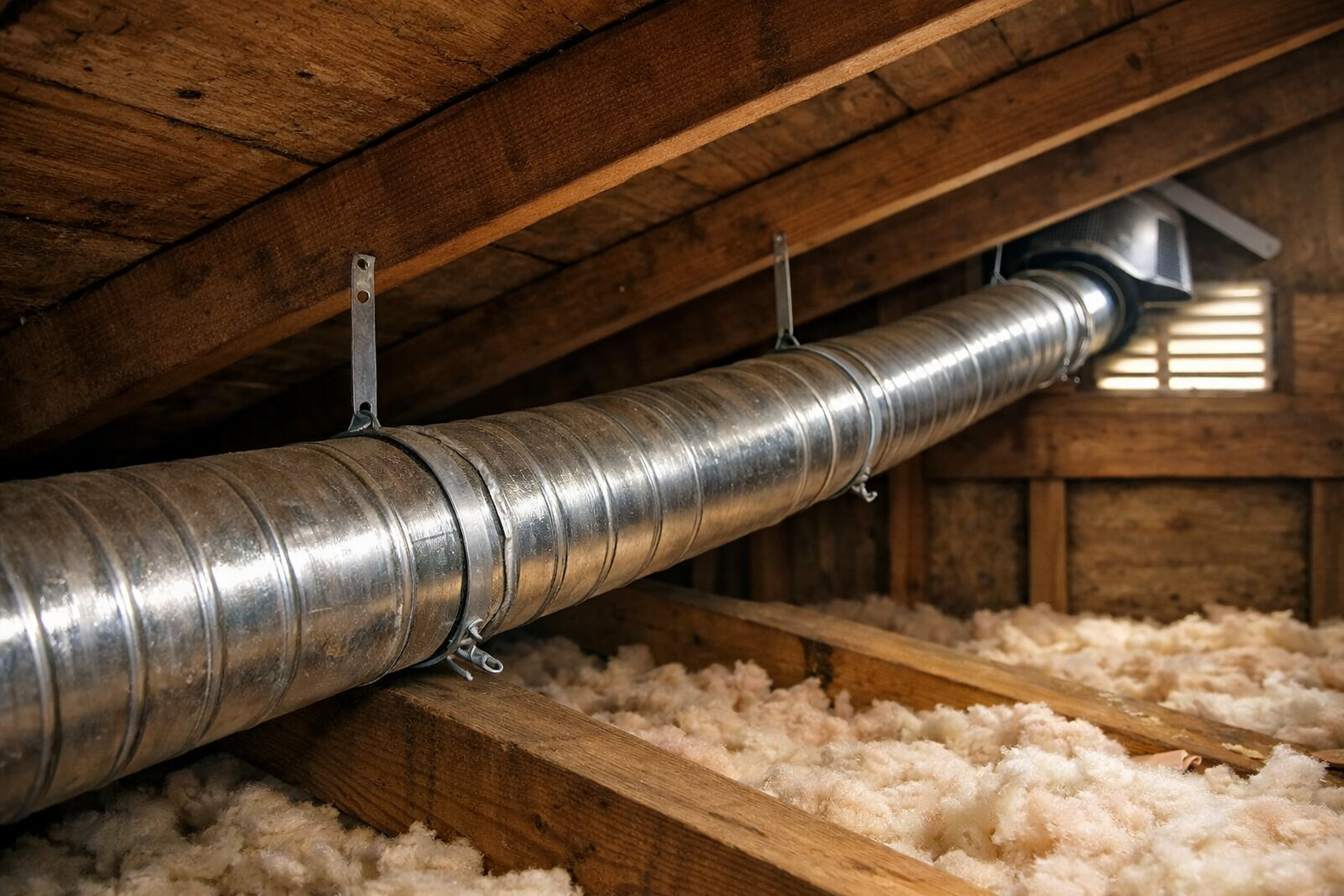
Yes, but it must be done correctly. Running a dryer vent through an attic or crawlspace is common when the laundry room sits in the middle of a house. However, distance often increases in these scenarios.
Attic runs introduce temperature differences. Warm, moist exhaust air entering a cold attic can cause condensation inside the duct. That moisture mixes with lint and creates clogs. The longer the run, the worse this becomes.
Crawlspaces present similar issues. If the duct sags even slightly, water can collect in low spots. Over time, that reduces airflow and accelerates blockage.
When venting through these spaces, rigid metal ducting with proper support every few feet is critical. The duct should slope slightly toward the exterior termination to prevent condensation pooling. Length calculations still apply regardless of routing location.
What If You Need a Longer Dryer Vent Run?
Sometimes relocation or remodeling makes a longer run unavoidable. In these cases, a dryer booster fan may be considered. These inline fans are designed to assist airflow when vent length exceeds code limits.
However, booster fans are not a free pass to ignore design principles. They must be listed and approved for dryer use. Installation must follow manufacturer instructions precisely. Some jurisdictions require permits for powered vent systems.
Even with a booster fan, the duct should remain rigid metal with minimal bends. I’ve seen DIY installations where flexible foil duct was used alongside a booster fan. That defeats the purpose entirely.
Before installing a booster, consult both the dryer manufacturer and local building authority. In many cases, re-routing the vent to shorten the run is safer and more reliable long term.
Signs Your Dryer Vent Is Too Long
The most common symptom is extended drying time. If clothes remain damp after a normal cycle, airflow may be restricted. Many homeowners assume the heating element is failing, but vent length is often the hidden culprit.
Another sign is excessive heat in the laundry room. Poor exhaust flow forces heat back into the space. You might also notice a burning smell or the dryer shutting off mid-cycle.
Lint accumulation around the exterior vent cap is another clue. If lint isn’t being expelled efficiently, it may collect near the termination hood.
When I inspect homes, I often measure vent length physically rather than guessing. You’d be surprised how often actual runs exceed code once elbows and hidden routing are accounted for.
Best Practices for Designing a Safe Dryer Vent Run
Keep the run as short and straight as possible. That’s the golden rule. Position the dryer near an exterior wall if feasible. Every foot matters.
Use rigid metal duct with a smooth interior surface. Avoid plastic or flexible foil ducts for permanent installations. Secure joints with foil tape rather than screws, which can trap lint inside the duct.
Support the duct properly to prevent sagging. Ensure the exterior termination includes a backdraft damper and is not screened, as screens trap lint.
A well-designed 20-foot straight run will outperform a poorly designed 30-foot run every time. Good airflow equals efficiency, safety, and lower utility bills.
Conclusion
So, how far can a dryer vent be run? In most residential situations, 35 feet is the maximum starting point—but elbows, routing, and duct material quickly reduce that allowance. The real answer depends on airflow resistance, code compliance, and manufacturer guidelines.
Longer runs increase fire risk, reduce efficiency, and strain your dryer. Shorter, straighter, rigid metal ducts always perform better. If your layout demands extra distance, consider redesigning the route before relying on booster fans.
Dryer vents may seem simple, but they play a major role in home safety. Get the length right, and your dryer will run cooler, safer, and more efficiently for years to come.