Black mold hiding inside a dishwasher sounds ironic, doesn’t it? The very machine meant to clean your dishes can quietly become a breeding ground for mold and bacteria. It’s more common than people think. Moisture, food particles, and dark interior spaces create the perfect environment for mold growth — especially around seals, filters, and spray arms.
I discovered this myself when a strange musty smell started coming from my dishwasher. At first, I blamed dirty dishes or leftover food. But after opening the door and inspecting the rubber gasket, I spotted it — dark, slimy patches of black mold forming around the edges. Not exactly what you want near plates and utensils!
If you’re wondering how to get rid of black mold in dishwasher appliances, the good news is that most cases can be fixed with a thorough cleaning and a few smart maintenance habits. In this guide, I’ll walk you through the causes of mold growth, safe cleaning methods, natural disinfectants like vinegar and baking soda, and long-term prevention strategies that keep your dishwasher fresh and hygienic.
Why Black Mold Grows Inside Dishwashers
Dishwashers may use hot water and detergent, but they are still highly vulnerable to mold growth. The reason is simple: mold thrives in warm, moist environments with access to organic material. A dishwasher provides all three.
After each wash cycle, small amounts of water remain in hidden areas such as the door gasket, filter housing, and spray arm channels. When these areas stay damp for long periods, mold spores can settle and begin growing. The dark interior of the appliance only accelerates the process.
Another common factor is food residue. Even with modern filtration systems, small particles of food often collect in the filter or drain area. Over time these particles break down and provide nutrients for mold colonies.
I once helped a friend diagnose a persistent odor in their kitchen. They cleaned dishes regularly and assumed the dishwasher was self-cleaning. But when we removed the filter, we found a layer of trapped debris and black mold forming beneath it. Once cleaned properly, the smell disappeared almost instantly.
Poor ventilation can also contribute to mold development. If the dishwasher door stays closed immediately after a wash cycle, trapped steam creates a humid microclimate that mold loves.
Signs Your Dishwasher Has Black Mold
The first clue most people notice is a strong musty smell. The odor is often similar to damp basements or wet laundry that has been left sitting too long.
Sometimes the smell appears even when the dishwasher is empty. That’s usually a sign that mold has developed somewhere inside the appliance rather than on the dishes themselves.
Visual signs are another indicator. Black mold often appears as dark patches or slimy spots along the rubber door gasket, around the detergent dispenser, or inside the filter compartment. These areas collect moisture and residue, making them prime locations for mold growth.
In some cases, you may also see cloudy residue on dishes or glasses after a cycle. This doesn’t always mean mold is present, but it can signal poor dishwasher hygiene and buildup inside the machine.
Ignoring these signs allows mold colonies to spread deeper into hidden components. Acting quickly prevents both odor problems and potential contamination.
Step-by-Step Method to Remove Black Mold
Removing mold from a dishwasher requires more than running a quick wash cycle. You need to clean the internal components where mold typically hides.
Inspect and Remove the Dishwasher Filter
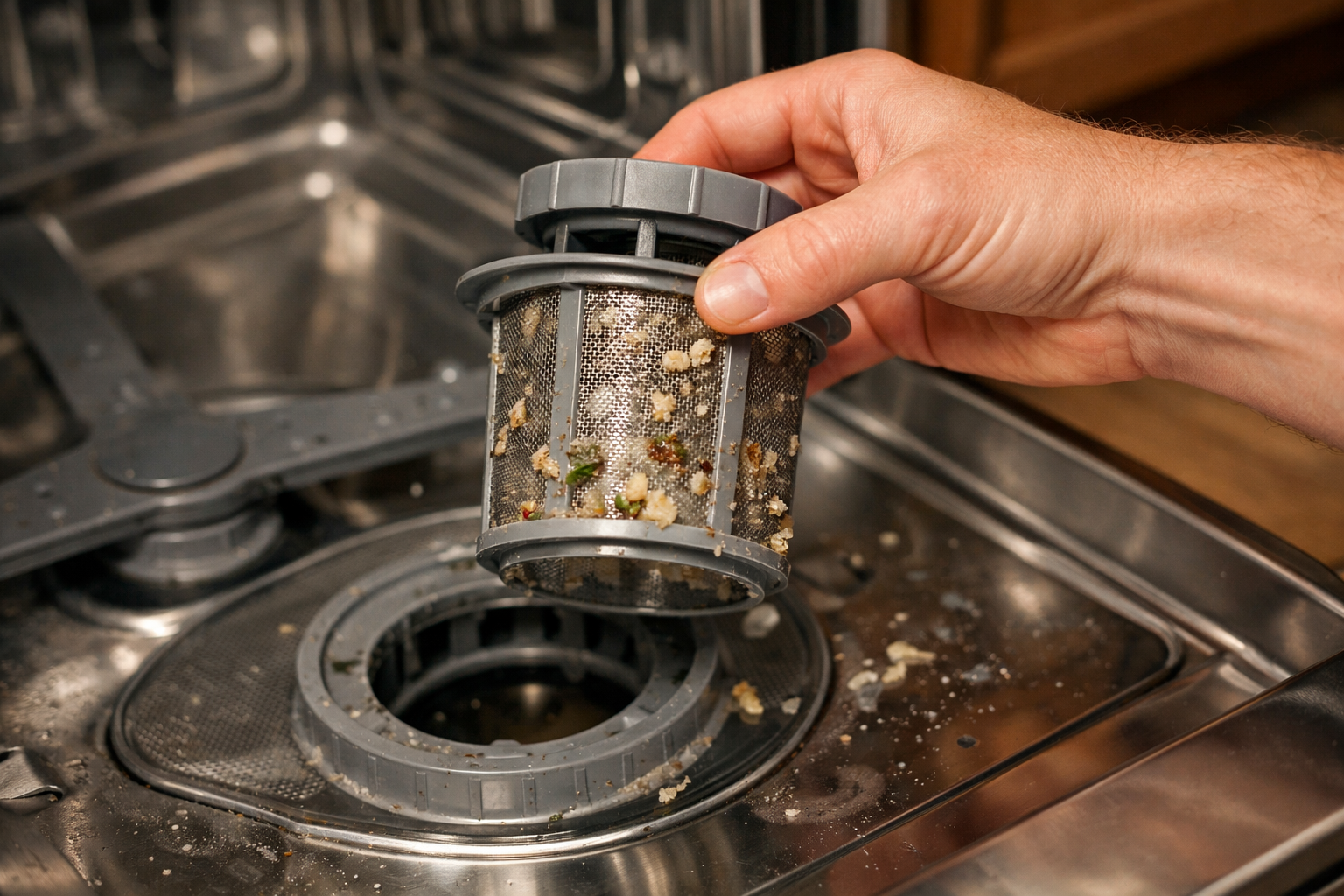
Start by locating the dishwasher filter, usually found at the bottom of the appliance near the spray arm. Remove it carefully and rinse it under warm running water.
Use a soft brush or toothbrush to scrub away trapped food particles and residue. Mold frequently grows on the filter because it collects organic debris.
When I cleaned my dishwasher filter for the first time, I was surprised by how much buildup had accumulated there. A quick rinse made a noticeable difference in odor.
Clean the Rubber Door Gasket
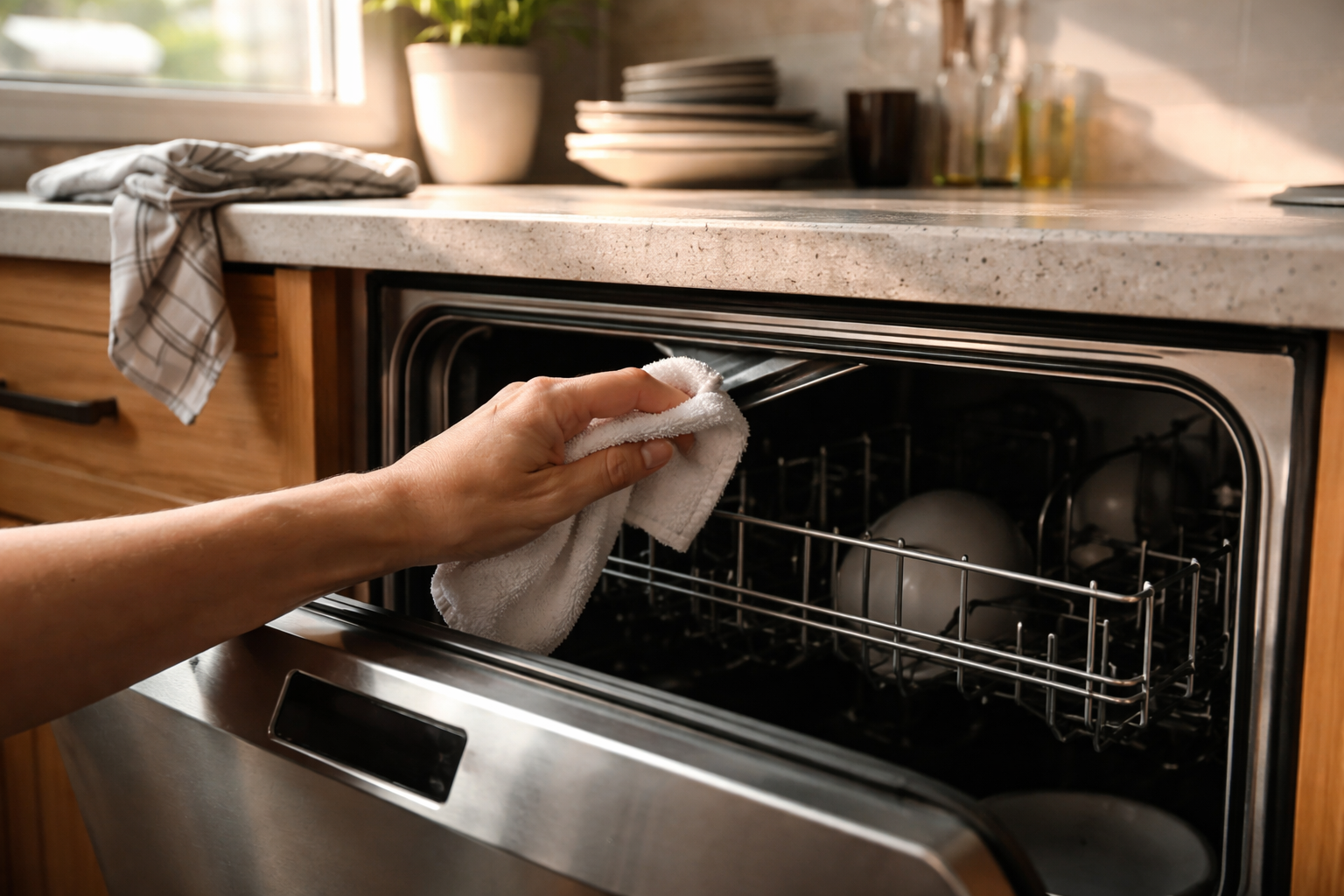
The rubber seal around the dishwasher door is one of the most common places for black mold to grow.
Use a cloth or sponge dipped in white vinegar to wipe the gasket thoroughly. Pay attention to folds and creases where moisture collects. Mold often hides in these small spaces.
If the buildup is heavy, a soft brush helps remove stubborn patches without damaging the rubber material.
Run a Vinegar Cleaning Cycle
Place a cup of white vinegar in a dishwasher-safe container on the top rack. Run a hot water cycle with the dishwasher empty.
Vinegar helps break down grease, soap residue, and mild mold buildup inside internal components. It also neutralizes unpleasant odors.
Use Baking Soda for Deodorizing
After the vinegar cycle finishes, sprinkle a small amount of baking soda across the bottom of the dishwasher and run a short hot cycle.
Baking soda helps absorb odors and leaves the dishwasher smelling fresh.
Natural vs Chemical Mold Cleaning Solutions
Many homeowners prefer natural cleaning solutions when dealing with mold inside kitchen appliances. Vinegar and baking soda are popular choices because they are non-toxic and safe around dishes.
Vinegar contains acetic acid, which has mild antifungal properties. It works well for light mold growth and routine cleaning. Baking soda complements vinegar by neutralizing odors and loosening grime.
However, severe mold infestations may require stronger solutions. Some appliance experts recommend diluted bleach or specialized dishwasher cleaners designed to eliminate bacteria and mold spores.
If you choose chemical cleaners, always follow manufacturer instructions carefully. Mixing certain chemicals, especially bleach and vinegar, can create harmful fumes.
In my experience, regular maintenance with natural cleaners prevents most mold problems before they become serious.
Preventing Mold From Returning

Once you remove mold from your dishwasher, preventing future growth becomes the priority.
One simple habit makes a big difference: leave the dishwasher door slightly open after each wash cycle. This allows steam and moisture to escape rather than remaining trapped inside.
Regular filter cleaning is another key practice. Checking the filter every few weeks prevents food buildup that can feed mold growth.
Using the dishwasher frequently also helps. Surprisingly, machines that sit unused for long periods are more likely to develop mold because stagnant water remains inside the system.
Another effective habit is running a monthly cleaning cycle with vinegar or a dishwasher cleaner. This routine maintenance keeps internal parts free of residue and odors.
When Mold Means a Bigger Dishwasher Problem
Sometimes mold growth signals a deeper issue with the appliance.
Persistent mold may indicate clogged drain lines, damaged door seals, or poor drainage inside the dishwasher. When water fails to drain completely, it leaves behind the moisture that mold needs to thrive.
Older dishwashers may also develop mold inside internal hoses or pump components that are difficult to access without professional repair.
If strong mold odors return shortly after cleaning, it may be worth inspecting the drain system or contacting an appliance technician.
Replacing worn door gaskets or filters can also solve recurring mold problems in some cases.
Conclusion
Learning how to get rid of black mold in dishwasher appliances is essential for maintaining a clean and healthy kitchen. Mold growth may seem alarming, but most cases are caused by simple factors like trapped moisture, food debris, and poor ventilation.
By cleaning the filter, wiping the door gasket, and running vinegar cleaning cycles, you can eliminate most mold buildup quickly and safely. Regular maintenance habits — especially allowing the dishwasher to dry properly after each cycle — help prevent mold from returning.
In my experience, a dishwasher that receives occasional deep cleaning stays odor-free and performs far better. With a little attention and routine care, your dishwasher can remain the hygienic cleaning machine it was designed to be.