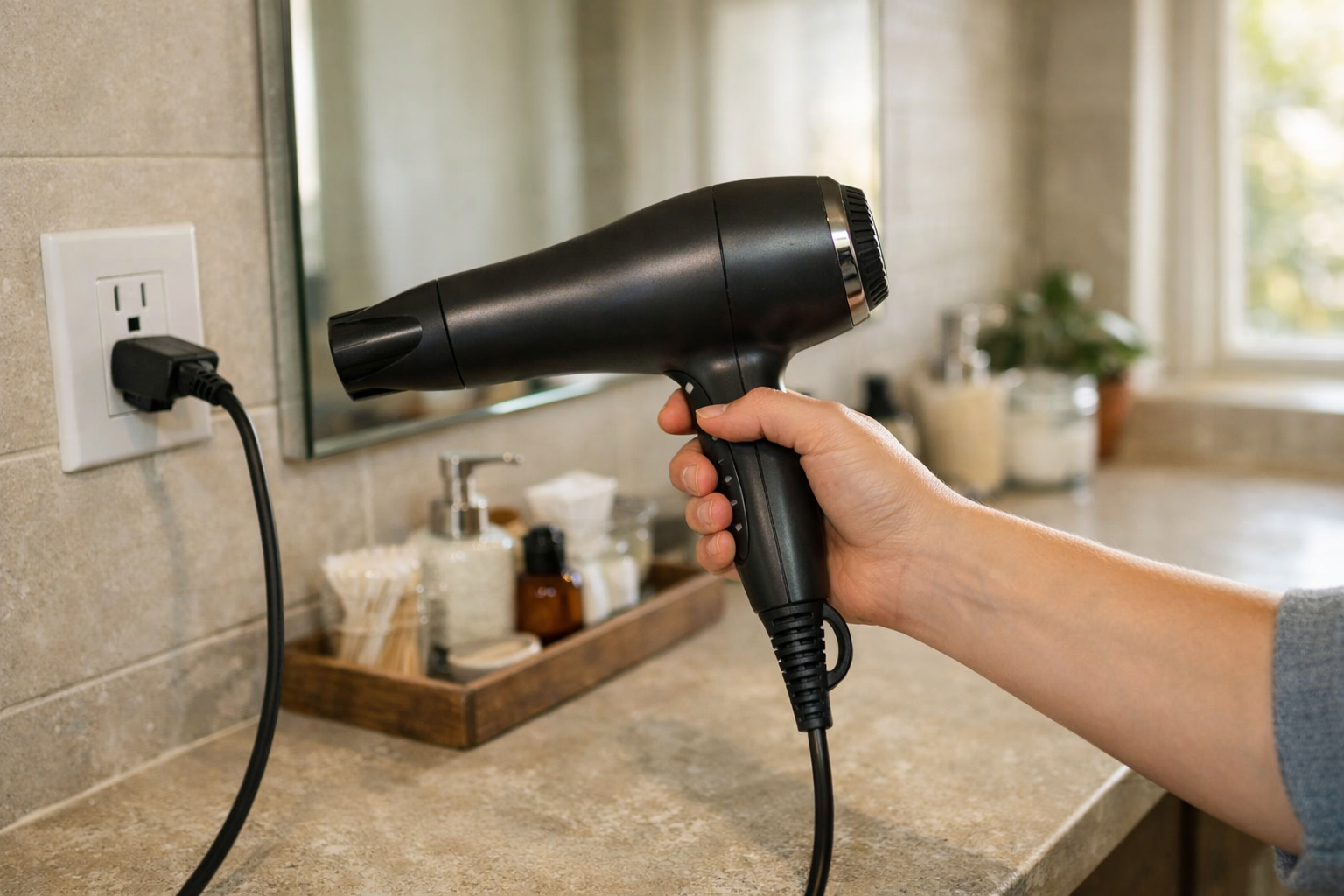
Did you know that a hair dryer can draw enough electricity to trip a circuit if multiple devices are running at once? Many of us underestimate the power these everyday tools consume! When I first started researching household appliances, I was surprised at how much variation exists in hair dryer amps depending on wattage, heat settings, and motor type.
Understanding how many amps a hair dryer uses isn’t just about numbers—it’s crucial for safe operation, preventing blown fuses, and avoiding electrical hazards. In this guide, I’ll break down the relationship between amps, watts, and volts, explain how different dryers compare, and give practical tips to safely use your hair dryer at home. We’ll also explore high-wattage models, dual-voltage options, and common mistakes that can lead to overheating or tripped breakers. By the end, you’ll know exactly what your hair dryer is pulling from your home circuit—and how to use it safely.
How Hair Dryers Draw Electricity
A hair dryer’s electricity consumption is measured in amps, which indicate the flow of electrical current. Most household hair dryers operate on a standard 120-volt outlet in the U.S., but the actual amp draw varies widely depending on the wattage. For example, a 1,200-watt dryer typically draws around 10 amps, whereas a 1,875-watt model can pull 15 amps or more.
I remember checking my old salon dryer—it was labeled 1875W at 120V. Doing the math, that’s roughly 15.6 amps! That’s almost the limit of a standard 15-amp household circuit. Running it alongside other appliances like curling irons or straighteners can easily overload the circuit.
It’s important to consider the dryer’s motor type, heat settings, and speed controls. High-speed motors or multiple heat levels increase current draw, which is why some dryers seem to “trip” your circuit faster than others. Understanding these details helps avoid blown fuses and potential hazards.
Amps vs Watts: Understanding the Difference
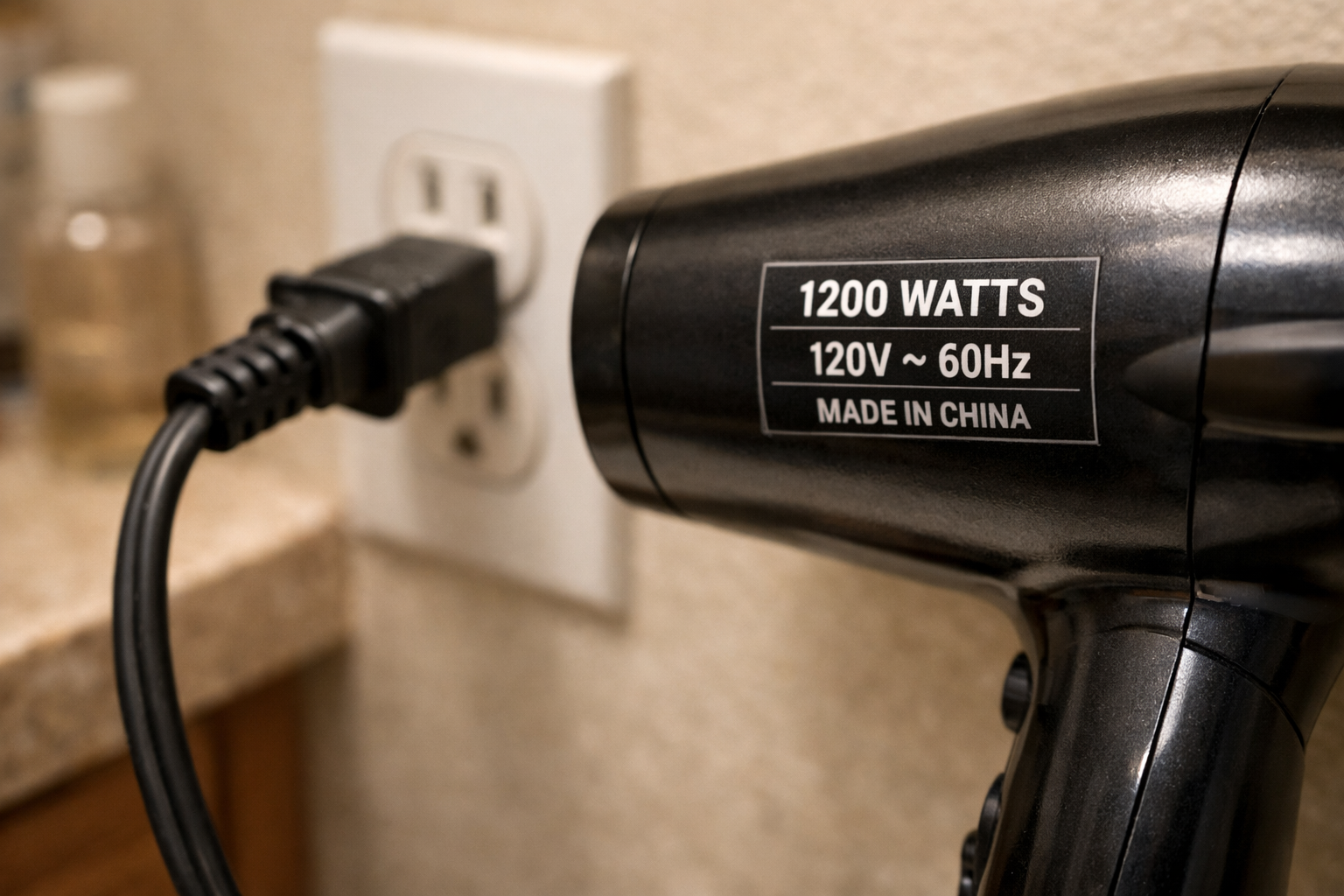
Many people confuse amps and watts, but they’re not the same. Watts measure the total energy consumed, while amps measure the current flowing through the wire. The formula is simple: Amps = Watts ÷ Volts.
For instance, a 1,500-watt dryer at 120 volts draws 12.5 amps. This is critical for homeowners to know because exceeding a circuit’s amp capacity can lead to tripped breakers or electrical fires. I always advise clients to check both the dryer’s label and the circuit rating before buying high-powered tools.
Some newer dryers are dual-voltage, especially travel models. Switching from 120V to 240V halves the amp draw while keeping wattage consistent, which is a clever design to reduce stress on smaller circuits. Knowing these calculations can save you from unnecessary electrical headaches.
Average Amps for Different Hair Dryer Types
Hair dryers come in several types, each with different amp ranges:
Standard home dryers: Usually 1,200–1,875 watts, drawing 10–15 amps. These are most common in U.S. households.
Professional or salon dryers: Often rated 2,000–2,400 watts. Amp draw can reach 16–20 amps, requiring dedicated circuits or commercial wiring. I’ve seen small salons install 20-amp circuits just for multiple high-powered dryers running simultaneously.
Travel or low-watt dryers: Designed for portability and often rated 800–1,000 watts. They draw about 6–8 amps, safe for most outlets but slower at drying hair. These are ideal for short trips or apartments with limited electrical capacity.
Understanding your dryer type ensures you don’t overload circuits and helps plan safe bathroom or salon layouts.
Factors That Affect a Hair Dryer’s Amp Draw
Several variables influence how many amps your hair dryer pulls:
Heat and speed settings: Higher heat settings increase resistance, pulling more amps. I often advise clients to use medium heat when multiple devices share the same outlet.
Motor type: AC motors are heavier-duty and draw more amps than lightweight DC motors. Ionic or ceramic models may have more efficient designs, slightly reducing current draw.
Additional features: Diffusers, concentrator attachments, and built-in sensors don’t add significant amps, but multiple heat modes can increase peak draw temporarily.
Age and wear: Older dryers may draw more amps due to motor inefficiency or lint buildup obstructing airflow. I’ve tested several vintage dryers and noticed they required 10–15% more current than their labeled specs.
Safe Usage Tips to Avoid Overloading Circuits
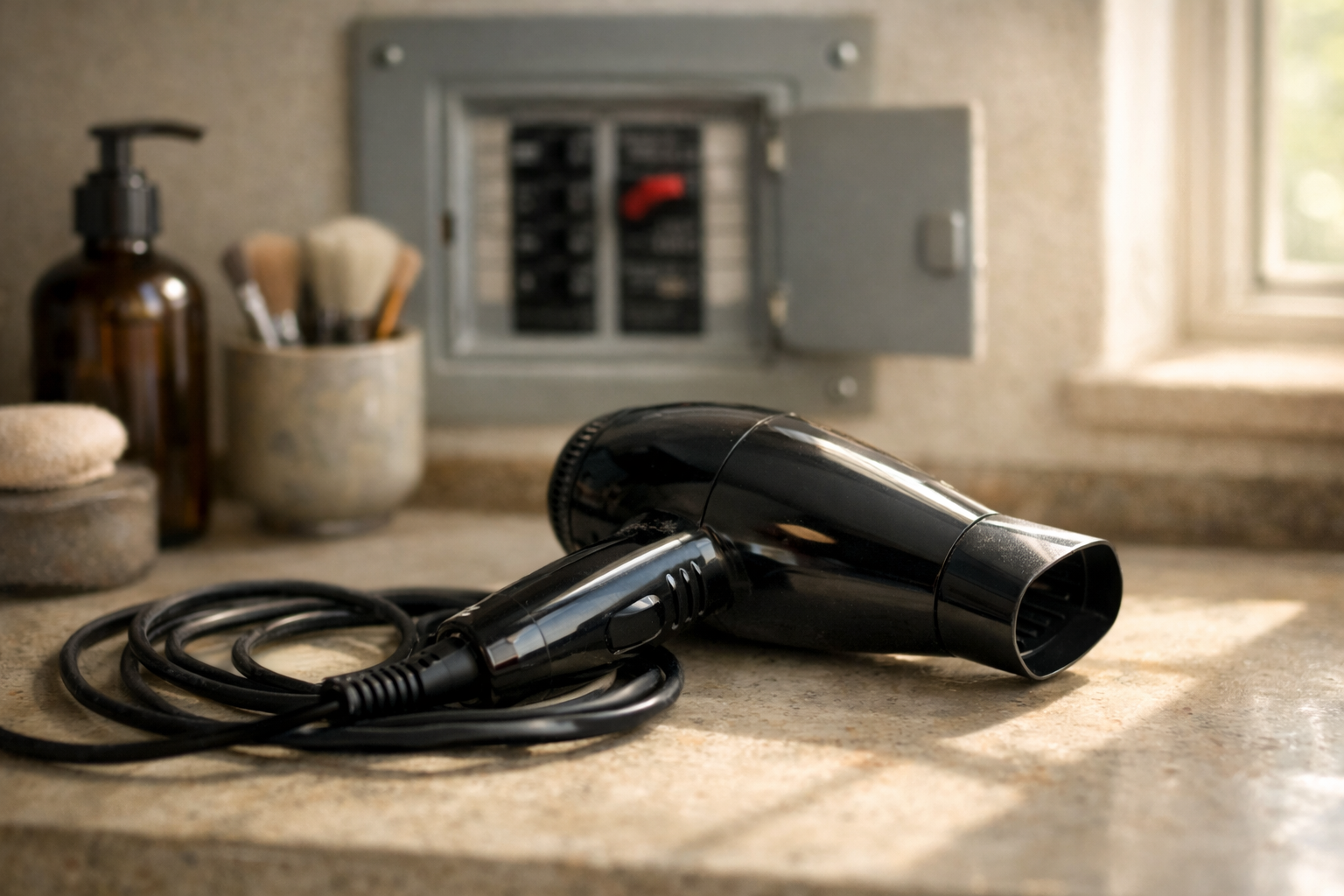
Knowing how many amps a hair dryer uses is only half the story. Safe use matters just as much:
Avoid using multiple high-wattage appliances simultaneously on the same circuit. Running a hair dryer alongside a curling iron and straightener is a common mistake.
Check your circuit rating: Most home bathroom outlets are 15–20 amps. If your dryer draws close to 15 amps, it may trip the breaker if anything else is running.
Install dedicated outlets for high-powered dryers if possible. I often recommend electricians install a dedicated 20-amp outlet for salon-style dryers at home.
Inspect cords and plugs: Damaged wiring increases resistance and heat, causing your dryer to draw more current than normal. Always replace frayed or bent cords immediately.
Travel Hair Dryers and Amp Considerations
Travel hair dryers are designed with lower wattage for convenience. They usually range from 6–8 amps at 120 volts, which keeps them safe for small circuits or hotel outlets.
Dual-voltage models can operate at 120V or 240V, effectively reducing amp draw while maintaining drying power. I often advise travelers to check labels carefully—plugging a 240V dryer into a 120V outlet without a converter can damage the unit or circuit.
Portability often sacrifices drying speed, but the safety and circuit compatibility make travel models ideal for frequent travelers or dorm residents with limited outlets.
Conclusion
Understanding how many amps a hair dryer uses is crucial for safe home and salon use. Most household dryers draw 10–15 amps, while professional units can require 16–20 amps. Factors such as heat settings, motor type, and additional features influence current draw.
By knowing your dryer’s amp requirements and your home circuit capacity, you can prevent tripped breakers, reduce fire risk, and maintain efficient drying. For high-powered or salon-style dryers, consider dedicated outlets or check with a licensed electrician. Small adjustments, like lowering heat settings or avoiding simultaneous appliance use, can make a big difference in safety.