Quick Answer
Your HVAC may not be blowing cold air due to dirty filters, low refrigerant, thermostat issues, or clogged coils.
In many cases, it’s a simple fix—but ignoring it can lead to bigger system damage.
It’s frustrating—you turn on your AC expecting cool air, but instead, you get weak airflow or warm air. It usually happens at the worst time, often during peak summer heat.
The problem isn’t always a major failure. In fact, most cooling issues come from small, overlooked problems like dirty filters or incorrect thermostat settings.
In this guide, I’ll walk you through the most common reasons why your HVAC isn’t blowing cold air, how to identify the issue, and what you can realistically fix yourself before calling a technician.

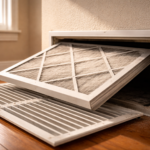
Dirty Air Filter Restricting Airflow
A clogged air filter is one of the most common—and most ignored—reasons your HVAC stops cooling properly. When airflow is blocked, your system can’t push enough cold air into your home.
Example:
A homeowner in a 3-bedroom house didn’t change their filter for 4 months. Result? Airflow dropped significantly, and cooling efficiency decreased by about 20–25%.
Practical tip:
Replace your air filter every 1–3 months, especially during heavy AC use.
Insight:
A dirty filter doesn’t just reduce cooling—it forces your system to work harder, increasing electricity bills and wear on components.
Low Refrigerant Levels (Gas Leak)
If your HVAC is low on refrigerant, it simply can’t produce cold air. This usually means there’s a leak somewhere in the system.
Example:
A system with a slow refrigerant leak may still run, but cooling gradually drops until the air feels barely cool—even when the unit is running constantly.
Practical tip:
If your AC is running but not cooling, and you hear hissing or notice ice on pipes, call a technician immediately.
Insight:
Refrigerant doesn’t get “used up”—if levels are low, there’s always a leak that needs fixing.
Thermostat Issues or Incorrect Settings
Sometimes the problem is simpler than expected—your thermostat may be set incorrectly or malfunctioning.
Example:
A homeowner accidentally left the thermostat on “fan mode” instead of “cool,” causing the system to blow air without cooling it.
Practical tip:
Double-check that your thermostat is set to “Cool” mode and the temperature is set lower than the current room temperature.
Insight:
Dead batteries or calibration issues in thermostats can silently cause cooling problems.
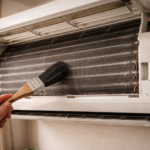
Dirty or Blocked Evaporator & Condenser Coils
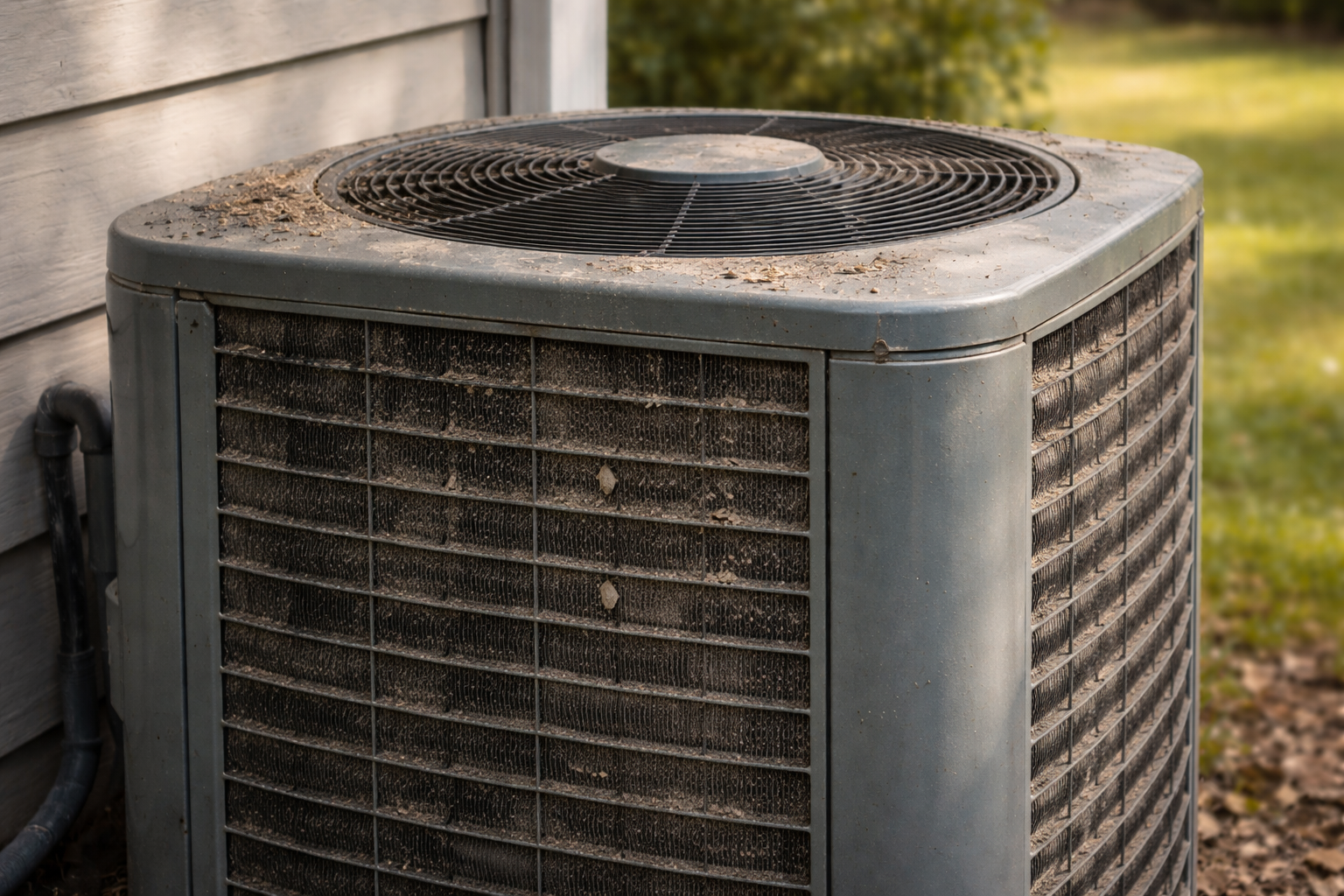
Your system relies on coils to transfer heat. When they’re dirty, heat exchange is reduced, and cooling performance drops.
Example:
A unit with dusty coils can lose up to 30% efficiency, making it feel like the AC isn’t working even though it’s running.
Practical tip:
Schedule coil cleaning at least once a year, especially if you live in a dusty environment.
Insight:
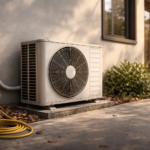
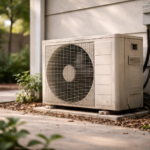
Outdoor coils often collect dirt, leaves, and debris faster than people expect—especially in windy or construction-heavy areas.
Common Mistakes People Make
Many homeowners unintentionally make the situation worse while trying to fix it.
Mistake example:
Continuously lowering the thermostat (like setting it to 16°C) won’t fix cooling—it only forces the system to run longer without solving the root issue.
Common mistakes:
- Ignoring dirty filters
- Not checking thermostat settings
- Running AC with blocked vents
- Skipping routine maintenance
Practical tip:
Before calling a technician, always check the basics first—it saves time and money.
What Most People Don’t Know
Not all “no cold air” problems are mechanical failures—some are airflow-related.
Example:
A system with blocked return vents can’t pull enough air to cool properly, even if everything else is working fine.
Practical tip:
Make sure return vents are not blocked by furniture, curtains, or dust buildup.
Insight:
Airflow issues are often misdiagnosed as system failures, leading to unnecessary repair costs.
When It’s Worth Calling a Technician
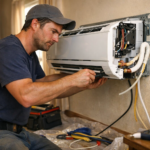
Some issues are DIY-friendly, but others need professional attention.
Call a technician if you notice:
- Refrigerant leaks
- Frozen coils
- Electrical issues
- Weak cooling despite clean filters
Example:
A refrigerant leak repair can cost more if ignored, often turning a $150 fix into a $1,000+ repair if the compressor gets damaged.
Practical tip:
If basic troubleshooting doesn’t fix the issue within a day, don’t wait—get it checked early.
Final Thoughts / Key Takeaways
If your HVAC isn’t blowing cold air, don’t panic. In most cases, the issue is something simple like a dirty filter, incorrect thermostat setting, or blocked airflow.
Start with the basics—check your filter, inspect your thermostat, and make sure vents are open. These small checks solve a surprising number of cooling problems.
If the issue continues, it’s better to call a professional before the problem gets worse. Small issues can quickly turn into expensive repairs if ignored.
Stay consistent with maintenance, and your HVAC system will reward you with reliable, efficient cooling—especially when you need it most.