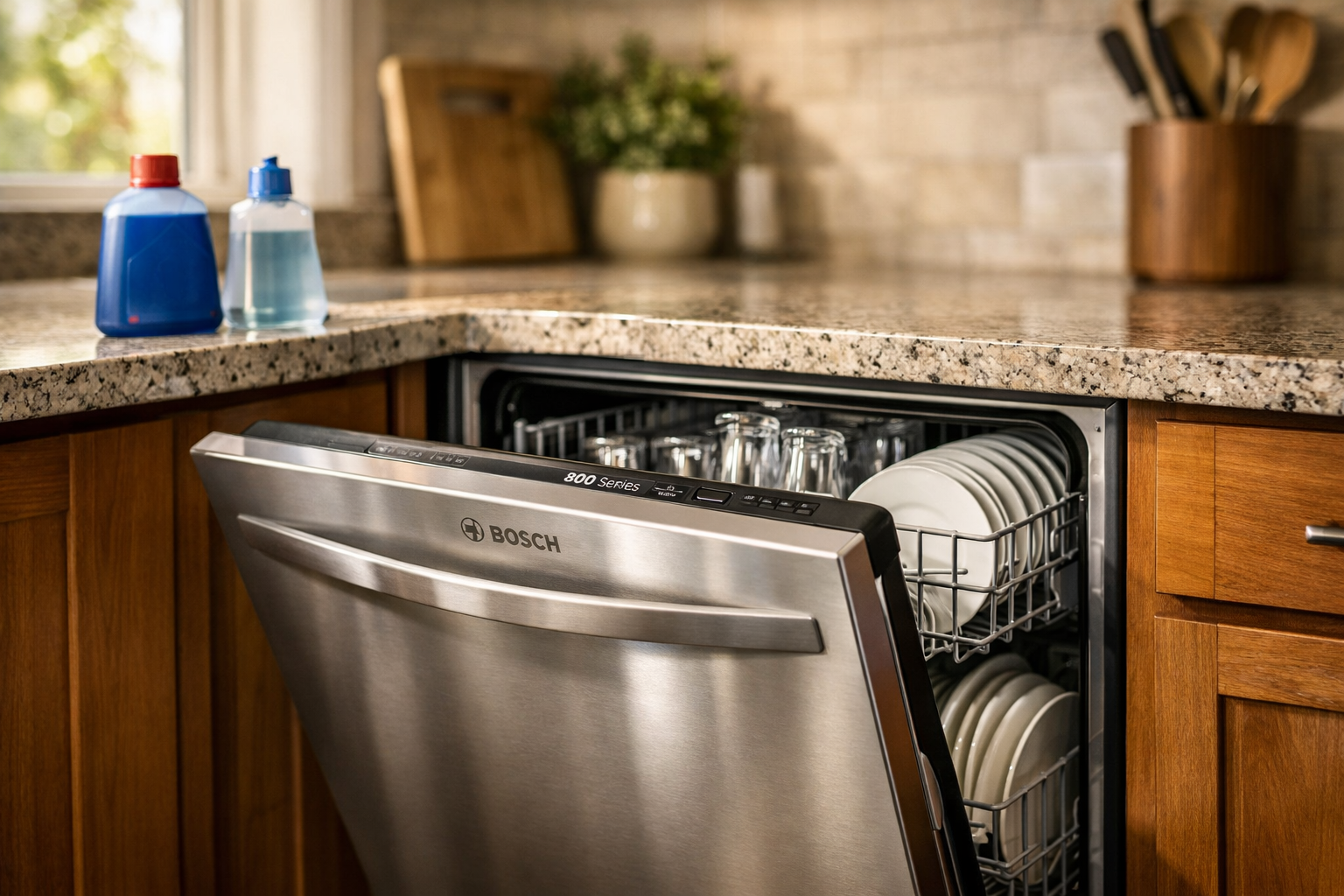
Did you know that even the most advanced Bosch 800 Series dishwasher can leave dishes dirty if loaded incorrectly? I’ve experienced it myself—scrubbing a supposedly clean plate only to find stubborn food particles. The secret isn’t just detergent or programs—it’s all about proper loading.
In this guide, I’ll walk you through exactly how to load a Bosch 800 Series dishwasher to maximize cleaning efficiency, protect delicate items, and prevent clogs or water spots. From placing silverware and glasses to arranging large pots, I’ll share practical tips and insider tricks I’ve learned over the years. We’ll also cover common mistakes people make and how to avoid them, ensuring every cycle delivers sparkling results. By the end, you’ll feel confident loading your dishwasher like a pro, saving time, energy, and frustration every day.
Understanding Your Bosch 800 Series Dishwasher
The Bosch 800 Series is packed with features—adjustable racks, flexible tines, and multiple wash programs designed for varying loads. When I first got mine, I was amazed at the options but slightly overwhelmed. Each model has a top rack for glasses and small items and a bottom rack for larger dishes and pots, and understanding this setup is crucial for proper loading.
Familiarize yourself with the flexible third rack if your model has one. This is ideal for utensils, spatulas, or even long kitchen tools, keeping them out of the way while improving water circulation. Knowing where each item belongs saves time and prevents interference with spray arms.
Another key point is the location of the detergent and rinse aid compartments. A blocked detergent compartment can lead to residue on dishes, so always check that racks or large items don’t obstruct it. Understanding the layout sets you up for a successful wash every time.
Preparing Your Dishes Before Loading

Before placing anything inside, it’s important to scrape off leftover food and rinse large debris. Bosch recommends pre-rinsing only if the food is stubborn. I’ve learned that lightly rinsing plates while leaving a small amount of food is usually fine—the dishwasher is powerful enough to handle most residues.
Check that fragile items, such as wine glasses or delicate ceramics, are free from cracks and properly spaced. For silverware, I separate knives, forks, and spoons to prevent nesting, which can trap food and water. I once loaded spoons all facing the same direction and discovered some were still sticky after the wash.
Finally, ensure the spray arms can rotate freely. Overcrowding the racks or placing items too close to the spinning arms is a common mistake that reduces cleaning efficiency. Taking these small preparatory steps saves time and improves results significantly.
Loading the Bottom Rack Correctly
The bottom rack is designed for larger items like plates, pots, pans, and serving bowls. Plates should face inward toward the center to ensure the spray arms reach both sides. I personally alternate large and small plates to maximize space while allowing water to circulate freely.
Pots and pans should be tilted slightly to let water drain and prevent pooling. Avoid placing oversized items that block the detergent compartment or spray arms—one too-big pan can ruin the entire wash cycle. I learned this the hard way when I tried cramming in a roasting pan that blocked the detergent compartment, leaving all dishes partially soiled.
Bowls should also be angled downward and not nested. This simple adjustment ensures that water jets reach all surfaces. Proper arrangement in the bottom rack is often the difference between spotless dishes and partially washed plates.
Loading the Top Rack Efficiently
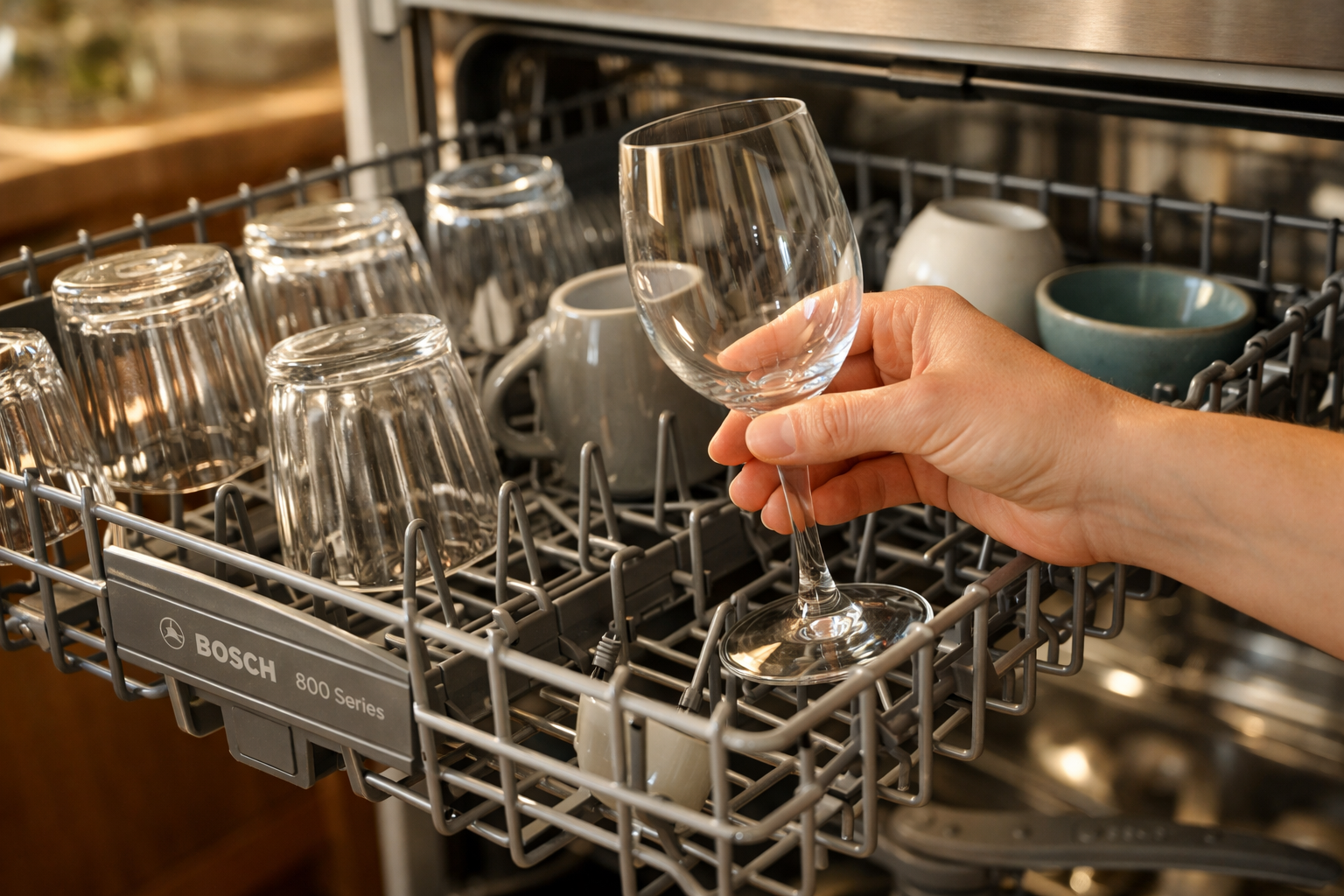
The top rack is ideal for glasses, cups, small bowls, and delicate plastics. Glasses should be placed upside down and spaced to prevent tipping. I always make sure wine glasses don’t touch each other to avoid chipping or breakage during the cycle.
Small bowls and cups should face downward, angled to allow water to drain completely. The flexible tines on Bosch 800 Series dishwashers make it easy to adjust the top rack to accommodate taller items, which I use frequently for coffee mugs and small pitchers.
Utensils, spatulas, or long kitchen tools can go in the third rack if available, keeping them out of the way and improving cleaning coverage. This organization prevents jamming the spray arms and allows every item to get maximum water and detergent exposure.
Loading Silverware and Utensils
Proper placement of silverware can make or break your wash results. Bosch recommends alternating forks and spoons in the basket, some facing up, some down, to prevent nesting. I’ve found that knives should generally be placed with the handles up for safety, but sharp knives can be placed downward if the basket design prevents sticking.
Avoid overloading the basket. I once dumped an entire drawer of mixed silverware in at once, and several spoons were still dirty. For larger utensils like serving spoons, ladles, or tongs, the third rack or side clip options keep them secure and away from the spinning spray arms.
Finally, check that no utensils protrude past the top rack level, which can block spray and reduce cleaning efficiency. Following these small steps ensures every fork, spoon, and knife comes out spotless.
Common Mistakes to Avoid
Even experienced users make small mistakes that affect performance. Overcrowding racks is probably the most common error, leading to blocked spray arms and poorly washed items. I’ve learned to step back and visualize airflow before closing the door.
Placing items too close together or improperly tilting bowls can trap water and detergent residue. Using the wrong detergent or overfilling the detergent compartment can also leave streaks or residue. I recommend following Bosch’s detergent guide closely.
Lastly, neglecting maintenance such as cleaning filters, spray arms, and the door gasket can reduce efficiency over time. A quick rinse of the filter and wiping down the seals once a month keeps the dishwasher performing like new. Avoiding these pitfalls is key to consistent, sparkling results.
Conclusion
Loading your Bosch 800 Series dishwasher correctly is a combination of understanding the machine, preparing dishes, and using strategic placement for every item. From racks and silverware to glasses and pots, attention to detail ensures a thorough clean.
By following these guidelines, you’ll maximize your dishwasher’s performance, avoid common mistakes, and achieve sparkling dishes every cycle. With a little practice, loading becomes second nature, saving time and energy while keeping your kitchen running smoothly. Treat your Bosch dishwasher well, and it will reward you with consistently spotless results for years to come.