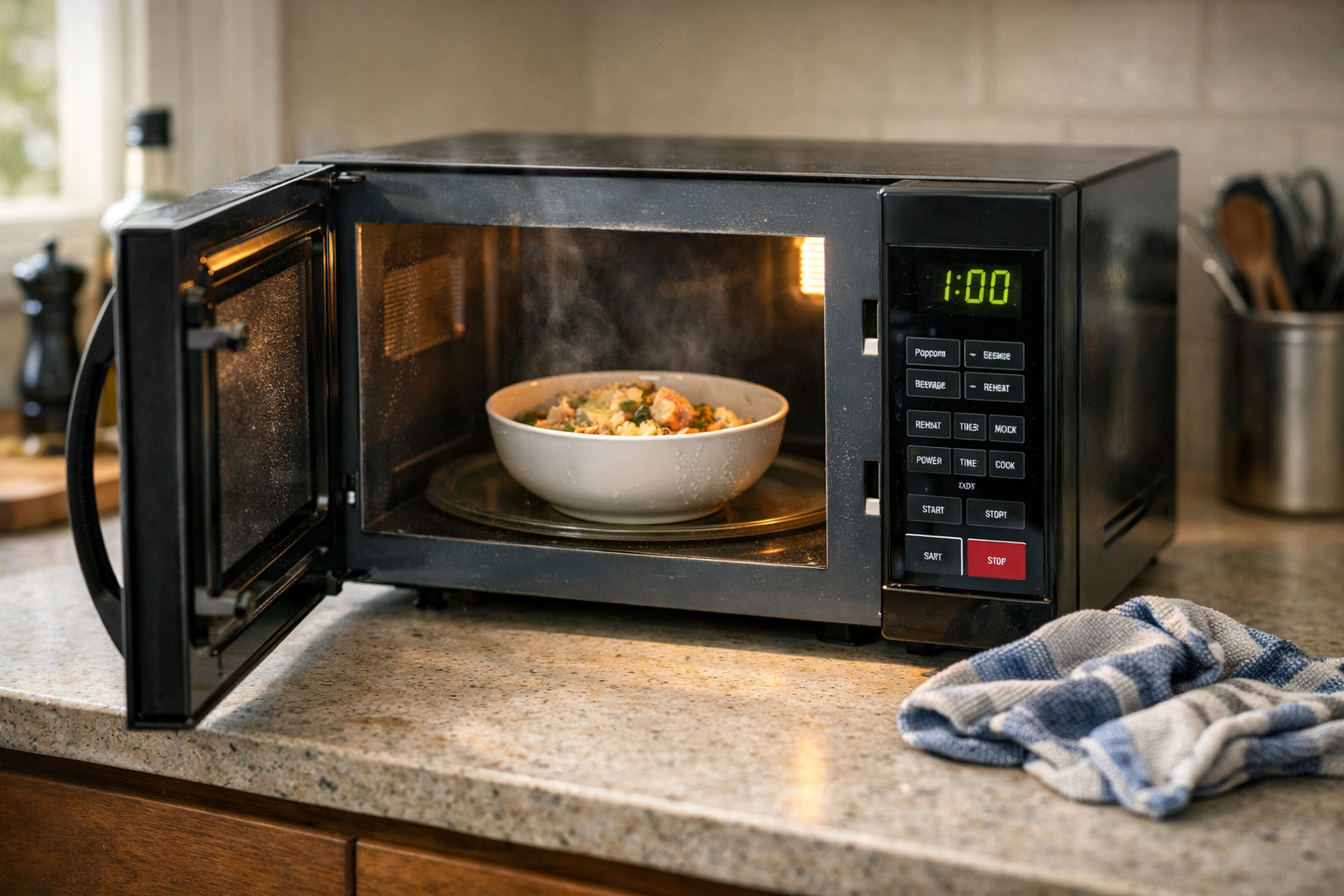
A microwave that suddenly sounds like it’s grinding rocks while your food stays ice cold is more than just annoying—it’s a warning sign. I’ve seen countless people ignore this exact problem for weeks, assuming it’s “normal aging,” until the microwave finally dies or trips the breaker. Loud noise plus no heating is never random.
When a microwave makes loud noise and does not heat, it usually points to a failure in one of the core high-voltage components. The tricky part is that the microwave may still turn on, spin the turntable, light up, and even sound powerful—while doing absolutely nothing useful. That’s confusing. And frustrating.
In this guide, I’ll walk you through what’s really happening inside your microwave, why the noise matters, and how to tell whether this is a simple fix or a sign to stop using it immediately. I’ll also share common mistakes people make, safety realities most blogs ignore, and how to decide between repair and replacement with confidence. If your microwave is buzzing, humming, rattling, or roaring but not heating, you’re in the right place.
Why Loud Noise and No Heat Usually Happen Together
When people hear a loud noise from a microwave, their first instinct is to blame something loose or mechanical. In reality, heating failure and noise almost always originate from the same electrical system. The heating function relies on high voltage, and when that system struggles, it makes itself known audibly.
Inside the microwave, electricity is stepped up to extremely high voltage to generate microwave energy. If one component in that chain fails, the system may still try to run, producing loud humming, buzzing, or even a growling sound. The noise is often the microwave’s last attempt to operate normally.
I’ve personally opened units where everything looked fine externally, yet the internal components were under massive stress. The microwave sounded “angry,” for lack of a better word. That sound is a symptom, not the problem itself.
Another key detail many people miss is timing. If the noise starts immediately when you press start and continues until you stop the microwave, that’s a strong indicator of a high-voltage issue. If the sound changes pitch or volume during operation, that narrows the diagnosis even further.
The Magnetron: The Most Common Culprit
The magnetron is the heart of your microwave. It’s the component responsible for generating the energy that actually heats food. When it fails, the microwave often becomes loud without producing heat.
A failing magnetron commonly produces a deep humming, buzzing, or even a screeching noise. I’ve had people describe it as “a transformer struggling” or “a low growl.” That description is surprisingly accurate. The magnetron is drawing power but not converting it properly.
What makes magnetron failure tricky is that the microwave still appears functional. The display works. The fan runs. The turntable spins. This gives a false sense of safety and leads people to keep using it. That’s a mistake.
Once a magnetron starts failing, continued use can damage other components or create electrical hazards. In many cases, magnetron replacement is possible, but cost and microwave age become major factors in deciding whether it’s worth it.
High-Voltage Diode and Capacitor Failures
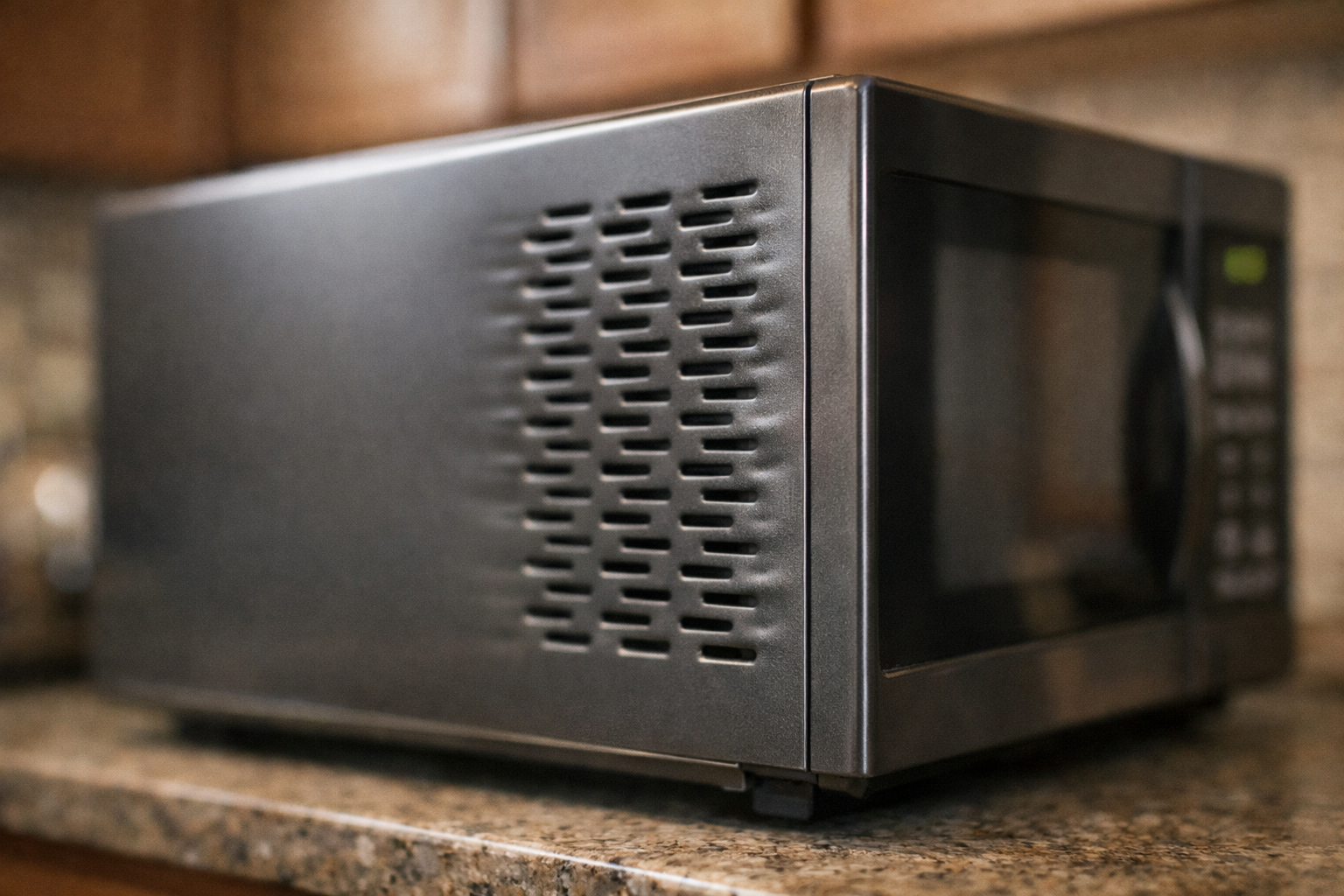
Not every loud, non-heating microwave has a dead magnetron. In many cases, the issue lies with the high-voltage diode or capacitor. These components regulate and store the power needed for heating, and when they fail, they often fail loudly.
A bad high-voltage diode typically causes a loud buzzing or humming noise combined with no heat. The microwave sounds like it’s working harder than usual, almost straining. I’ve seen this exact issue confuse homeowners because the noise suggests power, not failure.
Capacitor problems can be even more concerning. A failing capacitor may produce humming, popping, or irregular noise. In rare cases, it can even cause a burning smell. This is not something to ignore. Capacitors can retain dangerous electrical charge even after the microwave is unplugged.
This is where many DIY attempts go wrong. People open the microwave assuming it’s “just a loose part,” without realizing the electrical risk involved. Respect the danger here. These components are not beginner-friendly.
When the Microwave Sounds Loud but Heats Sometimes

Intermittent heating combined with loud noise is one of the most misleading scenarios. People often assume the problem fixed itself when the microwave heats once or twice. In reality, this behavior suggests a component that’s failing gradually.
Thermal stress plays a major role here. Components like the magnetron can temporarily function when cool, then fail again as they heat up. I’ve seen microwaves heat the first cup of coffee and fail completely on the second.
The noise in these cases often changes during use. It may start quiet, then grow louder. That change is critical information. It indicates internal resistance and instability.
If your microwave heats inconsistently while making loud noise, stop using it. This pattern almost always precedes total failure, and continuing to operate it increases the risk of damaging the power supply or control board.
Mechanical Noises vs Electrical Danger
Not all microwave noises are equally dangerous, and knowing the difference matters. A rattling or clunking sound may come from the turntable motor or a loose roller ring. These issues are annoying but not typically linked to heating failure.
However, when the microwave makes a deep humming, buzzing, or vibrating sound and does not heat, that’s electrical. The sound is steady, powerful, and synchronized with the heating cycle. That’s the red flag.
I always tell people to trust their ears. If the noise feels “heavy” or industrial rather than light and mechanical, assume it’s serious. Especially when food comes out cold.
Misdiagnosing this difference leads people to waste time on simple fixes while ignoring a dangerous internal problem. Mechanical noises rarely stop heating. Electrical failures almost always do.
Repair or Replace: Making the Smart Call
Deciding whether to repair or replace a microwave depends on age, cost, and component failure. If the microwave is under five years old and otherwise high quality, repair may make sense. Beyond that, replacement often wins.
Magnetron replacement can be expensive when labor is included. High-voltage component repairs require professional handling, and not every technician will even attempt them due to safety concerns.
I’ve seen people spend nearly the price of a new microwave trying to save an old one, only to face another failure months later. That’s frustrating and avoidable.
If your microwave makes loud noise and does not heat, and it’s older or out of warranty, replacement is often the safest and most cost-effective option. Peace of mind matters when dealing with high voltage appliances.
Safety Reality Most People Ignore
Here’s the part most articles avoid saying clearly: a loud, non-heating microwave is not just broken—it can be unsafe. Continued use may stress internal wiring, overheat components, or cause electrical arcing.
Even unplugged microwaves can be dangerous internally due to stored electrical charge. This is why casual DIY repairs are risky. I’ve seen otherwise careful people get injured because they underestimated this appliance.
If you hear loud electrical noise and your microwave isn’t heating, stop using it immediately. Unplug it. Then decide whether professional repair or replacement makes sense.
Microwaves are convenient, but they’re not forgiving when something goes wrong.
Conclusion
When a microwave makes loud noise and does not heat, it’s sending a clear message that something critical has failed. In most cases, the problem lies in the high-voltage system, often involving the magnetron, diode, or capacitor. These are not minor issues, and ignoring them only increases risk.
Understanding the type of noise, when it occurs, and whether heating is completely or intermittently lost helps you diagnose the situation accurately. From there, the choice becomes clearer. Repair may work for newer units, but replacement is often the smarter path for older microwaves.
Above all, safety comes first. Loud electrical noise combined with no heat is not something to experiment with. Address it decisively, and you’ll avoid bigger problems down the road.