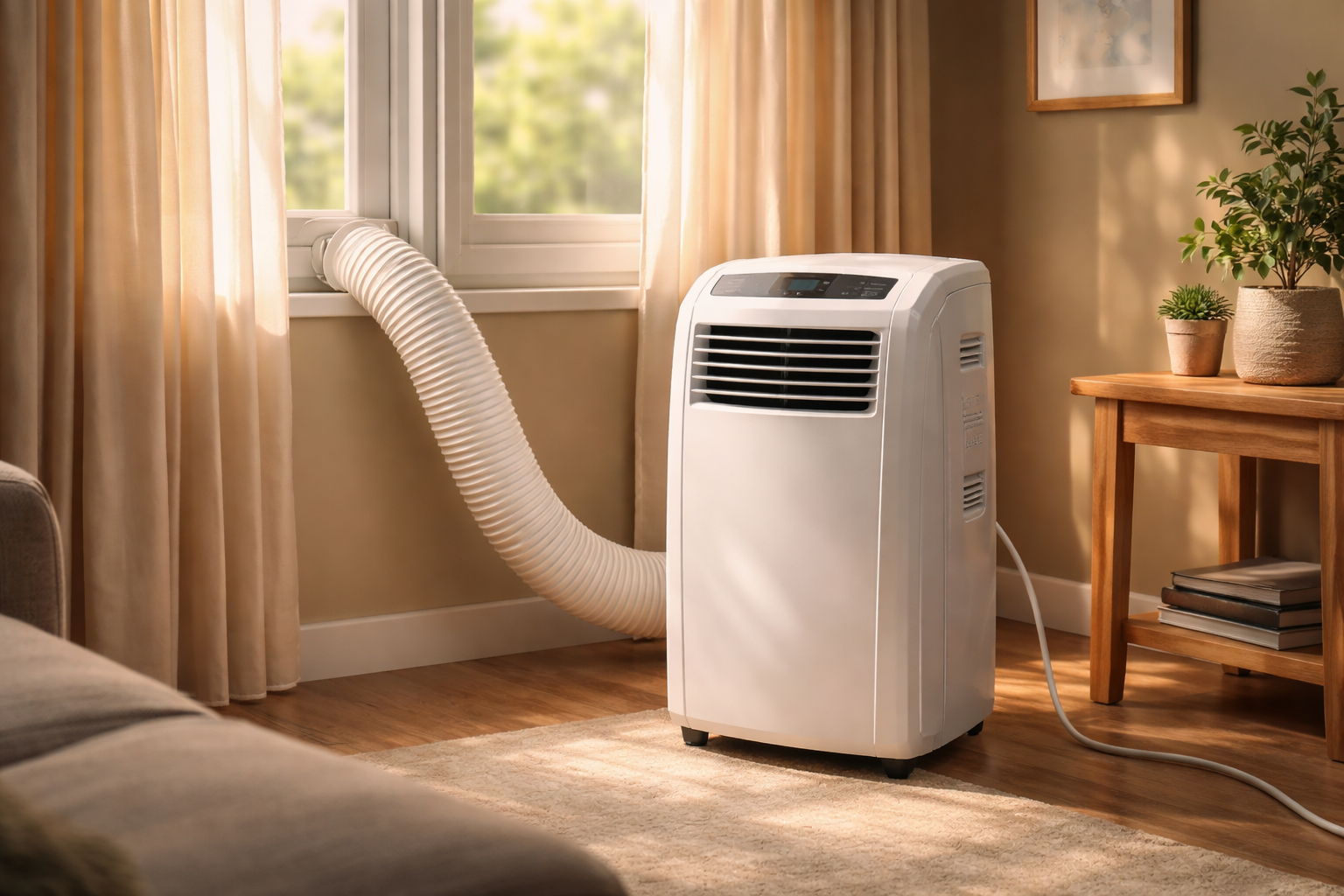
Most people assume a portable air conditioner works anywhere you plug it in—but that’s flat-out wrong. I learned this the hard way after running one in a closed room and wondering why it felt hotter, not cooler.
Here’s the truth: a portable AC without proper venting can actually make your space more uncomfortable. Heat has to go somewhere. If it doesn’t exit, it cycles right back in.
In this guide, I’ll break down whether a portable air conditioner can be used without a window, what actually happens if you try, and the smartest alternatives that won’t waste your money or spike your electricity bill. We’ll also cover venting options, real-world workarounds, and common mistakes people make when trying to “hack” these units.
If you’re trying to cool a room without a window, this will save you time, frustration, and a lot of heat—literally.
How Portable Air Conditioners Actually Work
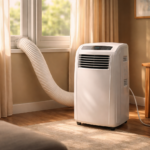
A portable air conditioner doesn’t “create” cold air—it removes heat from the room and pushes it somewhere else. That’s the entire principle behind it. Once you understand this, everything about venting starts to make sense.
Inside the unit, there’s a compressor and refrigerant system pulling heat from your indoor air. That heat is then transferred to the exhaust hose. If the hot air has nowhere to go, it gets released right back into the same room. You end up fighting yourself.
I remember testing this in a small storage room with no window access. The unit ran loudly, air felt slightly cool near the front, but the overall room temperature kept rising. It felt like standing next to a fan blowing lukewarm air while a heater ran in the background.
This is why every manufacturer includes an exhaust hose in the box. It’s not optional. It’s essential.
Without proper ventilation, the unit becomes inefficient at best—and completely useless at worst.
Can You Run a Portable AC Without a Window?
Technically, yes—you can turn it on. Practically, no—it won’t cool your space effectively.
Running a portable AC without a window means the hot air stays inside. You’re removing heat from one part of the room and dumping it back into another. It’s like trying to empty a bucket while pouring water back in at the same time.
There’s also another issue people don’t think about: humidity. Portable ACs remove moisture as they cool. Without proper venting, humidity levels can rise, making the room feel even more uncomfortable.
I’ve seen people try to “get away with it” by placing the exhaust hose loosely in the room or pointing it upward. That doesn’t work. The heat disperses quickly and cancels out any cooling effect.
So while the unit will run, it defeats its own purpose. You’ll waste electricity, stress the system, and still feel hot.
What Happens If You Don’t Vent the Hot Air?
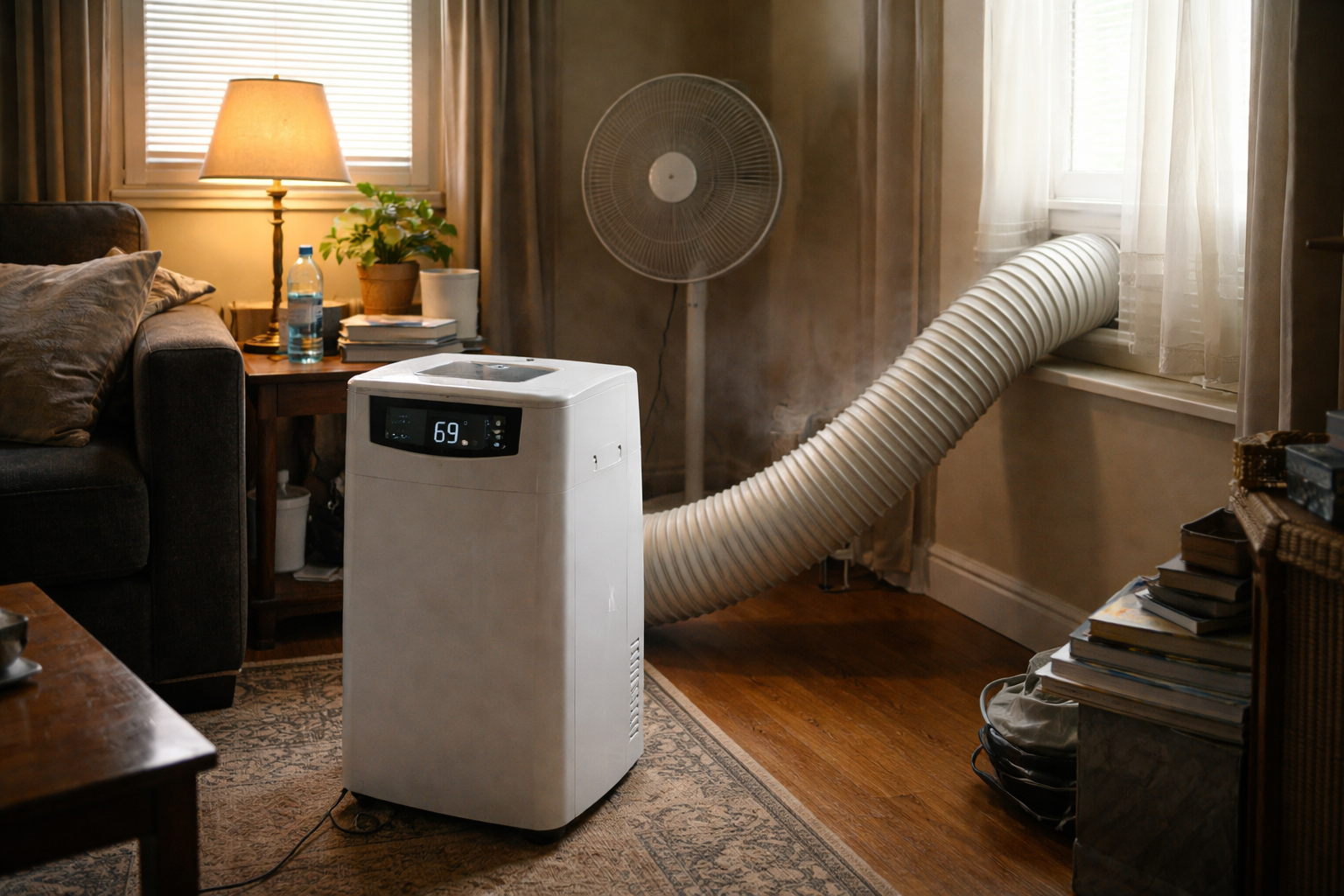
Things go downhill fast when you skip venting. The most immediate effect is poor cooling performance, but that’s just the beginning.
The room starts to feel stuffy rather than refreshing. You might notice pockets of warm air forming, especially near the exhaust area. Over time, the entire space becomes uneven in temperature—cool in one spot, warm everywhere else.
There’s also the risk of overheating the unit itself. Portable ACs are designed with airflow balance in mind. When that balance is disrupted, internal components work harder than they should. That can shorten the lifespan of the compressor.
I’ve personally seen units shut off automatically due to internal heat buildup when used improperly. It’s frustrating because people think the AC is defective when it’s actually an installation issue.
Energy consumption becomes another hidden problem. You’re running a high-power appliance with minimal results. That’s one of the fastest ways to drive up your electricity bill without any real benefit.
Alternative Venting Options Without a Window
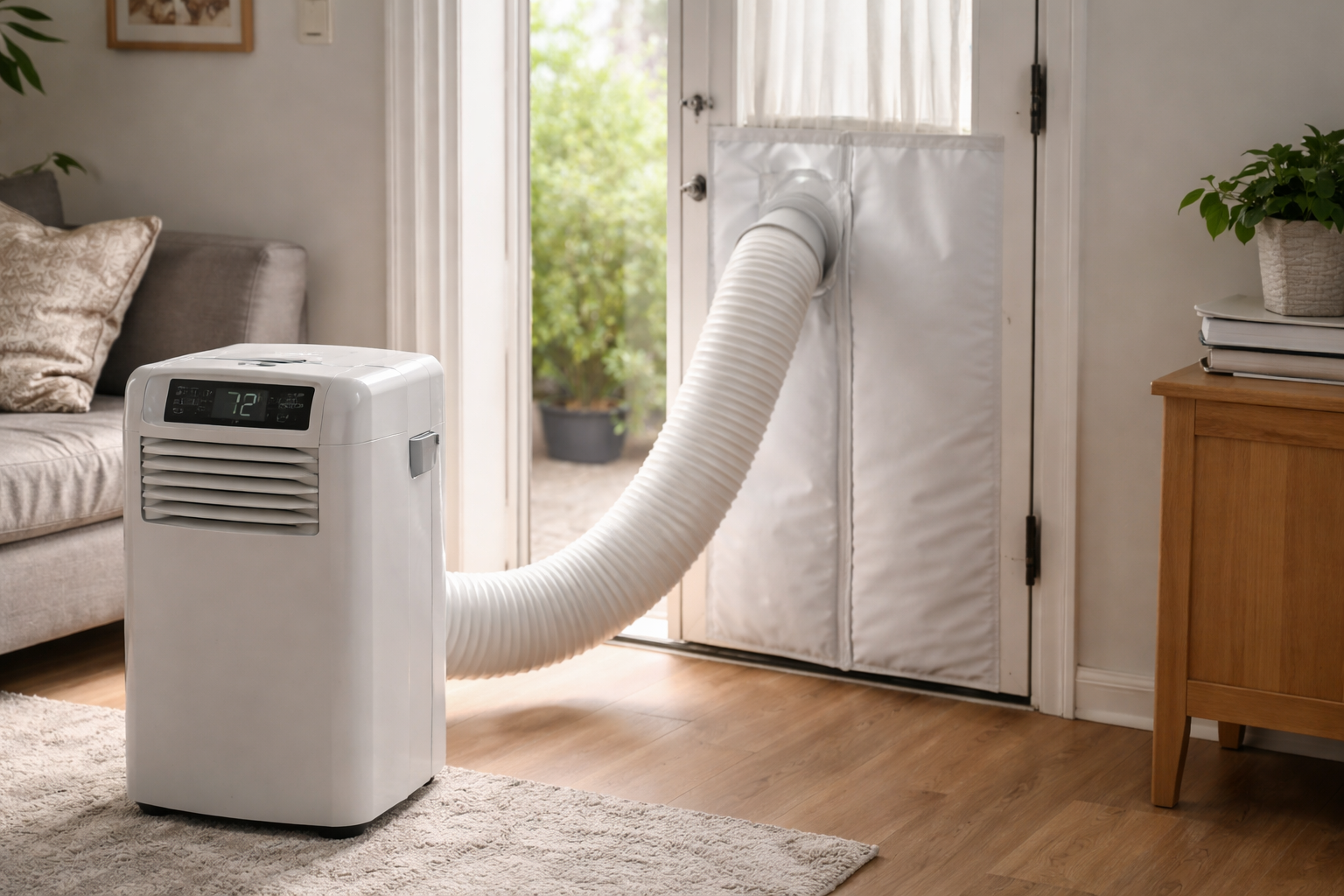
Not having a window doesn’t mean you’re completely stuck—it just means you need to get creative with ventilation.
Through a Door
One of the easiest solutions is venting through a slightly open door. It’s not perfect, but with proper sealing around the gap, it can work surprisingly well. I’ve done this in a hallway setup, and it managed to cool a small room effectively.
Through a Wall
This is a more permanent solution but far more efficient. Cutting a vent hole in the wall allows the hot air to exit directly outside. It requires effort, but the performance difference is night and day.
Ceiling or Drop Ceiling Venting
In some setups, especially offices, people vent into ceiling spaces. This can work temporarily, but it’s not ideal unless the heat is being redirected outside the building. Otherwise, you’re just moving the problem.
Dryer Vent or Existing Exhaust Systems
If your room has an existing exhaust duct—like a dryer vent—you can adapt your AC hose to it. This is one of the cleanest and most efficient alternatives I’ve used.
Each of these methods works because they solve the core problem: removing heat from the room entirely.
Common Mistakes People Make
People often try shortcuts, and most of them fail for the same reason—they ignore basic physics.
One of the biggest mistakes is thinking a portable AC works like a fan. It doesn’t circulate air—it transfers heat. Without an exit path, the system breaks down in effectiveness.
Another mistake is using long or twisted exhaust hoses. I’ve seen setups where the hose bends multiple times or stretches across the room. That reduces airflow and traps heat inside the hose itself.
Sealing is another overlooked factor. Even if you vent through a door or wall, gaps around the hose can let hot air leak back in. It completely undermines the cooling process.
Then there’s the assumption that “some cooling is better than none.” In reality, improper setup often leads to worse conditions than using a simple fan.
Best Solutions If Your Room Has No Window
If you’re dealing with a windowless room, your goal should be efficient heat removal—not temporary fixes.
The best long-term solution is installing a wall vent. It turns your portable AC into a properly functioning system. Yes, it takes effort, but it’s worth it if you plan to use the unit regularly.
If permanent changes aren’t possible, door venting with proper sealing is your next best option. It’s flexible and doesn’t require construction.
In some cases, switching to a different cooling solution makes more sense. Evaporative coolers or split AC systems can work better depending on your setup. I’ve recommended this to people in basement rooms where venting was nearly impossible.
The key is choosing a solution that actually removes heat—not just moves it around.
Final Thoughts: Does It Really Work Without a Window?
A portable air conditioner without a window isn’t truly “portable cooling”—it’s incomplete cooling. The unit depends on venting to function properly, and without it, you’re fighting basic thermodynamics.
If you’re serious about staying cool, focus on creating a proper exhaust path. Even a simple workaround can make a huge difference. I’ve seen setups go from useless to highly effective just by fixing the venting.
Don’t fall into the trap of running it as-is and hoping for the best. You’ll burn energy, stress the unit, and still feel uncomfortable.
Set it up right—or choose a better alternative. Your comfort (and electricity bill) will thank you.