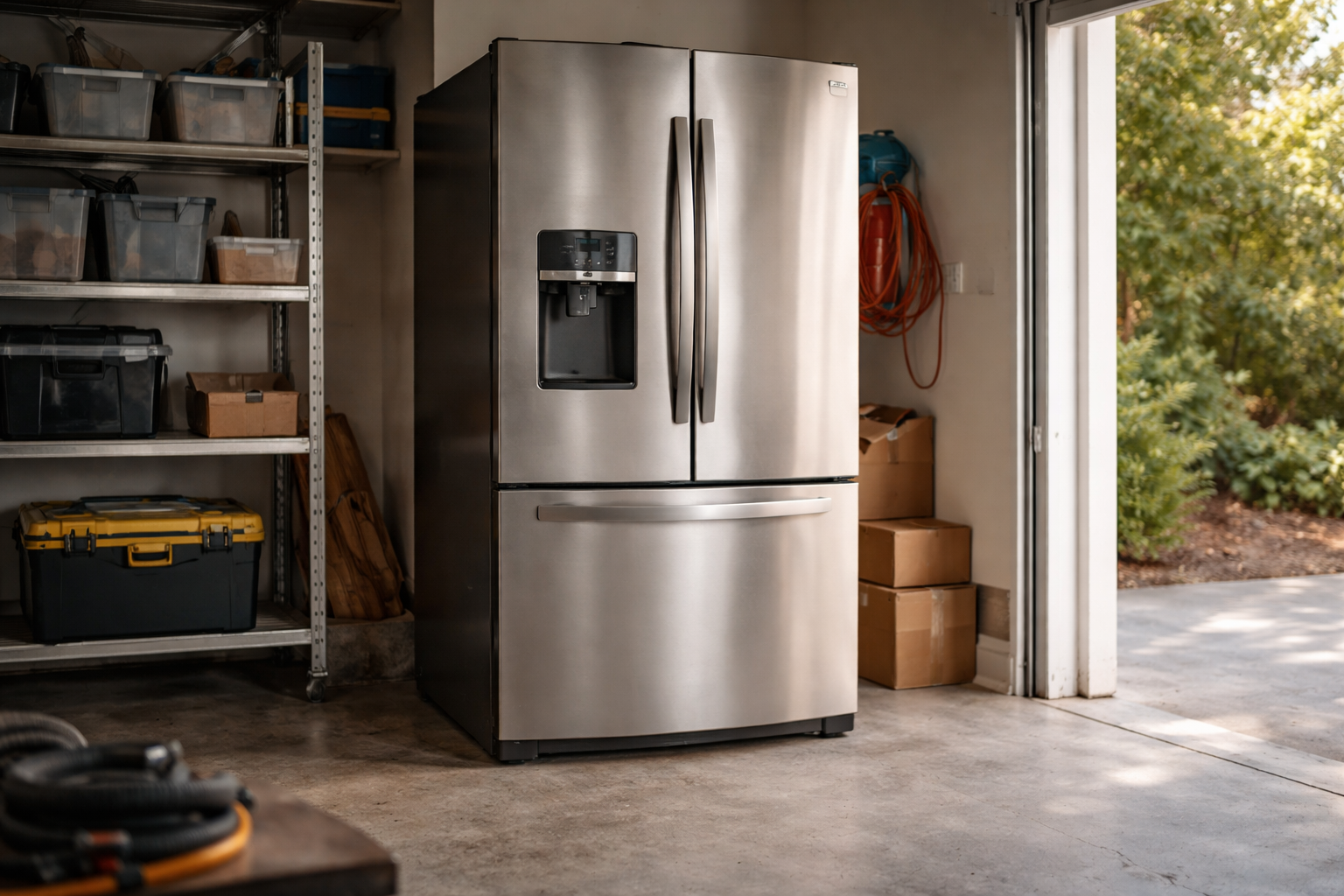
Can you keep a refrigerator in a garage without ruining it? It sounds simple, but this question has damaged more fridges than power surges ever did. I’ve seen perfectly good units fail early just because they were parked in the wrong garage environment.
Here’s the truth most people don’t realize. A refrigerator is designed for indoor, climate-controlled spaces, not extreme heat or freezing cold. When garage temperatures swing too far in either direction, the fridge’s compressor, thermostat, and insulation can behave in unpredictable ways.
If you’re using a garage fridge for extra food storage, drinks, meal prep, or overflow from a busy household, you’re not alone. Millions of homes do this. The key is knowing when it’s safe, when it’s risky, and what adjustments actually make a difference.
In this guide, I’ll walk you through exactly how garage temperatures affect refrigerator performance, what problems to expect, how to fix them, and whether a garage-ready refrigerator is worth it. By the end, you’ll know if your setup is smart—or silently shortening your fridge’s lifespan.
Can You Keep a Refrigerator in a Garage Safely?
Yes, you can keep a refrigerator in a garage, but only under the right conditions. This is where most advice online becomes dangerously oversimplified. The real answer depends on temperature stability, insulation, and how the refrigerator regulates itself internally.
Standard household refrigerators are engineered to operate within a specific ambient temperature range, usually between about 55°F and 110°F. When your garage stays within this zone most of the year, the fridge can run normally without excessive strain. In mild climates, this works surprisingly well.
Problems start when garages become seasonal extremes. In winter, a cold garage can trick the fridge into thinking it’s already cold enough, causing the compressor to stop running. The fridge section may stay cold, but the freezer can slowly thaw without warning. In summer, excessive heat forces the compressor to work nonstop, increasing energy use and accelerating wear.
I’ve personally seen garage fridges last over a decade in stable climates and die within three years in harsh ones. The difference was never the brand. It was the environment.
How Garage Temperatures Affect Refrigerator Performance
Temperature is the silent killer of garage refrigerators. Unlike indoor spaces, garages experience daily and seasonal swings that confuse a fridge’s internal sensors.
In cold conditions, the thermostat may never activate the compressor because the surrounding air is already cold. This leads to freezer failure first, which is especially dangerous because food can thaw and refreeze unnoticed. Many people only discover the issue after spoilage or strange freezer ice patterns appear.
In hot garages, the opposite happens. The compressor runs constantly to maintain safe food temperatures. This increases electricity consumption and causes faster mechanical fatigue, because garage heat puts serious strain on the compressor. Over time, seals degrade, coolant efficiency drops, and cooling becomes inconsistent.
Humidity also plays a role. Garages tend to be more humid, which can cause condensation on coils and inside compartments. That moisture accelerates rust, mold growth, and gasket breakdown. These problems rarely appear overnight. They creep in slowly, which makes them easy to ignore until the damage is done.
Winter Problems: Why Garage Fridges Fail in Cold Weather
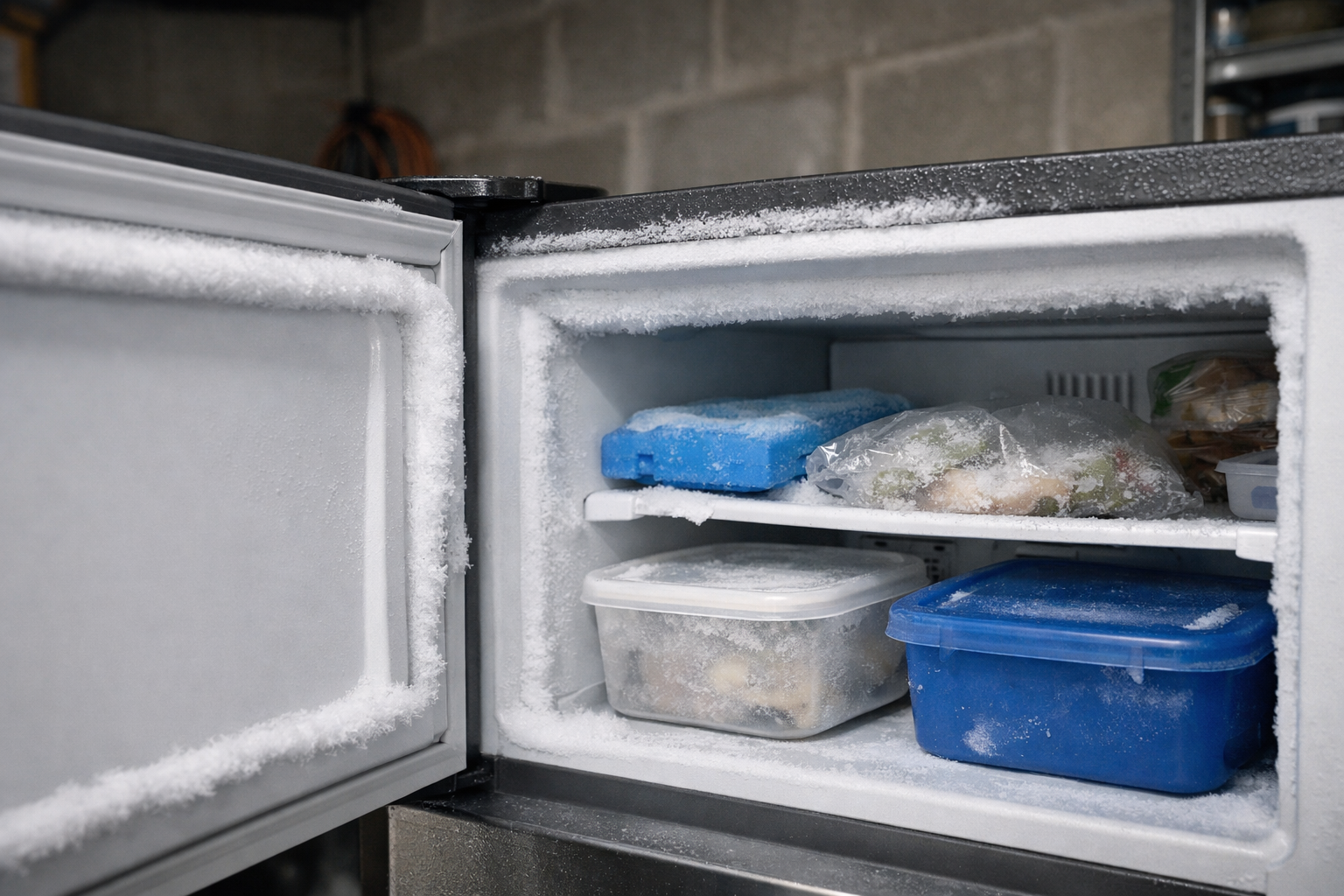
Cold weather is the number one reason people ask whether you can keep a refrigerator in a garage. The issue isn’t freezing pipes or cracked plastic. It’s thermostat confusion.
Most refrigerators use a single thermostat located in the fridge compartment, not the freezer. When the garage temperature drops close to freezing, the fridge compartment cools naturally. The thermostat thinks everything is fine and shuts off the compressor. The freezer, which depends on compressor cycles, stops receiving cold air.
I’ve had neighbors swear their freezer was fine in winter, only to discover melted ice cream weeks later. This problem is especially common in unheated garages during extended cold snaps.
Some people try to fix this by adjusting temperature dials, but that rarely solves the core issue. The fridge simply isn’t designed to interpret cold ambient air correctly. Without modification or a garage-ready model, winter performance will always be unpredictable.
Summer Problems: Heat, Energy Use, and Compressor Stress
Hot garages create a different set of problems. When temperatures climb above 90°F, refrigerators struggle to expel heat efficiently. The compressor runs longer cycles and may never fully rest.
This constant workload increases electricity bills and shortens the life of key components, especially since power requirements change significantly in a garage. I’ve seen garage fridges that felt hot to the touch on the sides, a clear sign they were working far harder than intended. Over time, this stress leads to noisy operation, temperature swings, and eventual failure.
Another overlooked issue is food safety. When a fridge struggles to cool in extreme heat, internal temperatures may rise just enough to encourage bacterial growth. The fridge may still feel cold, but not cold enough to protect perishable foods reliably.
Ventilation matters here more than people realize. A garage fridge crammed between walls or storage boxes traps heat, making summer problems even worse.
What Is a Garage-Ready Refrigerator and Do You Need One?
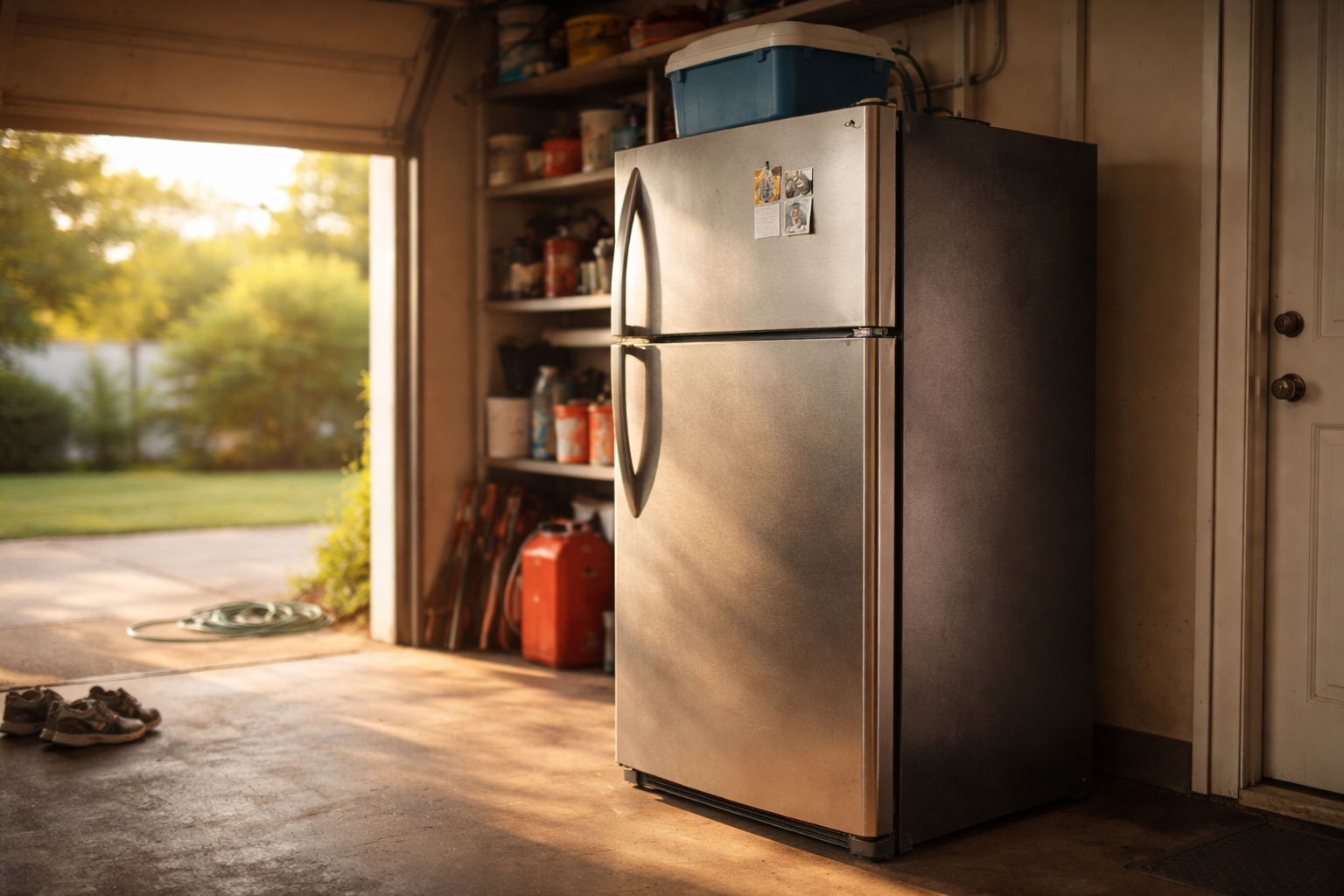
A garage-ready refrigerator is designed to operate across a wider temperature range, often from below freezing to extreme heat. These units use enhanced thermostats, improved insulation, and different control logic to handle unstable environments.
If your garage regularly drops below 40°F or exceeds 100°F, a garage-ready model isn’t a luxury. It’s a necessity. These refrigerators prevent freezer failure in winter and reduce compressor strain in summer.
That said, not everyone needs one. If you live in a moderate climate or have an insulated, temperature-stable garage, a standard refrigerator can perform perfectly well. The mistake people make is assuming all garages behave the same.
I always tell homeowners to observe their garage temperatures over a full year before deciding. A cheap thermometer can save you from replacing a fridge prematurely.
Practical Tips to Make a Garage Refrigerator Work Better
If replacing your refrigerator isn’t an option, there are ways to improve garage performance. Insulating the garage, especially the door, can dramatically reduce temperature swings, and it also helps because humidity in garages makes mold prevention critical. Even basic weather stripping makes a difference.
Some people use thermostat control kits or heater devices designed to keep the fridge’s thermostat active during winter. While these aren’t perfect solutions, they can stabilize freezer operation in cold climates.
Placement also matters. Keeping the fridge away from exterior walls and ensuring proper airflow around the coils helps in both summer and winter. Avoid placing it directly on cold concrete floors without insulation underneath.
The biggest mistake I see is ignoring early warning signs. Frost buildup, warm freezer food, or constant compressor noise are signals that your garage environment is pushing the fridge beyond its limits.
Conclusion
So, can you keep a refrigerator in a garage? Yes—but only if the environment supports it. Temperature extremes, humidity, and poor ventilation are the real enemies, not the garage itself.
If your garage stays within moderate temperature ranges, a standard refrigerator can work just fine for years. In colder or hotter climates, a garage-ready refrigerator or proper insulation becomes essential to avoid food spoilage and mechanical failure.
The smartest move is awareness. Monitor your garage temperature, listen to your fridge, and act before small problems turn into expensive replacements. When set up correctly, a garage refrigerator can be incredibly convenient and reliable. When ignored, it becomes a silent liability.