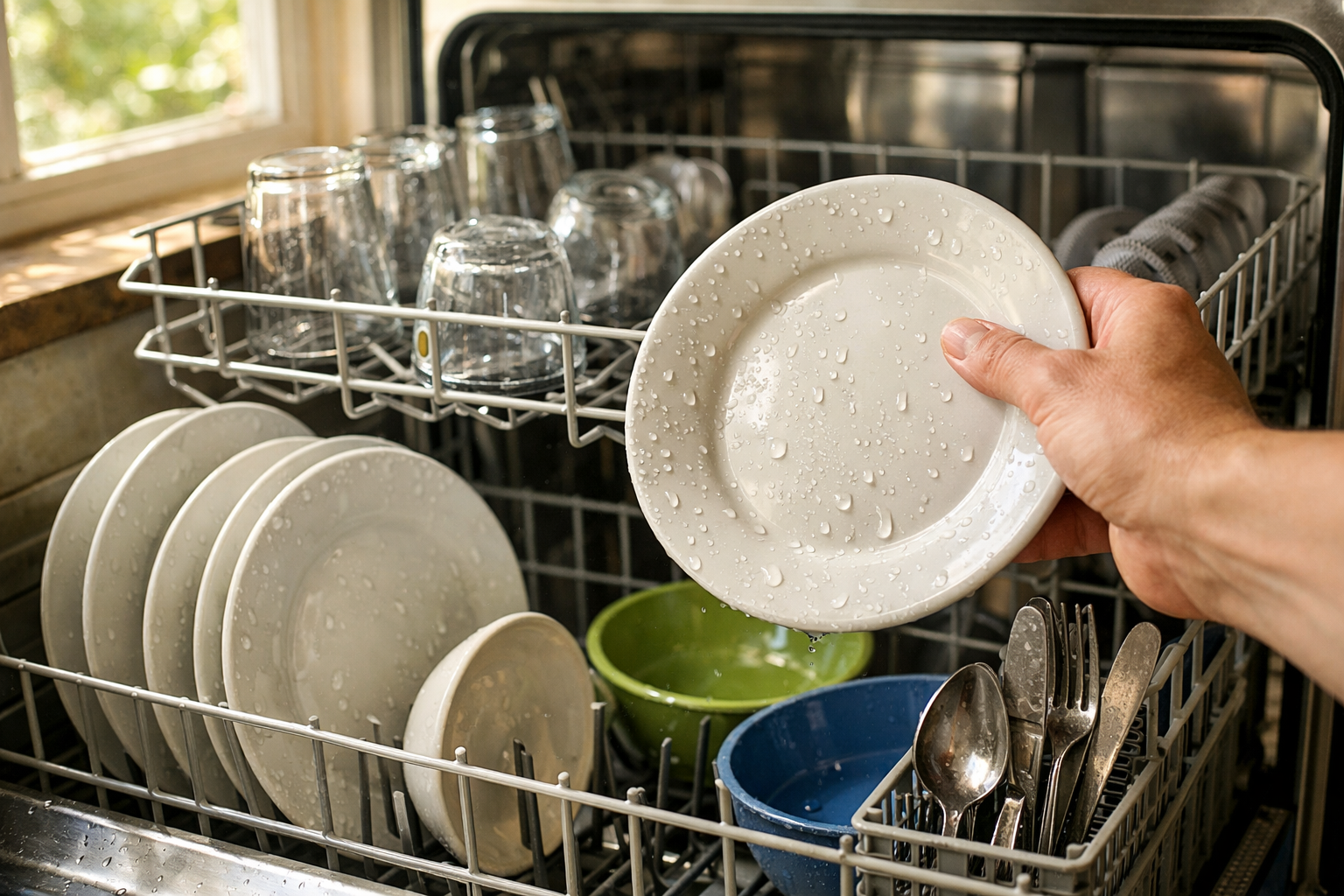
Have you ever opened your dishwasher only to find dishes still wet, dripping, or covered in stubborn water spots? It’s one of those small household frustrations that feels like a mystery. You ran the full cycle, the dishes are clean, but nothing seems dry. You’re not alone—millions of people experience this every year!
I’ve had this exact problem myself. Plates that should be ready for the table ended up leaving water puddles on the countertop. At first, I blamed the dishwasher, thinking it might be broken. But as it turns out, the reasons behind why dishes don’t dry properly are usually simple and fixable. From rinse aid issues to water temperature, plastic items, and venting problems, each factor plays a crucial role in the drying process.
In this guide, I’ll walk you through all the common causes, practical solutions, and maintenance tips to ensure your dishes come out dry and spotless. By the end, your dishwasher will feel like a brand-new appliance, and you’ll never have to towel-dry plates again!
1. Rinse Aid: The Secret to Spotless, Dry Dishes
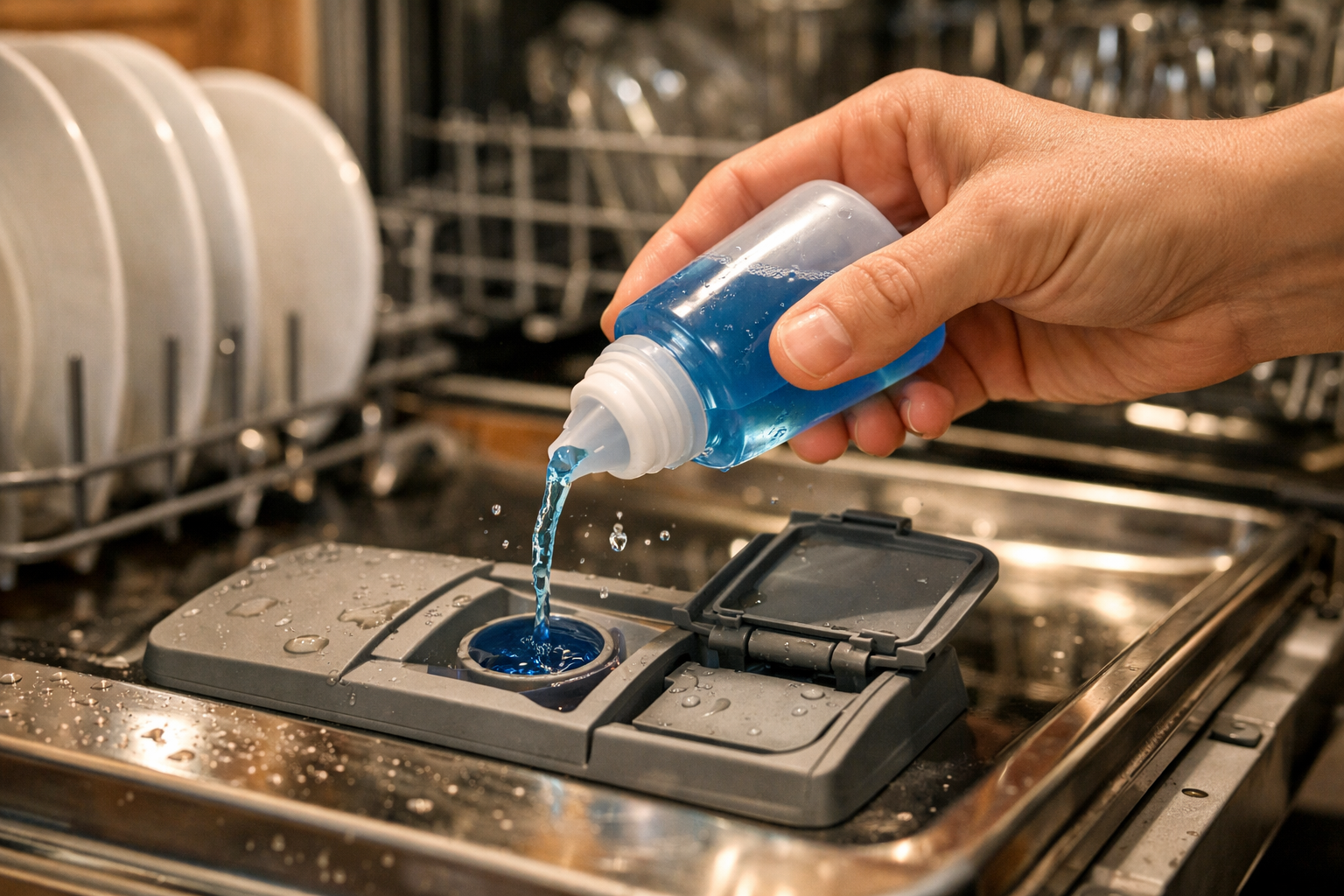
Rinse aid is often the unsung hero of dishwasher performance. Without it, water tends to cling to plates and glasses, leaving behind streaks, spots, and wet surfaces. Many people skip rinse aid entirely, assuming that soap alone is enough. In reality, detergent cleans, while rinse aid ensures water sheets off surfaces for proper drying.
I remember the first time I realized how crucial rinse aid was. I had been towel-drying my glasses every wash, frustrated by lingering water droplets. Once I filled the rinse aid compartment, the difference was immediate—plates dried faster, glasses sparkled, and I could finally skip the extra step.
The amount of rinse aid also matters. Too little won’t help, and some dishwashers allow adjustments depending on water hardness. In areas with hard water, more rinse aid ensures water doesn’t cling to surfaces and cause spots.
If your dishwasher supports automatic dosing, check the settings and refill regularly. Think of it as a small investment that saves time and keeps your dishes perfectly dry.
2. Heated Dry Function: Is It Working Properly?
Most dishwashers come with a heated dry option, designed to speed up drying by raising the water temperature at the end of the cycle. If your dishes are still wet, the heated dry function might be switched off or malfunctioning.
I’ve often seen people skip this feature to save energy, unaware that it can make a huge difference. Even on eco-friendly cycles, reduced heat means plastic items and thick plates may remain wet long after the cycle ends.
Sometimes, the problem isn’t the setting but a mechanical issue. Heating elements can burn out, thermostats can fail, or wiring can degrade. If you notice consistently wet dishes even with the heated dry enabled, it may be time for professional inspection.
In the meantime, running a normal cycle with heated dry or combining it with rinse aid often solves the problem without additional intervention. For plastic items, extra care may be needed as they naturally retain water longer than ceramic or metal.
3. Plastic Dishes and Water Retention
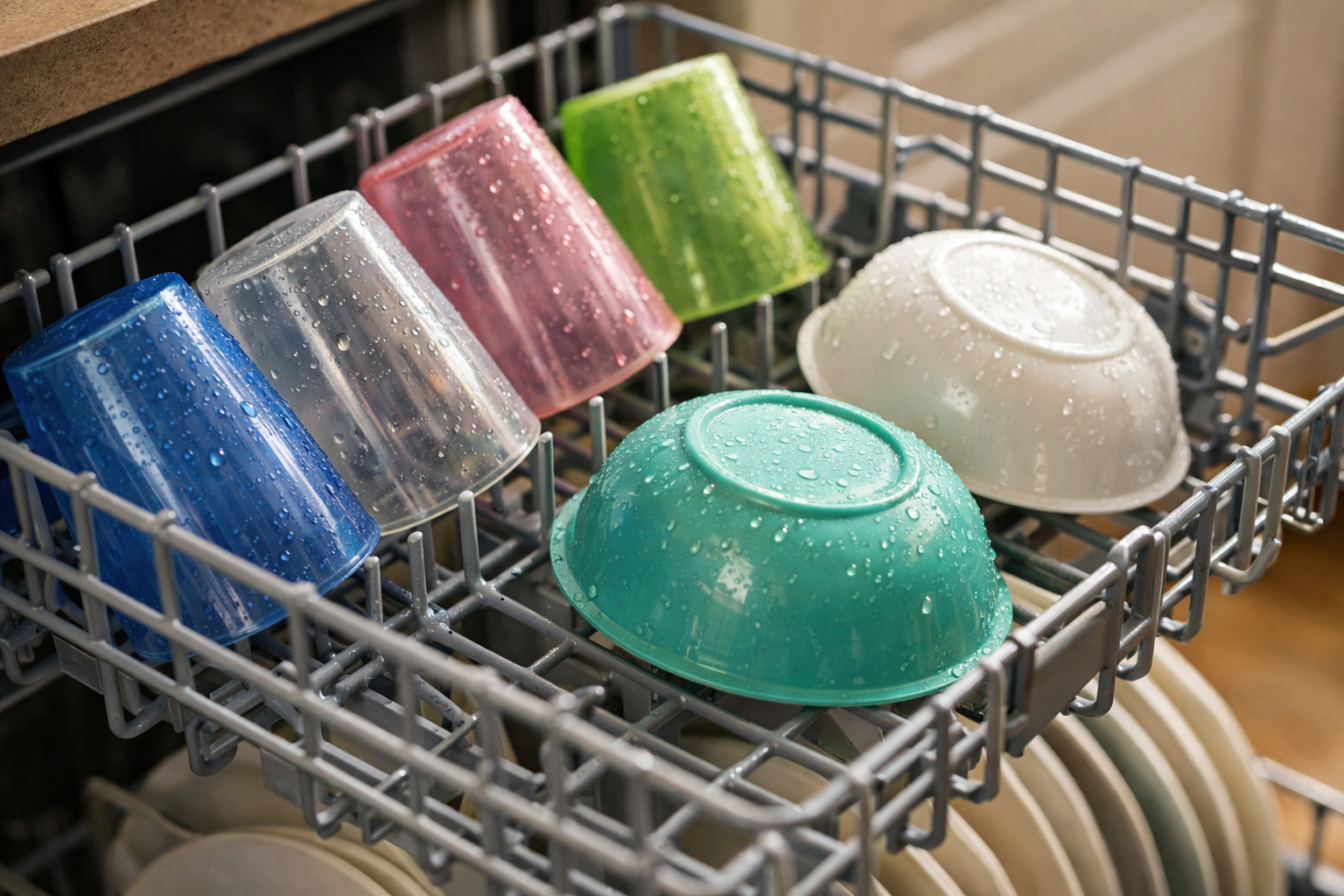
Plastic is lightweight and doesn’t retain heat the same way as ceramic or glass. This makes plastic dishes particularly challenging to dry in a dishwasher. Even with heated dry and rinse aid, they often come out wet or with water pooling in the cups or bowls.
I learned this the hard way after noticing my children’s plastic cups always left water spots on the countertop. The solution was surprisingly simple: placing plastic items on the top rack where heat circulation is better and arranging them to allow water to run off freely.
Another tip is to avoid nesting plastic bowls together. Stacked surfaces trap water, slowing down drying. Tilting cups and bowls slightly ensures water drains naturally.
In households with mostly plastic dishes, a quick hand-dry at the end may still be necessary, but careful placement can reduce dripping significantly.
4. Water Temperature Matters
Dishwashers rely on hot water not just for cleaning but also for proper drying. If your water heater is set too low, dishes won’t dry efficiently, and condensation can leave streaks. Ideal inlet water temperature is usually between 120°F and 150°F.
I once spent weeks trying to troubleshoot my wet dishes only to discover my water heater was set at 110°F. Raising the temperature solved both cleaning and drying issues in one go.
Hot water helps rinse aid and heated dry work more effectively, ensuring faster evaporation. It also prevents greasy residue, which can hold water droplets on surfaces.
Running the kitchen faucet to get hot water before starting the dishwasher is a simple tip that many people overlook. It ensures the appliance begins the cycle with sufficient heat to clean and dry effectively.
5. Ventilation and Air Circulation
Dishwasher drying depends heavily on airflow and proper venting. If the vent is blocked or not functioning, steam may not escape, leaving dishes wet or damp. Many modern dishwashers use condensation drying, which relies on cool air circulating around hot surfaces to evaporate water.
I remember inspecting my dishwasher after every load ended with dripping plates. The vent had accumulated a thin layer of grease and dust, partially blocking airflow. After cleaning it, drying improved noticeably.
Ensuring vents and seals are clean and unblocked allows heat and steam to circulate freely. Avoid covering vent openings or cramming large items that may block airflow during the drying phase. Even small adjustments in dish placement can improve air circulation dramatically.
6. Cycle Selection and Eco Modes
Not all dishwasher cycles are created equal. Eco or energy-saving modes reduce heat and water use, which is great for the environment but can compromise drying performance. If you rely on these settings exclusively, wet dishes are almost guaranteed, especially plastics and larger items.
I often switch to a normal or heavy-duty cycle when I need dishes to come out completely dry. These cycles use higher water temperature, longer drying periods, and more robust heat circulation.
Understanding your dishwasher’s cycles and matching them to your load is key. Heavy loads with mixed materials often need standard or heavy cycles to dry properly. Using the right cycle in combination with rinse aid and heated dry produces consistently dry dishes.
7. Maintenance and Cleaning for Better Drying
A dishwasher that is neglected won’t dry as well over time. Mineral buildup, clogged spray arms, and residue inside the appliance can interfere with drying. Even small deposits on heating elements reduce efficiency.
Running a monthly cleaning cycle with vinegar or a specialized dishwasher cleaner removes grease and minerals. Check seals, spray arms, and vents for clogs. Regular maintenance ensures heat, water, and airflow work in harmony.
I personally added a monthly cleaning routine and noticed a dramatic improvement. Even plates that previously stayed wet now dry without extra effort. A clean dishwasher is simply a more efficient dishwasher.
Conclusion
If your dishes are not drying in the dishwasher, the solution often lies in a few key areas: proper rinse aid use, heated dry function, water temperature, airflow, plastic placement, cycle selection, and routine maintenance. Most drying problems are easily fixed once you identify the cause.
With these adjustments, you can say goodbye to dripping plates and water-streaked glasses. A combination of thoughtful dish placement, correct cycle choices, and small maintenance habits transforms your dishwasher into a fully reliable appliance. In short, dry dishes are just a few tweaks away!