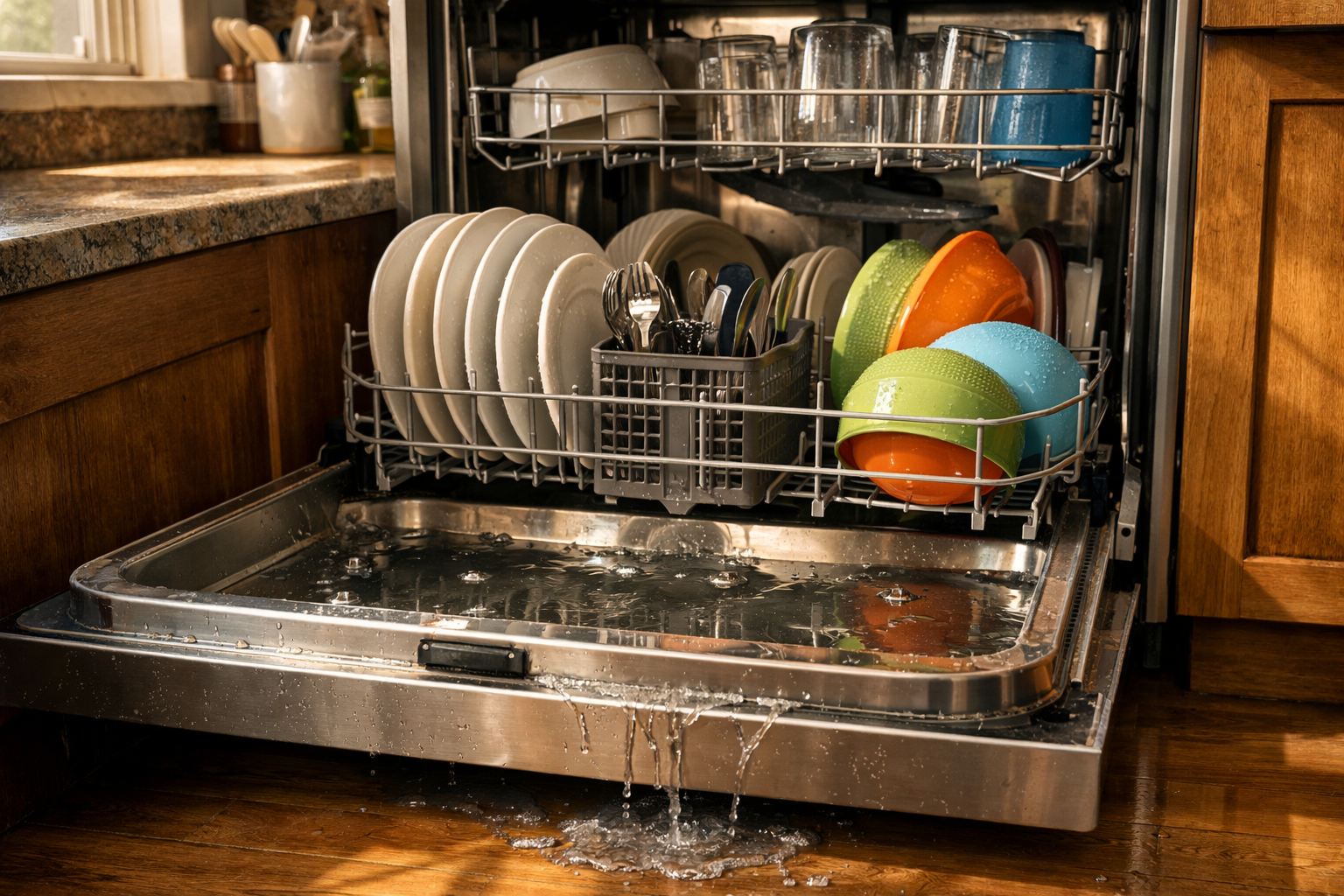
There’s nothing worse than opening your dishwasher to find puddles spreading across your kitchen floor. It’s frustrating, stressful, and honestly a little alarming! Did you know that dishwasher leaks are one of the most common appliance problems reported by homeowners? They often appear suddenly, leaving water damage and confusion about what went wrong.
I’ve been there myself—running a full cycle only to find water seeping from the bottom, threatening to ruin my wooden cabinets. At first, I blamed the appliance, assuming it had broken overnight. But after some investigation, I realized that leaks are usually caused by common, fixable issues like worn-out door gaskets, clogged filters, loose hoses, or even improper loading.
In this guide, I’ll walk you through all the reasons why your dishwasher may be leaking, how to identify the exact cause, and practical steps to fix it before the damage spreads. By the end, you’ll have a dry kitchen, peace of mind, and a properly functioning dishwasher again!
1. Worn or Damaged Door Gaskets
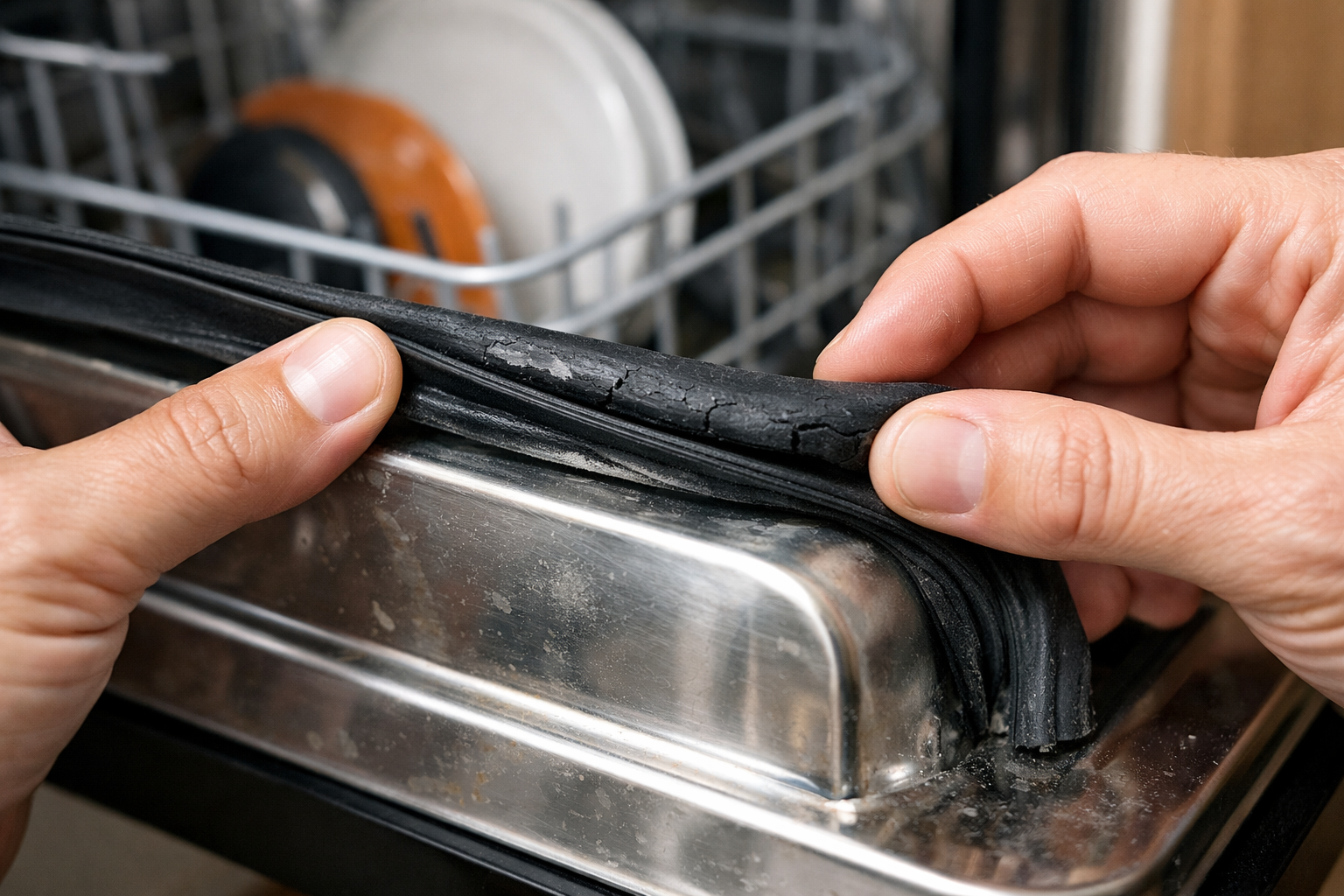
The door gasket, a rubber seal running along the edge of your dishwasher door, is critical for preventing water from escaping during cycles. Over time, this gasket can crack, warp, or accumulate debris, creating tiny gaps for water to leak through.
I once noticed water pooling on my kitchen floor, and upon inspection, the gasket had developed small cracks at the corners. Cleaning it alone didn’t solve the problem. Replacing the worn gasket immediately stopped the leak and restored confidence in my dishwasher.
A common mistake is to ignore buildup along the gasket. Food particles, soap residue, and mineral deposits can compromise the seal, allowing leaks even if the rubber is still intact. Regular cleaning with warm water and mild detergent keeps the gasket supple and effective.
Always check the gasket edges carefully and replace them at the first sign of cracking or hardening. Doing so prevents leaks and ensures your appliance maintains optimal pressure during wash cycles.
2. Loose or Damaged Hoses
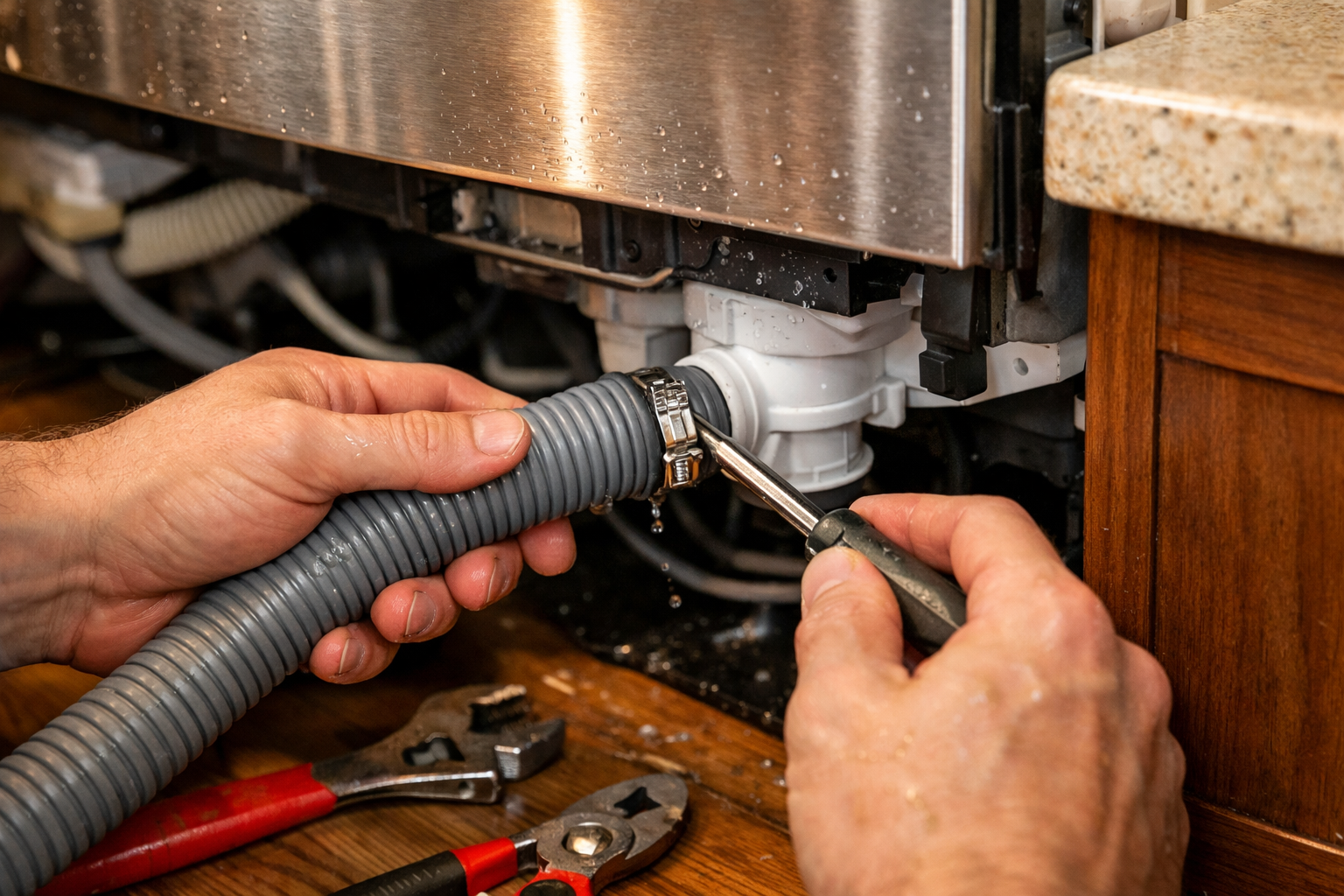
Dishwasher hoses carry water in and out of the machine. Over time, connections can loosen, or hoses can develop cracks, causing water to escape. The most common culprits are the drain hose and the water inlet hose.
I remember a neighbor complaining about repeated puddles under her dishwasher. When we inspected, the drain hose had partially detached from the connector behind the appliance. A simple tightening of the clamp solved the leak entirely.
Another frequent issue is worn or cracked hoses. If the hose walls are brittle or split, water will leak even if fittings are tight. Inspect hoses regularly, looking for bulges, soft spots, or discoloration. Replacing old hoses with high-quality replacements is often more cost-effective than repairing water damage later.
Check all connections during maintenance, and make sure hoses are properly aligned to prevent kinks that might increase pressure and cause leaks over time.
3. Clogged or Dirty Filters
A clogged dishwasher filter can lead to water backup inside the tub, creating leaks. Debris trapped in the filter prevents proper drainage, raising water levels above normal and sometimes forcing water past the door seal.
I’ve seen this firsthand after a week of heavy use without cleaning. My dishwasher started leaking slowly from the front bottom corner. Once I removed and rinsed the filter, water flowed freely, and the leak stopped immediately.
Neglecting the filter is a common mistake. Even a small buildup of food scraps can compromise drainage. Filters should be removed, cleaned, and reinstalled monthly for optimal performance. Using a soft brush under running water helps remove stubborn residue without damaging the mesh.
Keeping the filter clean not only prevents leaks but also improves washing efficiency and reduces odors. It’s a small step with big benefits.
4. Improper Loading and Overfilling
Overloading a dishwasher or placing large items incorrectly can disrupt water flow, causing leaks. Dishes blocking spray arms or tilting improperly may direct water toward the door, pushing it past seals.
I learned this the hard way after hosting a dinner party. Plates and pans stacked tightly caused water to spray toward the lower door edge, and by the time the cycle finished, there was a small puddle on the floor. Adjusting how dishes sit—angled properly, not stacked too high—eliminated the problem.
Even the type of detergent can worsen leaks if suds overflow due to excess foam. Using recommended amounts and proper placement ensures water flows as intended without escaping the appliance.
For households with frequent leaks, a careful review of load placement after every cycle can save both water and headaches.
5. Dishwasher Float Switch Issues
The float switch regulates the water level in your dishwasher. If it gets stuck or malfunctions, the appliance may overfill, leading to leaks from the base.
During a troubleshooting session, I observed water slowly seeping from the bottom of a friend’s dishwasher. The float switch had become jammed with debris, causing the dishwasher to fill beyond capacity. Cleaning the float restored normal operation, and the leak disappeared.
Float switches are usually located at the bottom of the tub and can be cleaned using warm water and a soft cloth. Avoid pressing it aggressively to prevent damage.
Regularly checking the float mechanism ensures your dishwasher doesn’t overfill, protecting both the machine and your kitchen floor.
6. Cracks in the Dishwasher Tub
While less common, cracks in the dishwasher tub—especially in older models—can cause leaks. Plastic or stainless-steel tubs may warp or develop pinholes over years of use, leading to slow drips or pooling water.
I’ve seen this in a vintage dishwasher; even small cracks at the bottom edge allowed water to escape gradually. Repairing or replacing the tub is usually necessary, as patching rarely provides a long-term solution.
Inspect the bottom of your dishwasher for any signs of cracks, discoloration, or moisture underneath. If detected early, replacement parts are often available from manufacturers or professional appliance repair services.
Maintaining a leak-free dishwasher requires vigilance. Small issues like worn gaskets or loose hoses can escalate into tub damage if left unresolved.
Conclusion
Dishwasher leaks are frustrating but usually solvable. From worn door gaskets and loose hoses to clogged filters, improper loading, float switch issues, and even cracks in the tub, identifying the cause is the first step to stopping water damage.
With careful inspection, routine maintenance, and proper use, most leaks can be prevented or fixed quickly. Pay attention to seals, hoses, filters, and water levels, and your dishwasher will remain efficient and dry. Don’t ignore small leaks—they’re often a warning sign, and fixing them early saves money and stress. A dry, functional dishwasher is just a few maintenance steps away!