Have you ever noticed your lights flicker when your fridge kicks on? That tiny flash is more than a quirk—it’s a peek into the startup surge of your refrigerator! Most people don’t realize that a fridge draws far more amps during startup than during normal operation.
I remember replacing an old breaker and realizing that my 15-amp circuit wasn’t always enough for our fridge. That experience made me curious: how many amps does a refrigerator actually draw on startup, and why does it spike so high compared to running current?
In this article, I’ll break it down in simple terms. We’ll cover why startup draws are higher, the difference between running and starting current, how to calculate your fridge’s power needs, and practical tips to avoid tripped breakers or electrical issues. By the end, you’ll understand the hidden power demands of your refrigerator and how to plan your circuits safely.
What Causes the Startup Surge in Refrigerators
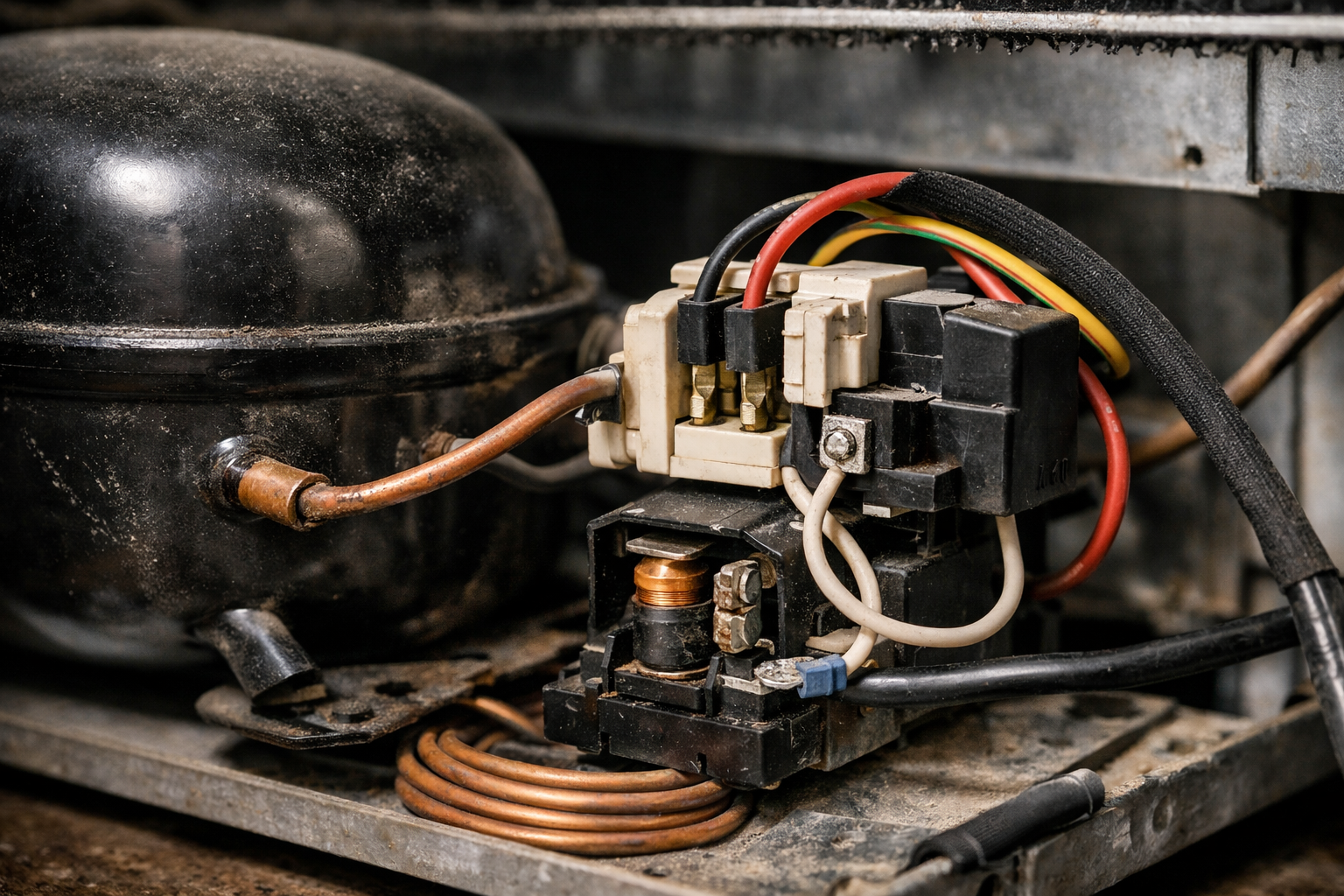
Refrigerators don’t draw a constant amount of electricity. When the compressor starts, it requires a burst of current much higher than its normal running amps, because the compressor is responsible for that startup surge. This surge is called the inrush current or startup current. It occurs because the compressor motor has to overcome initial inertia and start moving the refrigerant through the coils.
For most modern residential refrigerators, the running current is often 3–6 amps. On startup, that can spike to 6–12 times the running amps for just a few milliseconds. Even though this surge is brief, it’s enough to cause lights to flicker or trip an undersized breaker if your wiring isn’t designed for it.
Older fridges, or units with large compressors like commercial or side-by-side models, can draw significantly more amps at startup. The type of motor—single-phase, PSC (permanent split capacitor), or inverter compressor—also affects the surge magnitude. Inverter models typically have smoother startups, drawing fewer peak amps than older traditional compressors.
Understanding Running Amps vs Startup Amps
Running amps, also called steady-state current, are what your refrigerator consumes during normal cooling cycles. This is relatively predictable and can usually be found on the appliance label. Startup amps, on the other hand, are transient. They spike for a brief moment but don’t last long enough to affect your energy bill noticeably.
To illustrate, I once measured a mid-sized fridge with a clamp meter. Its running amps hovered around 4.5A, but at startup, the meter jumped to nearly 30A for a fraction of a second. That momentary surge is what causes lights to dim for a second and is completely normal.
Understanding the difference between running and startup amps is crucial for sizing your circuits and choosing the right breaker, especially since high startup amps often signal compressor trouble. Many DIY homeowners assume the running amps are enough to protect their circuit, but the brief surge is what trips breakers if they aren’t careful.
How to Calculate Your Refrigerator’s Startup Amps
Calculating startup amps can be tricky without a meter, but it’s possible to estimate. The general formula is:
Startup Amps ≈ 2–6 × Running Amps
For example, a refrigerator rated at 5A running may spike anywhere from 10A to 30A at startup. High-capacity fridges with larger compressors can spike even higher.
Another method is to check the manufacturer’s specifications, often listed as “Locked Rotor Amps (LRA)” or “Starting Current”. LRA represents the maximum current the compressor draws when it first starts and is the safest number to plan around for circuit design.
I’ve found that reading the appliance label carefully and adding a 25–50% safety margin is a reliable approach. This ensures your breakers don’t trip and your fridge runs safely even during peak surge moments.
Effects of Startup Amps on Your Electrical System
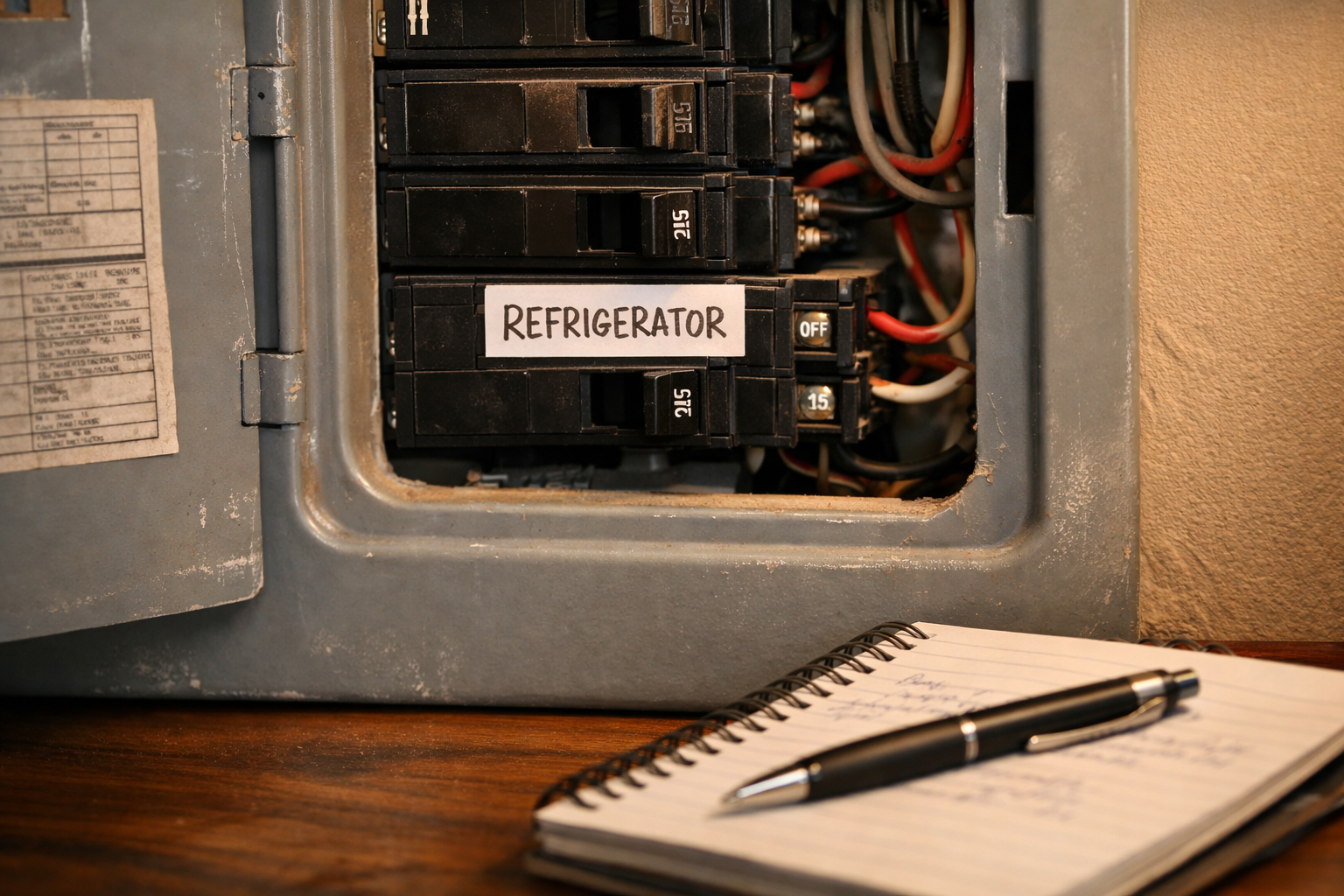
Startup surges, while brief, have several practical implications. If your refrigerator shares a circuit with other appliances, the sudden draw can cause lights to flicker or small devices to reset. In worst cases, it can trip breakers, particularly on older homes with 15-amp circuits.
Over time, repeated high inrush currents can stress wiring and connections. Loose outlets or undersized gauge wires may develop heat, potentially creating a fire hazard. I once inspected a kitchen where repeated fridge startup tripped a breaker; the underlying issue was corroded connections in the circuit box.
To mitigate risks, many homeowners install refrigerators on a dedicated circuit, but in some cases, garage fridges draw even more power in hot weather. This ensures the startup surge doesn’t interfere with other appliances. For larger fridges, a 20-amp or higher breaker may be appropriate, following local electrical codes.
Tools and Methods to Measure Startup Current
If you want to know your fridge’s startup amps precisely, a clamp meter or true RMS multimeter is the best tool. Clamp meters allow you to measure current without disconnecting wires, which is safer and more practical.
During measurement, watch for a spike in amps right when the compressor kicks on. You’ll notice the peak is short-lived, often just 0.5–2 seconds. For inverter compressors, the peak may be smoother and lower than traditional motors.
Many DIY enthusiasts also use smart plugs with current monitoring. These provide approximate readings and help track energy consumption over time, although they may not capture the instantaneous peak as accurately as a clamp meter.
Tips to Reduce Startup Issues
If your fridge frequently trips breakers or causes dimming, there are practical steps you can take. First, ensure the fridge is on a dedicated circuit with an appropriate breaker rating. Second, check that all wiring connections are secure and in good condition.
For homes with frequent dimming, consider using an appliance surge protector rated for high inrush currents. Modern inverter refrigerators typically draw fewer startup amps, so upgrading to a newer model can also help.
Finally, avoid placing large appliances on the same circuit. Heavy surges from multiple devices starting simultaneously are the main cause of tripped breakers, not the fridge alone. Taking these steps ensures your fridge runs reliably and safely.
Conclusion
So how many amps does a refrigerator draw on startup? The answer depends on your fridge’s size, compressor type, and age, but it can spike 2–6 times the running current, sometimes briefly hitting 20–30A or more. Understanding this surge helps prevent tripped breakers, flickering lights, and stress on your electrical system.
By checking manufacturer specs, using proper circuit sizing, and considering inverter technology, you can ensure smooth operation without surprises. Your fridge quietly keeps food cold, but now you’ll know the hidden power it demands in those first critical seconds. Knowledge like this isn’t just practical—it keeps your home safer and your appliances running longer.