Most people never think about their refrigerator compressor until the milk goes warm and the ice turns to water. By then, it’s usually too late for a cheap fix. I’ve been troubleshooting home appliances for years, and the compressor is the one component that surprises people the most — not because it’s complicated, but because it does so much without anyone noticing.
Knowing what a compressor does in a refrigerator can help you troubleshoot problems like when your compressor starts failing, save energy, and even extend your appliance’s life.
How a Refrigerator Compressor Works
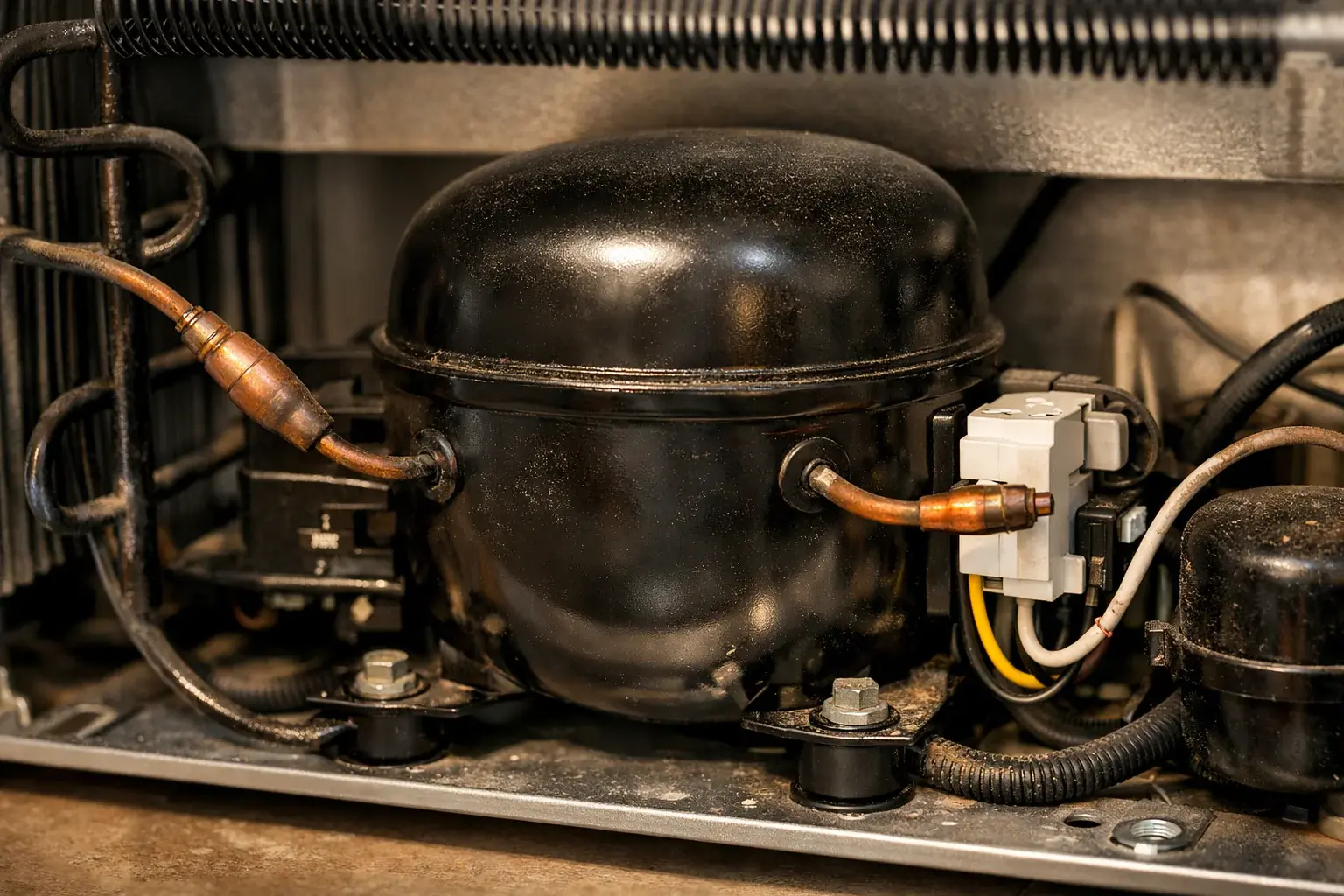
Think of the compressor as a pump with one job: compress refrigerant gas and push it through the entire cooling system. When the refrigerant gets compressed, its temperature and pressure spike. That high-pressure, high-temperature gas travels through the condenser coils — usually tucked at the back or bottom of your fridge — and dumps heat into the room around it.
After releasing that heat, the refrigerant moves through the expansion valve and into the evaporator coils inside the fridge. There it expands, absorbs heat from the air, and that’s what actually cools the space around your food. The compressor keeps this cycle going continuously. I’ve watched this rhythm on older units — the compressor clicks on, runs for a bit, clicks off — and it’s deceptively simple for something so critical.
Without the compressor, refrigerant sits still. Nothing circulates. Cold air doesn’t reach the back corners, the freezer fails, and the ice maker stops dead. Understanding this process makes it easier to appreciate why energy-efficient compressors are a key feature in modern appliances and to understand how much power the compressor pulls at startup.
The Role of the Compressor in Cooling
Here’s what surprised me when I first got into appliance repair: the compressor doesn’t just create cold — it creates a pressure difference that makes cooling physically possible. By raising the refrigerant’s pressure on one side of the system, it forces heat out of the fridge efficiently. Without that pressure gap, the evaporator coils inside can’t absorb enough heat, and your food sits at unsafe temperatures no matter how cold you set the dial.
Older refrigerators ran single-speed compressors — fully on or completely off, nothing in between. Modern inverter compressors adjust their speed based on how much cooling is actually needed. I’ve run both types side by side, and the difference is real. The inverter model keeps dairy noticeably fresher and runs quieter throughout the day. It’s not marketing — it’s physics working more efficiently.
The mistake most people make is ignoring what happens when circulation slows. Frost builds up in the freezer. Warm pockets appear in the fridge compartment. Food spoils faster than it should, and moisture buildup can create mold growth inside the cabinet. These aren’t random problems — they’re the compressor telling you something’s off.
Where you place your fridge matters too. Direct sunlight, a hot garage, or tight spaces with no ventilation all force the compressor to work harder — this creates temperature stress on components not designed to handle extreme heat.
Common Problems with Refrigerator Compressors
Compressors are built to last, but compressor issues do arise — and usually in predictable ways. Overheating is the most common culprit, and it almost always comes down to dusty condenser coils or a fridge crammed into a tight, warm space with no airflow. Electrical failures come next: worn wiring, a bad relay, or a faulty capacitor—these electrical problems can also cause unusual startup power draws. Mechanical wear — broken bearings, failed internal parts — is rarer but happens in older units.
I dealt with this myself on a fridge that hummed loudly but wouldn’t cool. The compressor was trying to start and failing every time. I cleaned the condenser coils, tested the start capacitor, replaced it for a few dollars, and the fridge came back to life the same afternoon. That experience taught me that a failing compressor isn’t always a death sentence for the appliance.
That said, there’s a clear line between what a homeowner should handle and what needs a professional. Refrigerant is under high pressure and requires certified handling. Wiring inside the compressor circuit isn’t something to probe around without training. Cleaning coils and swapping a capacitor? Absolutely do it yourself. Opening the sealed refrigerant system? Don’t.
How Compressors Affect Energy Efficiency
Your electricity bill and your compressor are more connected than you’d think. An old single-speed compressor pulls a hard surge of current every time it starts, runs at full power, then shuts off abruptly. Do that dozens of times a day — especially if the fridge door opens often — and you’re burning energy you don’t need to.
Inverter compressors changed that equation. They ramp up and down based on demand, running slower when the fridge is stable and faster when it needs to recover. I upgraded to an inverter model a few years back and saw a noticeable drop in my electricity costs within the first billing cycle. Lower energy draw also means less heat stress on the compressor itself, which directly extends how long the unit lasts.
Where you place your fridge matters too. Direct sunlight, a hot garage, or a tight alcove with no ventilation all force the compressor to work harder than it should. Small placement decisions can add years to a compressor’s life — or shave them off.
Maintenance Tips for Your Refrigerator Compressor
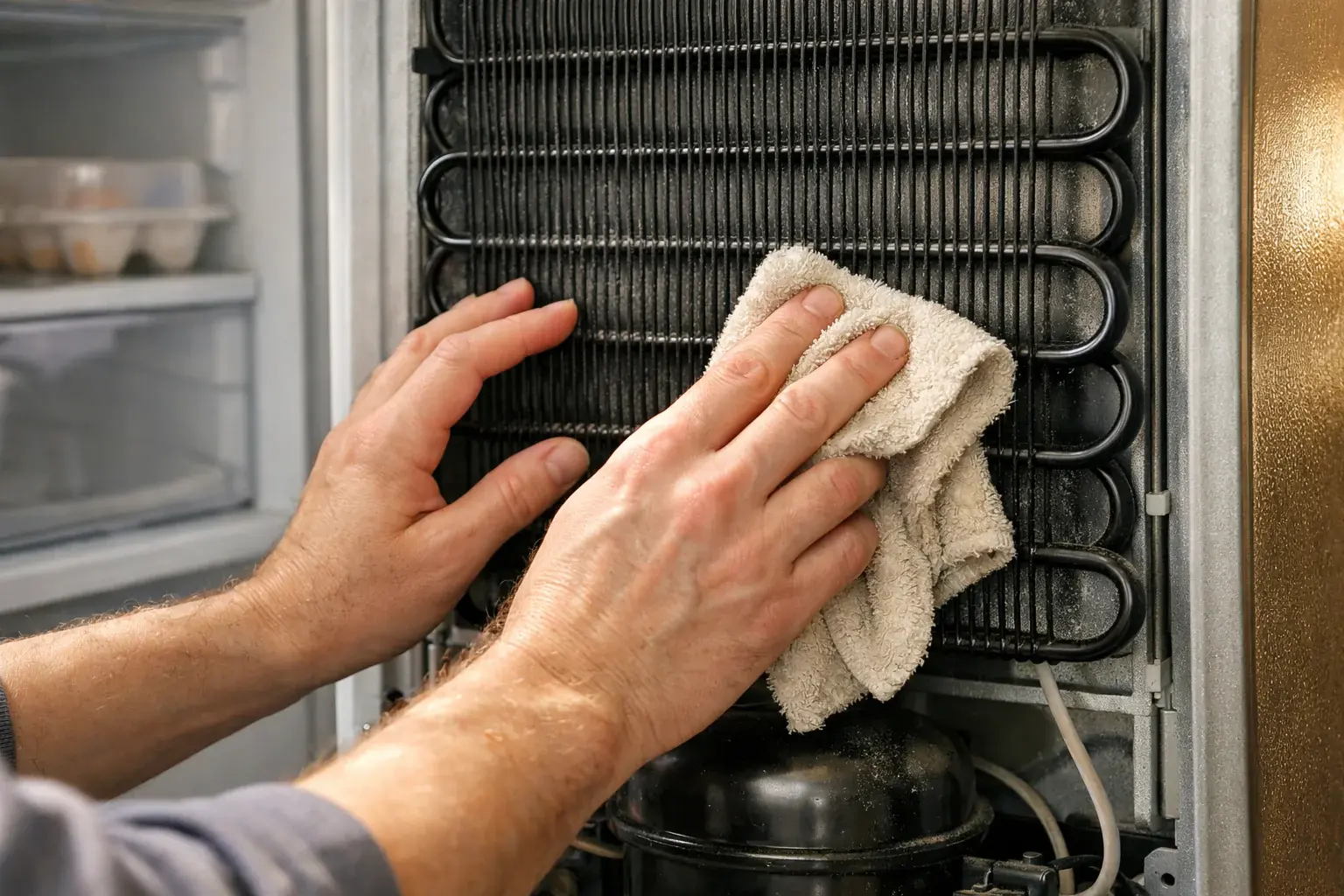
I run a simple seasonal check that takes maybe twenty minutes and has saved me from two potential breakdowns. First, vacuum the condenser coils. Dust acts as insulation and causes overheating faster than almost anything else. Second, check the door seals — press a piece of paper in the door and pull it out. If it slides easily, cold air is escaping and the compressor is compensating by running longer than it should. Third, make sure the fridge is level. An unlevel fridge affects refrigerant flow and puts unnecessary strain on the compressor over time.
Don’t overpack the fridge either. I’ve seen this cause problems more times than I can count. Restricting proper airflow inside the cabinet makes the compressor run longer to reach the set temperature. Leave room for air to move.
Listen to your fridge. A healthy compressor hums quietly and steadily. A clicking sound that repeats every few minutes usually means the overload protector is tripping — the compressor tries to start, overheats slightly, shuts off, and tries again. A loud continuous vibration often points to mechanical wear inside the unit. Catching these sounds early is the difference between a cheap fix and a full replacement.
When to Call a Professional
There are clear situations where you stop troubleshooting and call a technician. No cooling despite the compressor running. A buzzing or clicking that won’t stop. The back of the fridge running extremely hot to the touch. The circuit breaker tripping when the fridge tries to start. These aren’t symptoms you fix with coil cleaning.
I’ve seen people attempt compressor replacements themselves and regret it. It’s not just the technical difficulty — it’s the refrigerant handling requirements, the risk of voiding the warranty, and the reality that a misdiagnosed compressor replacement is expensive when the actual problem was something else entirely. A certified technician can pressure-test the system, check refrigerant levels, and confirm the compressor is actually the problem before replacing anything.
Final Thoughts
The compressor is the engine of your refrigerator. Everything else — the evaporator, the condenser, the thermostat — depends on it working correctly. Once you understand what it does and how it fails, you stop treating refrigerator problems as mysteries and start treating them as diagnosable issues with real solutions.
Clean the coils. Check the seals. Listen for warning sounds. Know when to call for help. That’s really all it takes to keep a compressor running well for the full life of the appliance — and avoid the very expensive surprise of opening your fridge to warm food and a repair bill you weren’t expecting.


