
A warm fridge full of spoiled food is one of those appliance failures that hits you immediately — and expensively. I came home one summer evening to find my refrigerator completely silent, the interior warm, and everything from the milk to the leftovers already going bad. The compressor had given up without a single warning sign I’d caught in time. That experience pushed me to learn everything I could about refrigerator compressor problems, and what I found out changed how I maintain every appliance in my home.
Knowing what a compressor does in a refrigerator can help you troubleshoot problems like when your compressor starts failing, save energy, and even extend your appliance’s life.
This guide covers the most common compressor issues, how to spot them before they turn into full failures, and what you can realistically fix yourself versus when you need to pick up the phone.
When your compressor starts showing signs of failure, understanding what’s happening helps you decide whether to repair or replace. The most common issues fall into three categories: electrical problems that prevent startup, temperature and moisture issues, and mechanical wear from age.
How a Refrigerator Compressor Works
Before diving into problems, it’s crucial to understand the compressor’s role, because most issues only make sense after you first learn what a compressor actually does.
The compressor functions as a pump that circulates refrigerant through the entire cooling system. When refrigerant gets compressed, its pressure and temperature rise sharply. That heat gets expelled through the condenser coils at the back of the unit. The refrigerant then travels into the evaporator coils inside the fridge, where it expands, absorbs heat from the interior, and keeps your food cold. The whole cycle repeats continuously, and the compressor is what keeps it moving.
I remember standing in front of my fridge after that summer power outage, opening the door to lukewarm air and realizing just how completely the cooling system depends on that one component. Without the compressor running, nothing else in the system matters. Understanding this process makes it easier to appreciate why energy-efficient compressors are a key feature in modern appliances and to understand how the startup surge strains compressor performance.
Modern refrigerators increasingly use inverter compressors, which vary their speed based on actual cooling demand rather than running at full power and switching off abruptly. They run quieter, use less electricity, and tend to produce less mechanical wear over time. That said, even inverter compressors need proper maintenance — they’re better, not bulletproof.
Common Signs of Compressor Problems
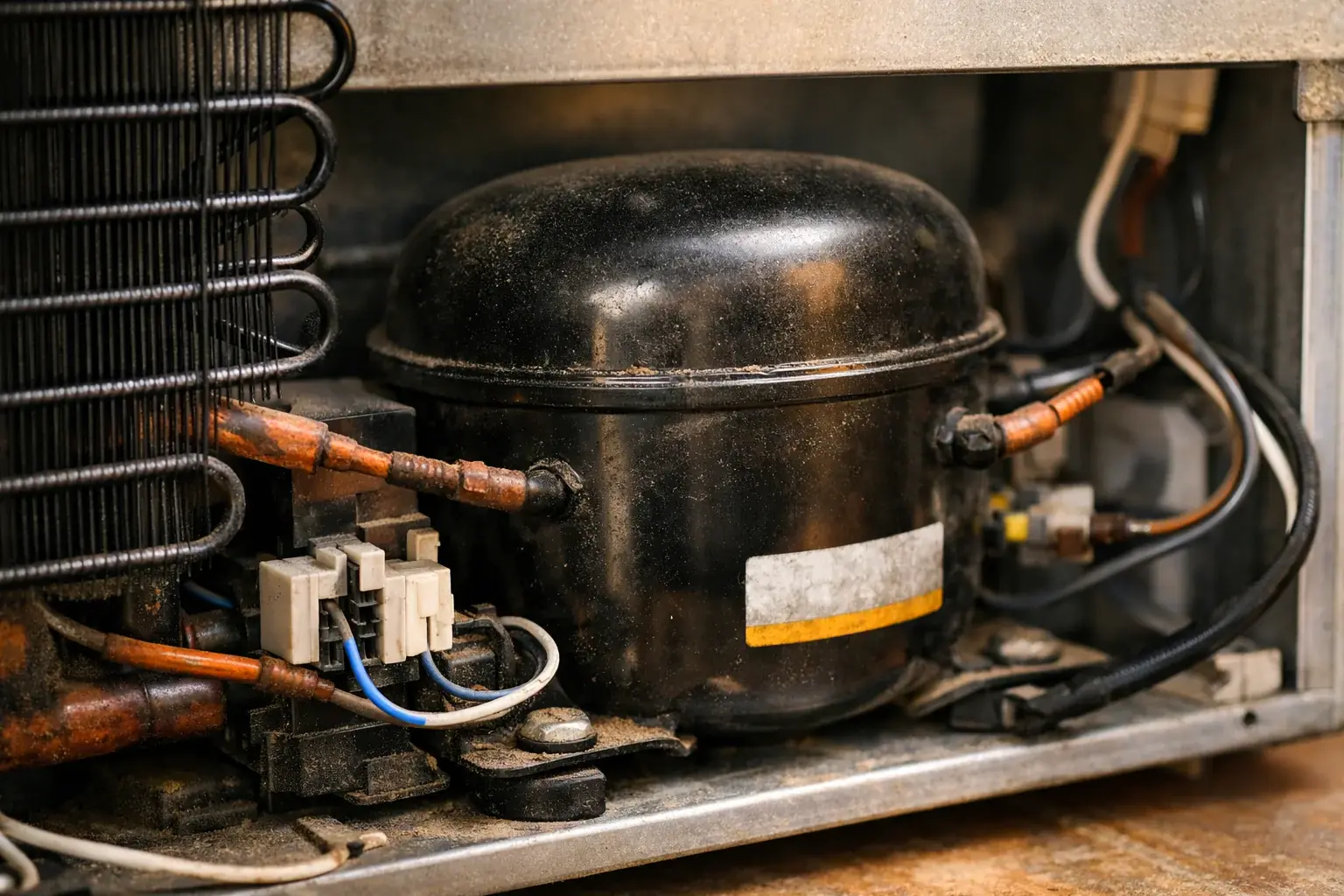
Most homeowners miss the early warning signs because they’re subtle and easy to explain away. The first thing to watch for is inconsistent cooling. If certain shelves are colder than others, or your freezer is struggling to form ice while the fridge section feels fine, the compressor may not be circulating refrigerant effectively through the full system.
Strange noises deserve serious attention. A compressor in good health hums quietly and steadily. Clicking that repeats every few minutes — where the compressor tries to start, stops, tries again — usually points to a failing start relay or a capacitor that can’t supply enough power to get the motor going. I had exactly this happen on a second fridge in my garage. It clicked every three minutes like clockwork. Turned out to be a faulty start relay, not the compressor at all. Replacing it cost me about eight dollars.
Loud continuous vibration is a different story and often signals mechanical wear inside the unit itself. Frequent cycling — where the compressor runs almost constantly without the fridge reaching the set temperature — is another red flag, and it’s often paired with higher electricity bills. Visible heat around the back coils beyond what’s normal also warrants investigation. Technicians commonly see these symptoms together when a compressor is in the early stages of failure.
Electrical and Mechanical Causes
Refrigerator compressor problems generally fall into two categories, and telling them apart matters because the repair path is completely different.
Electrical problems are more common and often more fixable. Faulty wiring, blown capacitors, and malfunctioning start relays all prevent the compressor from starting or cause it to overheat mid-cycle. Many homeowners find that what looks like a dead compressor is actually a failed relay or capacitor — parts that cost a few dollars and take minutes to swap out. That’s worth checking before assuming the compressor itself is gone.
Mechanical failures are less frequent but far more serious. The bearings, pistons, and internal valves inside a compressor wear down over years of use, creating friction and reducing efficiency gradually. I once inspected a unit that had been running for fifteen years — the motor tested fine electrically, but internal mechanical stress had caused slow, irreversible damage. By the time cooling became noticeably affected, the compressor was already too far gone to repair cost-effectively.
Impact on Energy Efficiency
A struggling compressor doesn’t just fail to cool — it drives up your electricity bill in the process. When the compressor is working harder than it should, whether because of dirty coils, a refrigerant issue, or internal wear, it draws more current and runs longer to achieve the same result. I tracked energy use on a fridge with an intermittent compressor problem over one month and found it was consuming nearly double what a properly functioning unit would use. That’s a significant cost for a problem most people don’t even realize they have.
Maintaining clean condenser coils, ensuring proper ventilation, and avoiding overpacking the fridge can reduce stress on the compressor and improve energy efficiency, even though temperature stress on compressor components in environments like garages or hot spaces. A fridge sitting in a hot garage in summer is working against itself constantly — the compressor runs harder, heats up faster, and wears out sooner.
Inverter compressors handle these conditions better than single-speed models because they adjust output rather than cycling hard on and off. But placement and maintenance still matter regardless of compressor type.
Troubleshooting Refrigerator Compressor Problems
Start with the basics before assuming the worst. Check that the fridge has power and the circuit breaker hasn’t tripped. Then move to the start relay — it’s usually a small component plugged directly into the compressor body, and you can shake it gently to check if there’s a rattle inside, which indicates it’s failed. Test the capacitor with a multimeter if you’re comfortable doing so. Clean the condenser coils thoroughly and make sure the vents aren’t blocked by the wall or surrounding furniture.
Listen carefully during all of this. A compressor that hums but won’t start often has an electrical component issue rather than a mechanical one. A compressor that starts, runs briefly, then shuts off may be overheating — which brings you back to coil cleaning and ventilation. Most people jump straight to “the compressor is dead” when the actual problem is something far simpler and cheaper upstream.
One thing to be clear about: compressors operate under high pressure and the refrigerant inside requires certified handling. Coil cleaning, relay testing, capacitor swaps, and connection checks are all reasonable for a careful homeowner. Opening the sealed refrigerant system is not. That’s where DIY ends.
Preventive Maintenance Tips
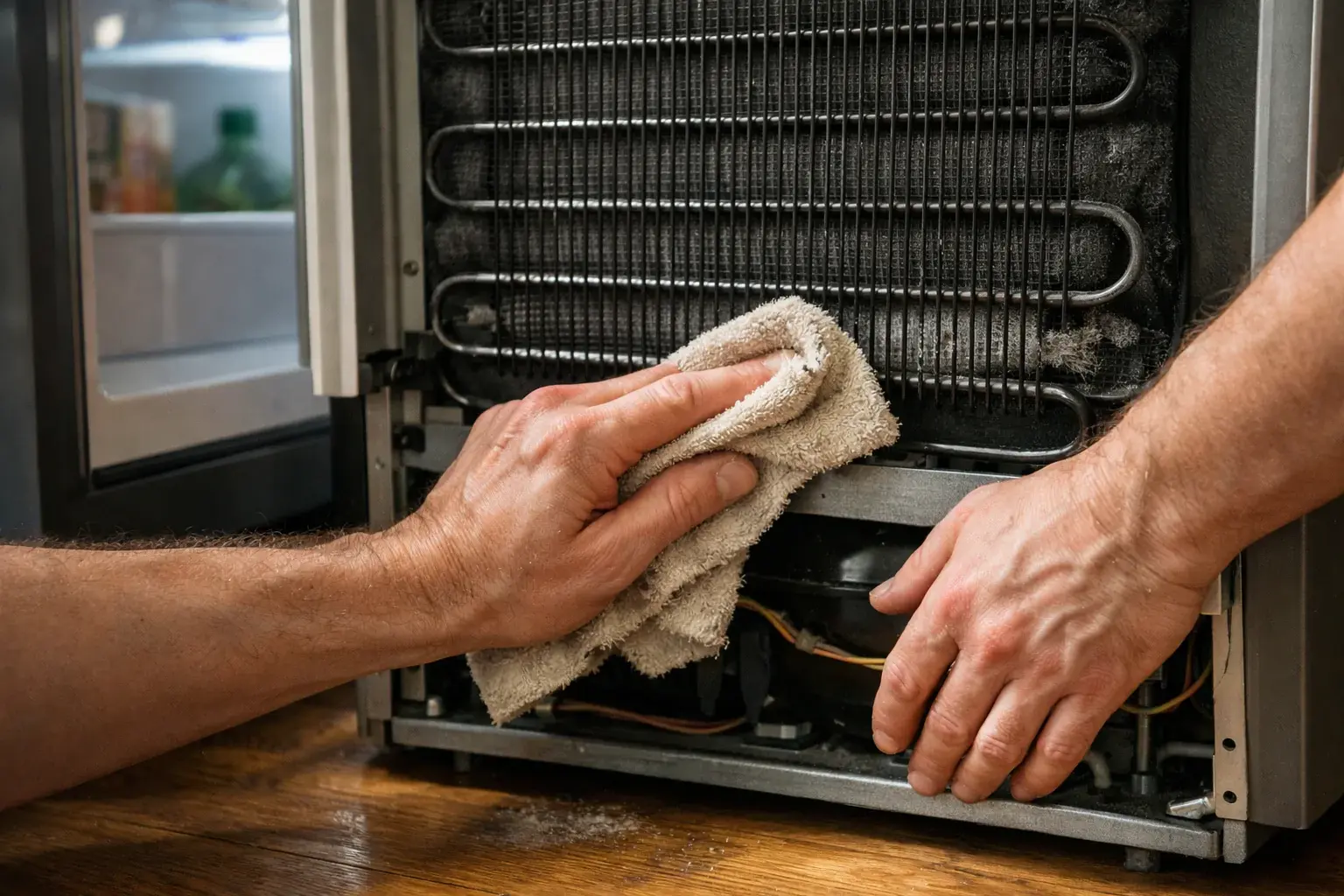
Preventing compressor problems is dramatically easier than dealing with them after the fact. Clean the condenser coils at least twice a year — dust buildup is one of the leading causes of overheating, and it happens faster than most people expect. Make sure the fridge is level, because an unlevel unit affects refrigerant flow and puts mechanical stress on the compressor over time. Check door seals regularly; a seal that doesn’t hold forces the compressor to compensate by running longer than it should.
Don’t overpack the fridge. Many homeowners treat the refrigerator like a storage container and then wonder why it can’t maintain temperature. Restricted airflow inside the cabinet makes the compressor work harder, creates moisture problems inside the unit, and that extra workload adds up over time. Leaving space for air to circulate isn’t just about organization — it’s about not burning out a component that costs hundreds of dollars to replace.
In my experience, running a simple preventive maintenance check every six months — coils vacuumed, seals tested, temperature monitored — catches problems early and keeps the compressor running efficiently for the full life of the appliance.
When to Call a Professional
Some situations are beyond the scope of home troubleshooting. Total cooling failure despite the compressor appearing to run, persistent strange noises that don’t resolve after checking the relay and capacitor, repeated circuit breaker trips when the fridge starts up, or the compressor body running extremely hot to the touch — all of these warrant a professional diagnosis.
Technicians have equipment to pressure-test the sealed system, check refrigerant levels, and confirm whether the compressor itself is the actual problem before recommending replacement. That last point matters because a compressor swap is one of the more expensive appliance repairs. You want to be certain it’s necessary before committing to it. I’ve seen situations where a homeowner paid for a compressor replacement when a refrigerant leak was the underlying issue — the new compressor ran into the same problem weeks later.
Before you commit to a compressor replacement, make sure you’ve addressed the root cause. Sometimes the compressor isn’t actually broken — it’s just being asked to work too hard because of water dispenser electrical failures or circulation issues that reduce cooling efficiency.
Don’t let a warranty concern push you toward DIY either. An improper repair can void coverage entirely, turning a fixable situation into a full replacement cost.
Final Thoughts
Refrigerator compressor problems are rarely sudden — they build up through wear, neglect, and overlooked warning signs. Strange noises, inconsistent cooling, excessive cycling, and climbing electricity bills are all the compressor’s way of telling you something’s wrong before the situation becomes a full emergency.
The homeowners who avoid expensive repairs are usually the ones who pay attention to those early signals, keep up with basic maintenance, and know exactly where the line is between a DIY fix and a job for a professional. Stay on the right side of that line and a refrigerator compressor can run reliably for fifteen years or more.


